Can POTUS, in his Capacity as Commander in Chief, Change Military Policy Via Twitter?

By Summer 2017 M-VETS Student-Advisor

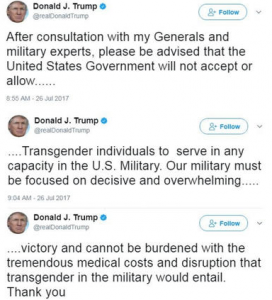
On July 26, 2017, President Trump issued a series of three tweets addressing transgender service in the U.S. Military.  He declared:[1]

The President’s “policy pronouncement” directly contradicts implemented DOD policy still actively listed on DoD’s website here. On July 28, 2015, then Secretary of Defense, Ash Carter, issued a Memorandum entitled, “Transgender Service Members” that allowed for open transgender service and stated:

…no Service member shall be involuntarily separated or denied reenlistment or continuation of active or reserve service on the basis of their gender identity, without the personal approval of the Under Secretary of Defense for personnel and Readiness. This approval authority may not be further delegated.[2]

Following Secretary Carter’s July 2015 Memorandum, DoD Instruction 1300.28 was issued and became effective October 1, 2016. It provides guidance for, among other things, how a service member can transition gender while serving.[3] In addition, the DOD issued “Transgender Service in the U.S. Military, An Implementation Handbook” in 2016.[4] The 72 page Handbook is, “designed to assist our transgender Service members in their gender transition, help commanders with their duties and responsibilities, and help all Service members understand new policies enabling the open service of transgender Service members.”

Article II Section 2 of the U.S. Constitution, states that “the President shall be Commander in Chief of the Army and Navy of the United States, and of the Militia of the several States, when called into the actual Service of the United States.” As Commander in Chief, the President’s powers are quite broad. However, whether the President, in his capacity as Commander in Chief, has the ability to change DoD policy via Twitter is an open question.

Common sense would dictate that, without a formal modification to DoD regulations, an announcement via Twitter would not effectuate a policy change. The President of the National Institute for Military Justice, Dru Brenner-Beck suggested that, “a tweet doesn’t really give you policy.”[5] She further indicated that under normal procedure, the President would issue an executive order instructing the Pentagon to amend its personnel policy that wouldn’t begin without extension coordination between DoD and various parts of the military.[6] Following that, Implementation Guidance, or formal directives would then be expected from the Secretary of Defense according to U.S. Army Chief of Staff Gen. Mark Milley.[7]

Because of the unconventional nature of the President’s “policy pronouncement,” its impact on the DODs implemented policy caused massive confusion. However, at this juncture, the Pentagon does not seem inclined to execute policy based on the President’s tweets. On July 27, a day after President Trump announced his transgender position on Twitter, Chairman of the Joint Chiefs of Staff, Gen. Joseph Dunford, Jr., issued a Memorandum to Service Chiefs, Commanders and Senior Enlisted Leaders stating:

I know there are questions about yesterday’s announcement on the transgender policy by the President. There will be no modifications to the current policy until the President’s direction has been received by the Secretary of Defense and the Secretary has issued implementation guidance.[8]

Following the President’s Tweets, a senior military official stated, “I hope our commander in chief understands that we don’t transmit orders via Twitter, and that he can’t, either.”[9] While it is legally ambiguous as to what the President’s tweets can do – he would be wise to heed this advice. Rash statements of policy on intricate issues serve no one’s interest, and the Pentagon should continue to require more than a tweet to begin the formulation of new policy.

[1] Donald J. Trump (@realDonaldTrump), Twitter (July 26, 2017, 8:55 a.m., 9:04 a.m., 9:08, a.m.), https://twitter.com/realDonaldTrump.

[2] https://www.defense.gov/Portals/1/features/2016/0616_policy/memo-transgender-service-directive-28-July-2015.pdf.

[3] https://www.defense.gov/Portals/1/features/2016/0616_policy/DoD-Instruction-1300.28.pdf.

[4] https://www.defense.gov/Portals/1/features/2016/0616_policy/DoDTGHandbook_093016.pdf.

[5] https://www.politico.com/story/2017/07/26/trump-transgender-troops-ban-240998.

[6] Id.

[7] https://dailycaller.com/2017/07/27/we-dont-execute-policy-based-on-a-tweet-pentagon-yet-to-receive-trumps-transgender-ban-order/.

[8] https://uk.reuters.com/article/uk-usa-military-transgender-exclusive-idUKKBN1AC2FB.

[9] https://www.reuters.com/article/us-usa-military-transgender-exclusive-idUSKBN1AC2FN?il=0.

M-VETS Student-Advisors Awarded Public Service and Outstanding Student Awards

Former M-VETS student-advisors were recently awarded the Emerging Leader in Public Service award and the Clinical Legal Education Association (CLEA) Outstanding Student Award. M-VETS student-advisor Jamesian D. Emmanuel was awarded the Antonin Scalia Law School Emerging Leader in Public Service award for his contributions in public service while attending Scalia Law, while M-VETS student-advisor C.J. Nee was awarded the CLEA Outstanding Student Award for his excellence in the clinical and classroom components of M-VETS.

Jamesian received the Emerging Leader in Public Service Award given to a graduating student who has engaged in public service work during their law school career and plans to continue public service work upon graduation. During his time at Scalia Law, Mr. Emmanuel was employed as a Police Officer for Northern Virginia Community College, presided as the President of the Military Law Society for two academic semesters, performed duties as a student-advisor for two academic semesters assisting veterans, military members and their dependents in M-VETS, and volunteered as an intern for the Department of Justice Office of Justice Programs.  Since graduation, Mr. Emmanuel has continued his public serve in a leadership position and has accepted an active duty commission in the Judge Advocate General’s Corp as an officer in the United States Air Force.

C.J. was awarded the CLEA Outstanding Student Award for his demonstrated excellence in the clinical and classroom components of M-VETS. The award honors one law student at each law school who has excelled in a clinical course. The award is given annually at the completion of the academic year for excellence in both the field work component of the clinical course and excellence in the seminar component of the clinical course determined by the quality of the student’s thoughtfulness and self-reflection in exploring the legal, ethical, strategic, and other pertinent issues raised in the particular clinic. C.J.’s dedication to the M-VETS program, its clients, and his understanding of the importance of helping those who have served our country in uniform has made a lasting impact in the lives of the clinic’s clients.  His work on behalf of the clinic has directly increased access to justice for the military and veteran community.

Jamesian and C.J., Bravo Zulu!


National Memorial to Honor Legacy of Native American Military Service

By Spring 2017 M-VETS Student-Advisor Monica Martinez

Native Americans have served our nation valiantly and with distinction in times of peace and war, while also fighting for the right to be an equal part of this very nation. To honor their legacy, Patriot Nations: Native Americans in Our Nation’s Armed Forces, an exhibition that tells the history of American Indian and Alaska Native men and women who have served in the United States military, will be available for viewing until January 18, 2018 at the Smithsonian Institution’s National Museum of the American Indian (NMAI) in Washington, D.C.

NMAI will also be the site of the National Native American Veterans Memorial, a project authorized by Congress in December 2013 with an anticipated dedication date of Veterans Day, November 11, 2020. The memorial will highlight the bravery, contributions, and sacrifices of American Indian, Alaska Native, and Native Hawaiian veterans during their military service. The $15 million memorial project, which will receive no federal funds, tasks NMAI and the National Congress of American Indians (NCAI)—an advocacy organization—with accepting contributions for, and paying the expenses of its establishment. To garner support and community input for the memorial, an advisory committee consisting of Native representatives from various tribes and branches of service will conduct a series of consultations this summer. There have been 30 such consultations to date and several more are planned over the next few months.

Commitment to Military Service

Native Americans comprise a rapidly growing segment of the U.S. military and veteran population. Yet military service has not been without sacrifice. Native Americans have honorably defended the U.S., despite a tragic history of cultural suppression, broken treaties, and confinement to reservations. At home, Native American veterans are some of the most revered members of their communities, recognized on special occasions through ceremonies and dances performed in their honor. Native Americans’ reasons for serving in the military are complex. While some see military service as an extension of their warrior traditions, or believe in a sacred purpose to protect their land, others join simply to fulfill the patriotic sense of duty felt by every American.

The Department of Defense estimates that some 31,000 American Indian and Alaska Native (AIAN) men and women are on active duty. According to the Census Bureau, more than 140,000 veterans self-identify as AIAN. American Indians have the highest per capita commitment to military service than any other ethnic group in the United States.

Overview of Native American Military Service

Native Americans served in the Army in every war in America’s history, as well as during peacetime, and even when unrecognized as American citizens. Additionally, 25 Native Americans have received the nation’s highest award for valor, the Medal of Honor. Below is a selection of highlights as compiled by the Department of Defense of Native American military service through the years.

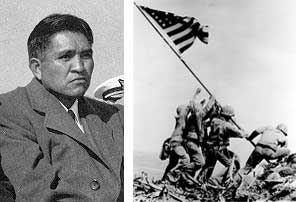
 Ira Hayes – Iwo Jima Flag Raiser

On Feb. 23, 1945, to signal the end of Japanese control, Ira Hayes and five other’s raised the U. S. flag atop Mount Suribuchi on the island of Iwo Jima. Three of the six men were killed while raising the flag. The heroic act transformed Hayes’ life forever. Hayes was a full-blood Pima Indian from Arizona, and is buried in Arlington Cemetery. The Ballad of Ira Hayes, a popular folk song performed by Johnny Cash, tells his story.

Early Wars (before World War I)

Many tribes were involved in the War of 1812, having fought for both sides as auxiliary troops in the Civil War. The Indian Scouts were established in 1866 and remained active for the remainder of the nineteenth century and the early twentieth century.

 World War I

Roughly 12,000 Native Americans served in the military during World War I. Four Native Americans serving in the 142nd Infantry of the 36th Texas-Oklahoma National Guard Division received the Croix de Guerre medal from France.

World War II

Over 44,000 Native Americans served between 1941 and 1945, (from a population of less than 350,000). Native American military personnel worked as cryptologists, using their Native languages to encode messages so that enemy code-breakers could not decipher them. Alaska Natives were a significant presence on the Alaska Combat Intelligence Detachment. This outfit was the first ashore on each island occupied by Allied forces in the Aleutian Campaign. Women contributed to war efforts through volunteer emergency service (WAVES), Women’s Army Corps, and Army Nurse Corps.

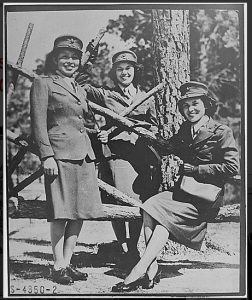
Marine Corps Women Reservists, Camp Lejeune, North Carolina, Oct. 16, 1943. From left, Minnie Spotted Wolf (Blackfoot), Celia Mix (Potawatomi) and Viola Eastman (Chippewa).

Korean War

Approximately 10,000 Native Americans served in the military during this period. Three were awarded the Medal of Honor.

Vietnam War

More than 42,000 Native Americans served in the military in the Vietnam Era, and over 90 percent of those servicemembers were volunteers.

Post-Vietnam Era

Native American servicemembers continued to serve in high numbers after the Vietnam Era—in Grenada, Panama, Somalia, the Gulf War, and in Operation Enduring Freedom (OEF), Operation Iraqi Freedom (OIF), and Operation New Dawn (OND).

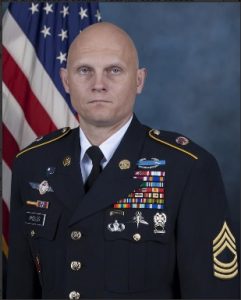
Master Sergeant Joshua Wheeler (Cherokee, 1975–2015) was a member of the army’s elite Delta Force and the recipient of 11 Bronze Stars during his military career. Wheeler died on Oct. 22, 2015, while rescuing prisoners from the Islamic State (ISIS) near Hawijah in northern Iraq. He was the first known U.S. military casualty in the fight against ISIS.

Challenges Facing Native American Veterans

Native American communities are committed to creating paths to education, active citizenship, career development, and improved health outcomes for returning servicemembers and veterans in order to ease the transition home, but challenges remain. American Indian and Alaska Native (AIAN) veterans, for example, are less likely to have an advanced degree compared to veterans of other ethnic groups. AIAN populations also have lower personal incomes than veterans of other ethnic groups and, though the unemployment rate for all veterans has risen since the economic downturn, the unemployment rate for those living on tribal lands has been higher. Further, AIAN veterans are more likely to lack health insurance and to have a disability, service-connected or otherwise, than veterans of other ethnic groups. In the area of mental health, increasing evidence shows that Native American veterans have the highest rate of PTSD of any ethnic group. Significant barriers to identifying and treating these conditions include lack of sufficient health literacy and confusion regarding eligibility for veterans services or the types of services available. However, geography poses the greatest challenge to receiving care, since reservations in rural and remote areas are at great distances from medical facilities. For veterans within or near rural communities, it can be also be difficult to receive representation for benefit claims because they cannot reach existing veterans service organizations (VSOs) or may not use them due to cultural barriers.

Federal Benefits for Native American Populations

The U.S. Department of Veterans (VA) affairs works through tribal governments to provide benefits and services to Native American veterans. VA has tried to address the lack of benefits representation in Native communities through a rule change in the Code of Federal Regulations (38 CFR 14.628). The change will allow eligible tribal organizations to become accredited by the VA to provide assistance on benefit claims. Other resources include the VA Veterans Benefit Administration (VBA), which administers a Native American Direct Home Loan (NADL) program with assistance from the Office of Tribal Government Relations (OTGR); and the VA Veterans Health Administration (VHA) Office of Rural Health, which administers telemental health clinics that provide mental health services remotely to rural veterans. Also, a new program through the Tribal HUD-VA Supportive Housing (Tribal HUD-VASH) program will provide rental assistance and supportive services to homeless Native American veterans or those at risk of homelessness. (This list provides only a brief overview of federal benefits available to Native American veterans.)

I. Veterans Service Organizations


The VA issued a final rule on January 19, 2017, to amend its regulations concerning recognition of certain national, state, and regional or local organizations for purposes of VA claims representation. Specifically, the rulemaking allows the Secretary to recognize tribal organizations in a similar manner as the Secretary recognizes state organizations. The final rule allows a tribal organization that is established and funded by one or more tribal governments to be recognized for the purpose of providing assistance on VA benefit claims. It also allows an employee of a tribal government to become accredited through a recognized state organization, similar to County Veterans’ Service Officer (CVSO) accreditation. Accredited tribal organizations will provide veterans with better, more culturally competent services through stringent requirements meant to secure long-term, quality representation.

II.  VA Direct Home Loan Program

VA provides direct home loans to eligible Native American veterans to finance the purchase, construction, or improvement of homes on Federal Trust Land, or to refinance a prior NADL to reduce the interest rate. To obtain a NADL, the law requires that the tribal government must have signed a Memorandum of Understanding (MOU) with the Secretary of Veterans Affairs. The MOU spells out the conditions under which the program will operate on its trust lands. The NADL will allow Native American veterans to reintegrate more easily into civilian working life and to secure a brighter future for their families.

III. HUD Supportive Housing Program

Tribal HUD VASH, a new program, is estimated to benefit 500 Native American veterans through the form of housing and supportive services. The program will combine $5.9 million in rental assistance from HUD with case management and clinical services provided by VA. Veterans who are homeless or at risk of homelessness and who are living on or near a reservation or other Indian areas are eligible for assistance. Through this innovative program, HUD hopes to help tribes move one step closer to ending veteran homelessness once and for all.

As the foregoing demonstrates, partnerships between Native American communities and federal government agencies have the potential to enhance the health, social, and economic outcomes not only for the returning Native servicemember, but for his entire family.

Patriot Nations

Just as the NMAI exhibition introduces many museum patrons to the historical sacrifices of Native Americans in the armed forces, the National Memorial will stand as a stunning tribute in the nation’s capital to allow us to reflect on that legacy of service. At the same time, we must continue to recognize and address the challenges inherent in serving Native American veterans. Cultural barriers, lack of information, and geography are a few factors that prevent Native American veterans from receiving excellent service-connected care and benefits. Through continued partnerships with national advocacy organizations like NCAI, and federal government agencies, these and other critical issues can be addressed in a forthright, effective manner and eventually overcome.


The Veterans Choice Improvement Act: An Overview of the changes to the program to extend the program through 2017


By Spring 2017 M-VETS Student-Advisor Larry Lohmann

Last month President Trump signed the Veterans Choice Improvement Act, an extension of the Veterans Access, Choice, and Accountability Act of 2014 or Veterans Choice Act. The Act, originally passed and implemented during the Obama administration, requires hospital care and medical services to be furnished to veterans through agreements with specified non-Department of Veterans Affairs (VA) facilities if the veterans do not live close to VA medical facilities.  The president signed the bill to extend the Choice program, which had a sun-setting provision set to expire on Aug. 7, and allow the expenditure of the remaining $950 million in the program.

Under the original Veterans Choice Act Congress made services available to Veterans that had been unable to schedule an appointment at a VA medical facility within the Veterans Health Administration’s (VHA’s) wait-time goals for hospital care or medical services. The original Choice Card program allowed Veterans facing extensive wait times at Veterans Administration facilities or living more than 40 miles from the nearest VA to seek care in the private sector.

Seeking to further extend care for Veterans, Rep. Phil Roe, Chairman of the House Veterans Affairs Committee, stated in February of the bill, “If you feel that you’re not getting the care at the VA hospital, you should have a choice to go where you want to. I want you to have the absolute best health care that can be provided by anybody in the world. You should have that as a veteran.” In that vein, Veterans already participating in the program will not need to re-apply under the new bill the president signed last month and using this program does not impact existing VA health care, or any other VA benefit. Veterans participating in Veterans Choice Program will continue to receive care from providers in their community.

Perhaps the most important change that comes with the new Veterans Choice Act is it directs the VA to cover co-pays and deductibles directly for private care rather than reimbursing veterans for paying up front. Previously, some community providers had to bill the Veterans’ private health insurance and Veterans Choice Programs separately with Veterans paying out of pocket for services. This implementation addresses a major complaint that was voiced by Veterans service organizations, such as the American Legion. In addition to directing the VA to cover co-pays and deductibles, the new Act is supposed to untangle the web of multiple community-care programs and streamline access for veterans across this country.

In the original version of the Veterans Choice Act the VA had a restriction different from other health-care providers regarding the exchange of health information. This law removes these restrictions and ensures that community providers have access to appropriate health information for Veterans, and brings VA in line with other health-care providers and federal standards related to the exchange of health information. The VA is emphasizing that this new change does not create an exception to, or weaken the protections of the Health Insurance Portability and Accountability Act (HIPAA). This implementation should lead to improved quality of care for Veterans, as access to their medical records will be easily available to their local health care providers.

The extension of the Act is the one of the major legislative accomplishments of the Trump administration thus far and is one that has proven to have wide bi-partisan support. The bi-partisan support is evident with VA Secretary Dr. David Shulkin remaining in place as the head of Veterans healthcare administration. Shulkin, the only holdover in the Obama administration in the Trump Cabinet and the only cabinet member to win unanimous confirmation in the Senate, said at the signing ceremony that the Choice extension was a precursor of “the great things that are to come to fulfill the president’s commitments that he made to veterans.”

Shulkin’s comments are important because while this Act is an improvement from the previous version and an extension of it, it is far from a complete solution to all of the VA’s problems. Shulkin is slated to make proposals to Congress this fall to better integrate the VA with the private sector, overhaul the Choice program further, and to give veterans more options for private care. These proposals will be crucial to the future for VA services for many Veterans that use the Veterans Choice Program because the funds for the current program will likely be exhausted by January 2018.

Important Highlights made by the VA

  • The law did not change eligibility for the VCP. Please refer to the VCP website for information regarding eligibility here: https://www.va.gov/opa/choiceact/
  • The Choice law requires Veterans to provide VA with their private health insurance information in order to use the program. The new law means that Veterans will no longer be responsible for cost- shares/co-pays associated with their private health insurance. It also means community providers will no longer have to bill a Veteran’s private health insurance and the VCP; they will only have to bill the VCP.
  • This law does not put any health insurance information at risk. Previously, VA had restrictions different from other health-care providers regarding the exchange of Veterans’ health information. This law removes those restrictions and ensures that community providers have access to appropriate health information for Veterans, and brings VA in line with other health providers and federal standards related to the exchange of health information.
  • The law allows VA to use the remaining funds available for the VCP. VA has partnered with Congress to work though remaining legislative needs to build a single, community care program. This law makes meaningful improvements for the VCP, but more needs to be done. The law is a bridge to allow VA time to partner with Congress and all of its stakeholders to create one community care program that is simple to administer, easy to understand and meets the needs of Veterans and their families, community providers and VA staff.

Sources

Public Law No: 113-146, H.R.3230, Veterans Access, Choice, and Accountability Act of 2014 – Title I: Improvement of Access to Care from Non-Department of Veterans Affairs Providers (08/07/2014) available at https://www.congress.gov/bill/113th-congress/house-bill/3230

Public Law No: 115-26, S.544, A bill to amend the Veterans Access, Choice, and Accountability Act of 2014 to modify the termination date for the Veterans Choice Program, and for other purposes. (04/19/2017) available at https://www.congress.gov/bill/113th-congress/house-bill/3230

Steve Brooks, Privatization, Choice Program hot topics during Commander’s Call, February 28, 2017, available at https://www.legion.org/washingtonconference/236354/privatization-choice-program-hot-topics-during-commanders-call

Richard Sisk, Trump Signs Bill to Extend Veterans Choice Program, April 19, 2017, available at https://www.military.com/daily-news/2017/04/19/trump-signs-bill-extend-veterans-choice-program.html

Veterans Choice Program Law changes fact sheet APRIL 19, 2017, Available at https://www.va.gov/opa/choiceact/documents/Choice%20Extension%20Fact%20Sheet%20FINAL%20April%202017_508.pdf

VA issues rule to provide disability benefits for Camp Lejeune veterans

By Spring 2017 M-VETS Student-Advisor Rodger Nayak

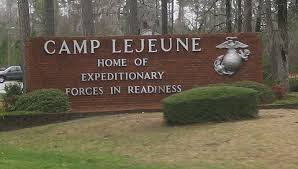
The U.S. Department of Veterans Affairs has sought to make it easier for certain veterans stationed at Camp Lejeune, North Carolina, between August 1, 1953, and December 31, 1987, to obtain disability compensation.

The VA awards disability compensation benefits to servicemen and women with injuries that were incurred or aggravated during active military service. A new rule issued by the VA seek to make it easier for veterans with one of eight specified illnesses who were stationed at Camp Lejeune between the 1950s and 1980s to prove that they are entitled to disability benefits.

The new rule was issued because of contamination in the water supply at Camp Lejeune from the 1950s to 1980s. Marines and their families who were stationed at the base were likely exposed to dangerous chemicals such as trichloroethylene, perchloroethylene, vinyl chloride, and benzene. Under the new rule by the VA that became finalized in March, veterans with one of several diseases can obtain disability compensation if they were stationed at Camp Lejeune while the contamination was present in the water supply. The rules establish several diseases as presumptively service-connected for these veterans.

Before the issuance of these rules, the VA had already awarded disability benefits to at least one veteran after being stationed at Camp Lejeune. In March 2010, the VA had awarded benefits to Paul Buckley, who developed bone marrow cancer after serving at Camp Lejeune.

The VA issued its Camp Lejeune final rule on January 13, 2017, with an effective date of March 14, 2017. Veterans must have served at least 30 days on the base during the eligibility period, and have developed one of eight diseases, to fall within the rule’s eligibility criteria. The diseases covered by the rule are kidney cancer, liver cancer, non-Hodgkin’s lymphoma, adult leukemia, multiple myeloma, Parkinson’s disease, aplastic anemia and other myelodysplastic syndromes, and bladder cancer.

The issuance of the rules follows action by Congress. In 2012, Congress passed the Camp Lejeune Act, which permits veterans who served at Camp Lejeune and sustained one of fifteen illnesses to obtain health care at a VA facility. Some criticized the proposed VA rule on the grounds that it covers fewer diseases than does the Camp Lejeune Act.  The VA in response said there is insufficient evidence that certain diseases covered by the Camp Lejeune Act would have arisen as a result of exposure at Camp Lejeune.

Organizations have continued to investigate and study the exposure at Camp Lejeune. On May 11, 2017, the Centers for Disease Control indicated it would conduct a cancer incidence study at Camp Lejeune. The study would include 463,922 cohort members and seek to determine if there is an association within this cohort between exposure at Camp Lejeune and specific cancers.

MEBs? PEBs? NDR? Knowing outcomes should inform your decisions

By Spring 2017 M-VETS Student-Advisor Rebecca Eubank

When a servicemember is injured on active duty or diagnosed with a condition that leaves him unable to perform his assigned duties, his case is referred to the Integrated Disability Evaluation System (IDES). While this process can be long and at times confusing, knowing the possible outcomes at each step of the process should inform the servicemember’s decisions. [1].

First things first, is the condition duty related?

When a condition is identified that inhibits a servicemember’s ability to perform his duties, one of the first questions that must be addressed is whether the injury or medical condition was sustained in the line of duty. Typically, conditions diagnosed while the servicemember is on active duty are considered duty related. [6]

When is a condition not incurred in the line of duty?

The easiest answer is that any medical conditions that were identified at the time the servicemember enlisted will not be considered in the line of duty. Also, if a condition was incurred during an unexcused absence or even if the condition was due to misconduct or negligence, then the condition may not be found to be in the line of duty. In some cases, a line of duty investigation may be established to make this determination. [5]

What if a condition that predates military service gets worse while on active duty?

In these cases, the condition was identified before the servicemember enlisted, but it was determined that the condition would not inhibit his ability to perform his duties. However, if active military service permanently aggravated this condition to the point that the servicemember is no longer fit for duty, the condition may be considered in the line of duty. This is not the same as the natural progression of the illness. [5]

What happens after a condition is diagnosed?

When a servicemember has suffered an injury while on active duty or otherwise diagnosed with a serious medical condition, the servicemember’s case will be referred to a Medical Evaluation Board (MEB). Generally, there will be two physicians on the Board. A third physician is required in cases where the servicemember has a mental health condition. The MEB assesses whether the injuries significantly interfere with the servicemember’s ability to perform the physical duties required of all servicemembers.  The MEB’s goal is to determine if the servicemember’s conditions are medically acceptable for continued service. Each branch of the military maintains its own standards of medical acceptability. While documentation of the servicemember’s treatment is supplied by the medical team treating, the servicemember may submit a personal statement about his condition and how it affects his performance. [2]

Outcomes:

The MEB will either determine that the servicemember’s condition is medically acceptable, and the servicemember will be returned to active duty, or determine the condition is medically unacceptable and the case will be referred to a Physical Evaluation Board (PEB).

If the MEB determines a condition/s is medically unacceptable, and the condition is not in the line of duty, then the case may be referred to a Non-Duty Related Physical Evaluation Board.

What is a Non-Duty Related Physical Evaluation Board?

A non-duty related Physical Evaluation Board (NDR-PEB) may be established where a MEB determines that a servicemember has a condition, not in the line of duty, that inhibits the service member’s ability to perform his duties. The only determination that a NDR-PEB makes is a final determination of whether a non-duty related condition is unfitting for continued military service. Unlike its counterpart for duty related conditions, the NDR-PEB does not assign a rating for disability compensation. [7]

Outcomes: The only determination that the NDR-PEB may make is whether the servicemember’s condition renders him unfit for service. The servicemember has several choices at this stage. Regardless of his choice, it is beneficial to seek guidance from the Office of Soldier’s Counsel or another source. The servicemembers options are:

(Option 1) Agree with the PEB’s decision and waive a formal hearing. If the servicemember agrees at this stage, it will be very difficult to argue at a later date that the condition found to be unfitting is actually service connected and that the servicemember should be compensated accordingly.

(Option 2) Disagree with the PEB’s decision but waive a formal hearing. In this case, the servicemember may submit a written appeal.

(Option 3) Disagree with the PEB’s decision and demand a formal hearing with or without a personal appearance. If the servicemember requests a formal PEB, he should consider obtaining legal counsel either from an on base Legal Services officer or from an outside source. The purpose of a formal hearing is to provide the servicemember and his counsel with an opportunity to present new evidence, either medical or non-medical, that was not previously available. The formal hearing also provides the servicemember an opportunity to address the Board directly and make a case for a different disposition of his case.

What is a duty related Physical Evaluation Board?

A duty related Physical Evaluation Board (PEB), simply referred to as a PEB, makes a final determination as to whether a servicemember is fit for duty. The MEB’s findings will be forwarded to the PEB who will issue informal findings. Like the MEB, an informal PEB is made up of several doctors. [2].

Outcomes: The PEB may make one of several decisions:

  1. Find that the servicemember is fit for duty and return him to duty.
  2. The PEB will assign ratings that the Department of Veterans Affairs has provided concerning the unfitting condition/s. If the unfitting condition/s are above 30%, the Servicemember will either be placed on the Temporarily Disabled Retired List (TDRL) if the unfitting condition/s are not stable or the Permanently Disabled Retirement List (PDRL) if the unfitting condition/s are considered permanent and stable. The PDRL will result in a medical retirement from the military with disability retirement pay. If placed on the TDRL, the condition/s will be monitored for up to 5 years to evaluate whether the servicemember is fit for service.
  3. If the unfitting condition/s are rated by the VA at below 30%, the servicemember will be separated from with severance pay. Further, if the condition/s was found not to have been incurred in the line of duty, the Board may recommend separation without any compensation. [3].

Appealing the PEB decision.

After the informal PEB makes a decision, the next steps are in the servicemember’s hands. Regardless of the PEB’s decision, the servicemember has several ways he may respond. It is important to fully understand the consequences of each of these responses.

The servicemember’s options are:

(Option 1) Agree with the informal PEB finding. This means that the servicemember fully agrees with the Boards determination of his fitness and with all unfit ratings. If the servicemember agrees at this stage it will be difficult later to make an argument that the servicemember wants a different outcome.  Except in extenuating circumstances, review Boards have declined to alter the disposition of a PEB’s decision when the servicemember agreed with the outcome.

(Option 2) Disagree and request a formal PEB with or without a hearing. If the servicemember requests a formal PEB, he should consider obtaining legal counsel either from an on base Legal Services officer or from an outside source. The purpose of a formal hearing is to provide the servicemember and his counsel with an opportunity to present new evidence, either medical or non-medical, that was not previously available. The formal hearing also provides the servicemember an opportunity to address the Board directly and make a case for a different disposition of his case.

(Option 3) If medically separated or retired after a formal PEB, the servicemember may appeal further service’s Board for Correction of records. [4].

More information about each of these boards can be found here:

Army: Army Board for Correction of Military Records (ABCMR): https://arba.army.pentagon.mil.

Navy and Marine Corps: Board for the Correction of Naval Records (BCNR): https://www.donhq.navy.mil/bcnr/bcnr.htm

Air Force: Air Force Board for Correction of Military Records (AFBCMR): https://www.afpc.af.mil/afveteraninformation/airforceboardforcorrectionofmilitaryrecords

Sources:

[1] The Integrated Disability Evaluation System, Military Disability Made Easy, https://www.militarydisabilitymadeeasy.com/integrateddisabilityevaluationsystem.html

[2] The Military Medical Evaluation Process, Military One Source, https://www.militaryonesource.mil/health-and-wellness/wounded-warrior?content_id=282472

[3] Wounded, Ill and Injured Compensation and Benefits Handbook, Defense Department, https://warriorcare.dodlive.mil/files/2011/11/Compensation-and-Benefits-Handbook-May-2014.pdf

[4] SECNAV INSTRUCTION 1850.4E, https://www.secnav.navy.mil/mra/CORB/Documents/SECNAV%20INST%201850_4e.pdf

[5] Army Regulation 600-8-4 (Line of Duty Policy, Procedures, and Investigations)

[6] Military Medical Policies, Military Law Task Force, https://nlgmltf.org/military-law-library/publications/military-medical-policies/

[7] Army Regulation 635-40, Physical evaluation for Retention, Retirement, or Separation.

[See generally] Physical Disability Evaluation System PDES Q and A, https://www.hrc.army.mil/TAGD/Army%20Physical%20Disability%20Evaluation%20System%20PDES.

[See generally] Navigating the Disability Evaluation System, https://www.realwarriors.net/active/disability/disability.php#_end3


National Defense Authorization Act for Fiscal Year 2017: An Overview of Provisions That Matter for Military Service Members and Veterans

Written By Spring 2017 M-VETS Student-Advisor Anne Kidd.

On December 23, 2016, President Obama signed into law the National Defense Authorization Act (NDAA) for Fiscal Year (FY) 2017 (“FY17 NDAA”). The NDAA is an annual occurrence and is one-half of the federal budgetary process for the Department of Defense.

Background. At the most fundamental level, executive agencies in the federal government require two laws to operate: (1) an authorization law, which delineates what the government is allowed to do and may also recommend funding required to do those things, and (2) an appropriations law, which permits the release of funding to agencies to actually go and do those things.  If one fiscal year ends without these laws in place, Congress may pass a Continuing Resolution (CR), which allows the government to continue doing what it has been doing at the same level of funding.  As we saw in 1995, 1996, and again in 2013, without an appropriations law or a CR in place, the federal government shuts down.

Why should you care?  “Defense-related” programs authorized by the NDAA include personnel programs that directly impact pay and benefits, including allowances, bonuses, insurance, and healthcare, for all active duty military service members and military retirees.

What do you need to know?  The following is just a sampling of the provisions in the FY17 NDAA:

Military Pay. For those of you who are still in active duty service, the FY17 NDAA authorized an across-the-board pay raise of 2.1% for service members, effective January 1, 2017. However, you should note that the rate for Basic Allowance for Housing (BAH) is funded and regulated separately, so you should check the BAH for your Military Housing Area to see if any changes were enacted for 2017 that will otherwise impact your overall pay.  You can do this at: https://www.defensetravel.dod.mil/site/bahCalc.cfm.

Also: The NDAA directs the DOD to move to a single pay system no later than January 1, 2018, which represents an attempt to treat BAH as compensation rather than an allowance.

TRICARE Reform. The FY17 NDAA permits DOD to establish TRICARE Select, which will be a self-managed, preferred-provider network to allow freedom of choice for eligible beneficiaries. Additionally, fees will increase for TRICARE Prime retirees and family members through increased annual enrollment fees and additional cost sharing fees (e.g., copays).

Healthcare Reform. The FY17 NDAA provides for expansion in access to urgent care in military and private facilities.  Also, the FY17 NDAA requires Military Treatment Facilities to increase primary care services through expanded hours of operation.

Family Leave. Primary caregivers in the military services will be permitted to take 12 weeks of leave following the birth of a child, including up to six weeks of medical convalescent leave and secondary caregivers in the military services may take up to 21 days of leave.  Additionally, the FY17 NDAA permits primary caregivers in the military to take six weeks of leave following adoption of a child and secondary caregivers will be able to take up to 21 days of leave.

UCMJ Reform. The FY17 NDAA authorizes an overhaul of the UCMJ, including significant procedural reforms at all levels of the litigation process from pretrial through appellate hearings, expansion and/or introduction of defined offenses, and revisions to punitive measures.  The goal of procedural changes is to improve transparency in the system.

Recruiting and Retention Incentives. The FY17 NDAA includes new or revised recruiting and retention incentives for certain critical positions in the military.

Civilian Pay. President Obama extended the 2.1% pay raise for military service members discussed above to all civilian employees in the federal government (not only those in the DOD).  Additionally, the Office of Personnel Management adjusted the Cost of Living Adjustment (COLA) for various localities in 2017.  General Schedule (GS) pay tables can be accessed at: https://www.opm.gov/policy-data-oversight/pay-leave/salaries-wages/2017/general-schedule/. Note that these pay tables reflect adjusted COLA, but do not reflect the 2.1% pay raise.

Administrative Leave Restrictions. The FY17 NDAA restricts the amount of time all civilian personnel (not only those in the DOD) may be placed on paid administrative leave.

Sources:

Staff Sgt. Jannelle McRae, Fiscal Year 2017 National Defense Authorization Act Impacts on Airmen (Dec. 28, 2016), available at https://www.militaryspot.com/news/fiscal-year-2017-national-defense-authorization-act-impact-airmen.

Statement by the President on Signing the National Defense Authorization Act for Fiscal Year 2017 (Dec. 25, 2016), available at https://www.whitehouse.gov/the-press-office/2016/12/23/statement-president-signing-national-defense-authorization-act-fiscal (noting the President’s concern with revisions to the Administrative Leave Act).

Letter from the President, Alternative Plan for Locality Pay (Dec. 8, 2016), available at https://www.whitehouse.gov/the-press-office/2016/12/08/letter-president-alternative-plan-locality-pay.

Leo Shane III, Obama signs defense bill that authorizes pay raise, more troops, MilitaryTimes (Dec. 23, 2016), available at https://www.militarytimes.com/articles/ndaa-17-obama-signs.

Committee on Armed Services, NDAA, H.R., https://armedservices.house.gov/hearings-and-legislation/ndaa-national-defense-authorization-act

Conference Report to Accompany S. 2943, National Defense Authorization Act for Fiscal Year 2017, H.R. Rep. 114-840 (Nov. 30, 2016), https://www.gpo.gov/fdsys/pkg/CRPT-114hrpt840/pdf/CRPT-114hrpt840.pdf.

Previous News

M-VETS Recognized by Stetson Veterans Advocacy Clinic
cropped-Mason-M-VETS-Logo.png
The Antonin Scalia Law School Mason Veterans and Servicemembers Legal Clinic (“M-VETS”) was recognized in an article published by WUSF for their legal work for the military and veteran community.  The Stetson Veterans Advocacy Clinic Director, Professor Stacey-Rae Simcox, recognized the valuable legal assistance provided by M-VETS to active-duty personnel and veterans in a statement discussing the current formation of the National Law School Veterans Clinic Consortium which is aimed at bringing together law schools with veterans legal clinics to form a more cohesive and influential voice involving veterans legal issues.

M-VETS Director, Timothy M. MacArthur, discussed M-VETS participation in the Consortium.  “We are a member of the National Law School Veterans Clinic Consortium and the formation of the Consortium is a giant step in the right direction in assisting veterans with navigating the often difficult Veterans Affairs disability and compensation process, as well as, providing easier access to additional legal services.”  MacArthur said.  “The wait times for initial disability ratings and appeals are long and we have found through our work with veterans that there is a growing sense of frustration within this community towards the organization whose sole mission is to care for those who have served our country in the Military Forces.  I believe the Consortium will be able to advocate for better policies within the VA, connect veterans with the legal services they require, and inspire the creation of veterans legal clinics among the law schools which do not currently have them as part of their operations.”

The mission of M-VETS is to provide free representation to active-duty members of the armed forces, veterans, and their families while offering law students the opportunity to receive supervised, practical legal experience by advocating for those who serve or have served in our United States armed forces.  M-VETS will continue to conduct outreach and provide information regarding the Scalia Law School to active-duty members of the armed forces, their families, and veterans while coordinating with the Consortium to ensure that no veteran is left behind.  Please keep visiting our webpage to keep updated on future developments.  The WUSF article can be read thru the link provided below.

https://wusfnews.wusf.usf.edu/post/law-schools-students-join-forces-veterans#stream/0

M-VETS Student Advisors Participate in the National Veterans Law Moot Court Competition
fullsizer
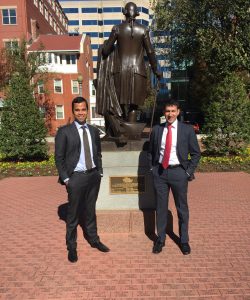
For the first time in program history, two Student Advisors with The Antonin Scalia Law School Mason Veterans and Servicemembers Legal Clinic (“M-VETS”) participated in the 2016 National Veterans Law Moot Court Competition at the George Washington University Law School in Washington, D.C.  Matthew McIntee and Rodger Nayak, third year law students at Scalia Law School and first semester Student Advisors with the M-VETS program, entered the competition in September 2016 and worked for two months to prepare a brief in support of the hypothetical Respondent and prepared to argue both sides of the appeal during oral argument at the competition taking place on November 5-6, 2016.

This year’s case dealt with an appeal before the United States Supreme Court pertaining to the VA’s authority to administer medical marijuana to patients.  Specifically, the teams were asked to analyze whether the U.S. Court of Appeals for Veterans Claims has the authority to review the validity of laws and regulations listing marijuana as a Schedule I drug for purposes of the Controlled Substances Act and whether the VA’s failure to administer medical marijuana constitutes “carelessness, negligence, lack of proper skill, error in judgment, or similar instance of fault” for purposes of 38 U.S.C. § 1151.

This year’s competition was one of the largest in history with 24 teams competing from 17 law schools, including M-VETS’s first ever appearance in the competition.   Despite an outstanding effort by the M-VETS team, Baylor Law School took home top honors in the competition. Regarding the experience, Student Advisor Rodger Nayak stated “in researching our brief and preparing for oral arguments, Matt and I learned the principles, policies, and history of Veterans benefits law. The U.S. has an administrative agency, federal court, and body of case law devoted solely to veterans benefits determinations.  Our greater knowledge of this complex area of law, combined with the feedback that the judges at the competition provided us, has helped me and Matt become better advocates for Veterans seeking benefits from the Department of Veterans Affairs.”  Student Advisor Matt McIntee echoed this statement and provided “the Veteran’s Moot Court Competition at GW Law was a great opportunity to dive headfirst into a unique, but exceptionally important area of the law. It not only afforded students the chance to hone their brief writing and oral argument skills, but it also helped raise awareness about a growing area of the law that needs solid attorneys.”

M-VETS Director, Timothy MacArthur, indicated that both Student Advisors dedicated a significant amount of time and effort to the brief and oral arguments stating “Matt and Rodger did a great job during the entirety of this competition.  This was the first time Scalia Law School participated in this event and we hope to keep sending Student Advisors to this competition in the future.  The oral arguments were a very valuable learning experience as the moot court judges were litigators in the area of Veterans Law.  This type of competition furthers the goals of inspiring public service in this area of law and provides a practical exercise for experience.  Also, M-VETS would like to personally thank Adjunct Professor Brandy Wagstaff who volunteered her time and substantial moot court experience to get Matt and Rodger ready for this competition.”

How – and why – a law school veterans clinic works
cvopd_mwcaajs7a

The Antonin Scalia Law School Mason Veterans and Servicemembers Legal Clinic (“M-VETS”) recently contributed to the ABA Law Student Division Before the Bar blog.  The Before the Bar blog connects students to information on careers and topics within the legal field and spotlights projects that are going on at law schools.  One of these areas, legal services for Veterans, is the special focus for the ABA Pro Bono week taking place from 23-29 OCT 2016.  At the annual ABA meeting in August, ABA President Linda Klein launched a Veterans Legal Services Initiative focused on providing a major effort to mobilize lawyers on behalf of enhanced legal services for the nation’s veterans.

M-VETS Student-Advisors Rebecca Eubank and Michael West answered the call of President Klein through their enrollment in M-VETS and represented Scalia Law School and the M-VETS program by contributing an article to the Before the Bar blog detailing the M-VETS program, their experience as student-advisors in the M-VETS clinic and working directly with Veterans, Servicemembers and their dependents.  Ms. Eubank states “the best part of taking part in a clinic is the practical experience you gain and the opportunity to work directly with Veterans, Servicemembers and their dependents.  A clinic experience reflects life in a real law practice where you may or may not know much about a specific area of law before you’re assigned to a case. In a class, you might sit there for a semester pouring through property law and trying to commit as much of it as you can to memory. After assisting a veteran in one landlord tenant matter, you’ll probably remember the steps required for a landlord to evict a tenant much better when the bar exam rolls around.” Mr. West echoes this statement and adds “M-VETS gives us the opportunity to develop our law practice skills by providing us with a hands-on educational experience and the opportunity to gain real-world legal experience as if we worked in a real law firm.   The director and staff attorney give us leeway in how we want to operate our clinic.  The experience has been great thus far.   The learning curve was steep at first, but once we were over the hump, it has become an extremely satisfying experience.”

The article highlights the fact that M-VETS is dedicated to the mission of providing active-duty members of the armed forces, their families and Veterans with free legal representation in matters of clear injustice or in which they could not retain legal counsel without undue hardship.  As the first Veterans clinical program in the United States, M-VETS has served as the model for Veterans and military clinics in law schools across the country.  Managing Attorney Leigh M. Winstead praised the ABA’s decision to highlight Veterans clinics and other pro bono veterans initiatives in celebration of Pro Bono Week.  “Many of these clinics and initiatives began as a result of student-organized efforts to provide legal assistance to Veterans, Servicemembers and their families in a very nuanced and complex area of law unfamiliar to many practitioners and law students,” Winstead said.  “Their hard work and incredible results should be highlighted and praised.  It is important to spotlight the work being done in these clinics and organizations so we can educate the greater legal community about the continuing need for assistance in this area.”

The “How – and why – a law school veterans clinic works” written by Ms. Eubank and Mr. West can be read at https://abaforlawstudents.com/2016/10/25/how-and-why-a-law-school-veterans-clinic-works/

M-VETS Clinic Now Accepting Student-Advisor Applications for Spring 2017

The Mason Veterans and Servicemembers Legal Clinic (M-VETS) will begin accepting applications for the spring 2017 semester.  Applications will be accepted until 11 November 2016, however, student-advisors will be selected on a rolling basis until enrollment is met which may occur before the 11 November 2016 deadline.  All applicants are encouraged to apply as soon as possible as interviews are scheduled in the order M-VETS receives the application.      

Application and Permission of the Director are required for registration in M-VETS.  To apply, please email an updated resume to [email protected] and submit the Student-Advisor Online Application available at:  https://mvets.law.gmu.edu/students/.  Upon receipt and review, a brief interview will be scheduled with the Director and Managing Attorney.

M-VETS enables students to represent active-duty members of the armed forces, their families and veterans in a wide variety of civil and administrative, litigation and non-litigation matters, including consumer-protection, landlord-tenant, family law, contracts, and military and veterans law and entitlement matters.  Students are supervised by law school instructors or private practitioners with subject matter expertise, attend 2 hours of weekly classroom instruction and status meetings, and conduct an average of 6-10 hours per week (fall & spring) out-of-class casework.  Students registered for the fall or spring session of the clinic will receive three (3) total graded credits for this course, two (2) of which are “in-class” credit and one (1) of which is “out-of-class.”  M-VETS meets from 1600-1750 each Wednesday of the spring semester, student-advisors are required to complete office hours, attend director meetings and continue responsibility for the matters to which they have been assigned until the commencement of the summer 2017 semester. 

Selected student-advisors must be available for a 4 hour “boot-camp” which will take place prior to the first M-VETS class.  Although not required or dispositive, preference may be given to applicants that 1) possess or are able to obtain a Third Year Practice Certificate, and/or 2) those who have taken the course once previously or anticipate taking the course for both spring and summer semesters.  If accepted, students will be enrolled by the Records office in the course.

Please direct questions to the M-VETS Director: Timothy M. MacArthur, [email protected]

M-VETS Expands its Pro Bono Practice Areas to include Expungements

The mission of the Mason Veterans and Servicemembers Legal Clinic (“M-VETS”) is to provide active-duty members of the armed forces, their families and Veterans with free legal representation in matters of clear injustice or in which they could not retain counsel without undue hardship. M-VETS was founded in response to the legal needs of our deployed Servicemembers facing legal issues at home while protecting our country abroad.  In this sense, M-VETS’s services directly impact the readiness, quality of life, and morale of the members of our armed forces and their families.  The clinic later increased its footprint in the military community by expanding its practice area to include military law and VA matters, providing valuable representation to Veterans and their dependents which directly impacts their access to VA benefits and services.

Today, M-VETS represents clients from all five branches of the armed forces and provides the most comprehensive legal representation of any Veterans clinic in the Commonwealth of Virginia with services ranging from applications for discharge upgrades, Boards for Correction of Military Records, representation before Medical and Physical Evaluation Boards, appeals of the denial of VA disability compensation claims, requests for increased ratings decisions, and appeals to the Board of Veterans Appeals and the Court of Appeals for Veterans Claims, to representation in the negotiation and litigation of consumer protection, family law, landlord-tenant, and contract matters in Northern Virginia courts.

M-VETS will now further expand its practice areas to include requests for expungement in Northern Virginia courts.  Please apply for expungement services online at https://mvets.law.gmu.edu/apply/applicant-intake-form-for-civil-matters/

The following links provide initial information regarding expungements in the Northern Virginia courts M-VETS will operate:

https://www.fairfaxcounty.gov/courts/circuit/expungement_info.htm

https://courts.arlingtonva.us/circuit-court/expungements/

https://www.pwcgov.org/government/courts/circuit/pages/expungement.aspx

https://www.loudoun.gov/index.aspx?NID=961

M-VETS Community Outreach at a Celebration for Veterans at VFW Post 3103
pi

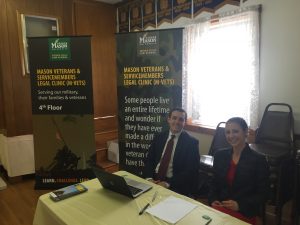
The Antonin Scalia Law School Mason Veterans and Servicemembers Legal Clinic (“M-VETS”) attended an outreach event at a “Celebration for Veterans” at the Veterans of Foreign Wars Post 3103 in Fredericksburg, Virginia, on 15 OCT 16.  Student-Advisors Anne Kidd and C.J. Nee represented Scalia Law School and the M-VETS program by providing information to the Veteran attendees and their family members in an effort to increase awareness of the pro bono legal services M-VETS is able to provide to these Veterans and their family members.   M-VETS Director, Timothy M. MacArthur, believes outreach to organizations like the VFW is “essential in providing visibility concerning our program, services and school to this population.  This type of outreach is also valuable to the M-VETS student-advisors as they are able to gain a greater understanding of Veteran and military culture through first-hand experience.”

The event was a “Celebration for Veterans” and was attended by local businesses and State and Federal organizations.  Local businesses provided access to on-site massage therapists, cosmetic services and a free lunch provided by Olive Garden.  M-VETS was joined by the Department of Veterans Affairs mobile Vet Center which provided health screenings to veterans in attendance and Virginia Department of Veterans Services who provided literature regarding benefits for Veterans and their family members.  M-VETS Managing Attorney, Leigh M. Winstead, was in attendance on Saturday and explains “we are very grateful to the organizers of the event and the Fredericksburg VFW for hosting a great day of appreciation for our Veterans.  It was a great opportunity to not only offer our assistance to local Veterans but simply be able to thank so many Veterans in-person for their service.”

M-VETS will continue to conduct outreach and provide information regarding the Scalia Law School to active-duty members of the armed forces, their families, and veterans.  Please keep visiting our webpage to keep updated on future events.

M-VETS files Amicus Curaie brief to the U.S. Supreme Court on behalf of veterans seeking redress in medical malpractice claims against the Department of Veterans Affairs.

The Antonin Scalia Law School Mason Veterans and Servicemembers Legal Clinic (“M-VETS”) filed an Amicus Curiae brief together with the Baylor Law School Veterans’ Assistance Clinic (“Baylor Clinic”) in an effort to increase available avenues of justice for veterans seeking redress in medical malpractice claims against the Department of Veterans Affairs’ (“VA”).

M-VETS and the Baylor Clinic filed the brief in support of the petitioner in Milbauer v. United States of America, which is on petition for writ of certiorari before the United States Supreme Court.  The case will resolve a split among the United States Circuit Courts as to whether the Veterans’ Judicial Review Act (“VJRA”) bars federal districts courts from hearing VA medical negligence suits arising under the Federal Tort Claims Act (“FTCA”).

The Petitioner, Richard Milbauer, brought suit against the VA after the failure of VA physicians to recommend and perform alternative diagnostic procedures rendered a treatable shoulder injury permanent.   The Eleventh Circuit held that the federal courts lacked jurisdiction over Milbauer’s claim based on a broad reading of the VJRA’s prohibition on judicial review of any VA decision affecting “the provision of benefits” to veterans.

“This issue is extremely important to our military veterans seeking redress in cases of medical negligence against the VA,” Leigh Winstead, M-VETS Managing Attorney said. “The split among the Circuits creates uncertainty for veterans who have been harmed by the decisions of VA medical staff and desire to pursue damages under the FTCA.”  Winstead said.  “It is imperative that the Supreme Court clarify the confines of the VJRA’s jurisdictional bar to ensure that appropriate legal remedies are available to our veterans.”

M-VETS and the Baylor Clinic were represented by the international law firm of Reed Smith LLP in filing the brief. Both clinics provide active-duty members of the armed forces, their families, and veterans with free legal representation in matters of clear injustice or where they cannot retain counsel without undue hardship.  See link below for the U.S. Supreme Court filing.
milbauer-v-united-states-of-america-m-vets
M-VETS Partners with 2-1-1 Virginia to Host a Veterans Information Seminar

M-VETS partners with 2-1-1 Virginia to host a veterans information seminar at the Antonin Scalia Law School.  Topics will consist of the 2-1-1s services to veterans and their families, 2-1-1 database, reports data and statistics, and the collaborative relationship between 2-1-1 Virginia and the Virginia Department of Veterans Services.
Please join 2-1-1 Virginia and M-VETS for an informative seminar on Friday, September 16. Please see details below.

 Veteran’s Information Seminar flyer
Patriot Thursdays with American Legion Post 139
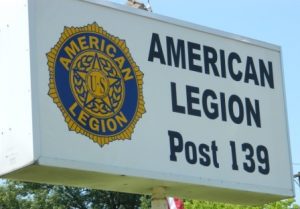
Patriot Thursdays is a partnership between the Mason Veterans and Servicemembers Legal Clinic (M-VETS) and American Legion Post 139 located in Arlington, Virginia. This partnership will be housed at American Legion Post 139’s location at 3445 Washington Blvd, Arlington, Virginia 22201.  M-VETS is able to provide much needed legal services to members of the military, their dependents and veterans.  Due to the proximity of Post 139 to the Antonin Scalia Law School, it was an ideal partnership to form.  Providing direct access to legal resources to the large veteran population in our geographic area is a priority for M-VETS. M-VETS provides legal representation concerning VA Disability/Benefit Appeals, Discharge Review Boards, Boards for Correction of Military Records, Medical/Physical Evaluation Boards, and military legal issues.
A unique service offered by the M-VETS legal clinic is the ability of the clinic to provide representation to clients in Northern Virginia civil courts in certain situations. M-VETS partnership with American Legion Post 139 will provide the opportunity for veterans and Servicemembers to speak one-on-one with attorneys and student advisors in an informal setting regarding a wide variety of civil matters such as landlord/tenant issues, contract disputes, or guidance in the divorce or separation process.  Many times clients simply need legal advice rather than representation and this will create a comfortable, confidential forum for that advice.  An initial consultation with a private attorney could cost as much as $400 for something as simple as advice on your rights as a tenant.

M-VETS will conduct office hours at Post 139 by appointment on Thursdays from 1300 until 1600 in order to provide legal services in a familiar and friendly environment. Post 139 will provide confidential workspace which will allow for veterans to have their legal matters heard by student advisors in the M-VETS program with supervision by an M-VETS attorney.  More information can be obtained and appointments can be made for this program by visiting https://mvets.law.gmu.edu/patriotthursdays/ by email at [email protected] and phone (703) 993-8214.  American Legion Post 139 can be reached at [email protected] or (703) 524-1396.

RECENT PRESS 2014:  
Clinic files Amicus Curaie briefs to the U.S. Supreme Court on behalf of active duty servicemembers, dependent families members and our veterans:
                  U S v June – CLASV Amicus Brief (Final)
                  U S v Wong – CLASV Amicus Brief (Final)
Discharge Upgrades for Less-than-Honorably discharged Vietnam Veterans:
The National Defense Talk Radio:  September 20, 2014

Defense One:  https://www.defenseone.com/management/2014/09/dod-will-reconsider-thousands-vietnam-vets-discharge-statuses/94037/
Government Executive:  https://www.govexec.com/defense/2014/09/new-guidance-aims-help-vietnam-era-vets-who-are-denied-benefits/94001/

The Alice Stewart Show, September 18, 2014
M-VETS & Fairfax Veterans Treatment Docket:
NBC4:  https://www.nbcwashington.com/news/local/262045511.html?sdklas
Fairfax Times:  https://www.fairfaxtimes.com/article/20140530/NEWS/140539816/1117/fairfax-county-to-create-veterans-treatment-court&template=fairfaxTimes
Washington Posthttps://www.washingtonpost.com/local/crime/officials-working-to-create-veterans-docket-in-fairfax/2014/05/23/dc747214-e1f2-11e3-8dcc-d6b7fede081a_story.html
Recent Press/May 2014:
Lars Larson:   https://itunes.apple.com/us/podcast/lars-larson-national-podcast/id783763928?i=309787802&mt=2   5/2/2014, National Broadcast (around 830 pm—in last ½ hour)
Rob Shilling Show:  10709 WINA Charlottesville:  https://wina.com/podcasts/hour-1-bill-frady-jason-haag-laurie-forbes-neff-and-mary-sutton/
Richmond’s Morning News with Rob Barrett:  https://www.1140wrva.com/media/podcast-jimmy-barrett-RMNPodcasts/free-legal-help-for-vets-24733203/
TownHall Q&Ahttps://townhall.com/tipsheet/cortneyobrien/2014/05/26/gmu-military-clinic-representing-our-armed-forces-n1843283
New Release On April 30, 2104
Neff spoke with Jim Bohannon, host of the nationally-syndicated Jim Bohannon Show (10 pm – 1 am weeknights) and nationally-syndicated America in the Morning (5 am – 6 am ET weekday mornings) about GMU’s M-VETS, what it is doing, and it’s involvement in establishing a veterans’ treatment docket in Fairfax County.

New Release dated November 28, 2013

Neff describes to In the Capital’s Higher Ed Reporter, what a gem GMU’s M-VETS is to the student participants and those they assist.

https://inthecapital.streetwise.co/2013/11/28/george-mason-law-school-clinic-offers-pro-bono-services-to-veterans/ 

News Release dated November 11, 2013

-Neff speaks with Andrew Wilcow of the Blaze TV’s “Wilcow!”.

-Neff appears on Fox 5 DC to talk about the great work M-VETS is doing for servicemembers, dependent family members and veterans.

https://www.myfoxdc.com/video?autoStart=true&topVideoCatNo=default&clipId=9514043

Neff speaks to Federal News Radio about M-VETS

-M-VETS and a student advisor featured in The Free Beacon:

https://freebeacon.com/uncategorized/off-the-battlefield-and-into-the-courtroom/

News Release dated September 19, 2013

-Neff Appointed to the Special Committee on Problem-Solving Dockets by Chief Justice Cynthia Kinser, Virginia Supreme Court

Press Release dated July 15, 2011
Neff Assumes Leadership of Clinic for Legal Assistance to Servicemembers and Veterans (pdf)

News Release dated October 10, 2011

M-VETS Founder and Senior Advisor Joseph Zengerle will address the Dougherty-Nelson Air Force Judge Advocate General’s Corps Continuing Education Symposium (Oct. 13-14, 2011) at George Mason University School of Law, Hazel Hall, Room 121. Zengerle will speak on 13 October from 1315-1415 hours.

M-VETS and Mason Law sponsor the Joint Services Appellate Defense Conference, October 27, 2011, from 0800-1300 hours in Hazel Hall, Room 121.

News Release dated August 14, 2012

On July 21, Laurie Forbes Neff presented at the 122nd Virginia Bar Association Summer Conference, speaking by invitation from the Virginia Veterans Task Force on “What You Need to Know When Helping Veterans: SCRA, USERRA, and the Rest of the Alphabet Soup.”