M-VETS Student Advisor Represents U.S. Navy Veteran at Board of Veterans’ Appeals Hearing

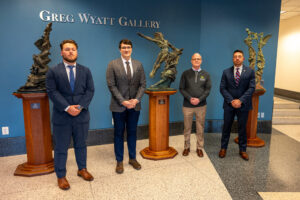
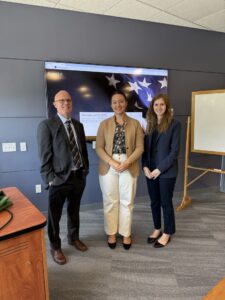
(Pictured from L-R: M-VETS Director Timothy M. MacArthur, Student Advisor Erica Bampton, Student Advisor Megan Nieboer)

A Student Advisor in the Mason Veterans and Servicemembers Legal Clinic (M-VETS) represented a U.S. Navy Veteran at a Department of Veterans Affairs (VA) Board of Veterans’ Appeals (BVA) hearing on July 13, 2026. The veteran served for nearly ten and a half years on active duty in the Navy and developed epilepsy during his time in service, for which the Physical Evaluation Board (PEB) and the VA had granted service connection.

The BVA hearing involved an appeal for an increased rating of epilepsy from the veteran’s entry into the Integrated Disability Evaluation System (IDES) to present. At issue was whether the veteran’s sleeping seizures were considered major seizures under 38 U.S.C. § 4.124(a) (D.C. 8910) and whether their frequency warranted a higher rating with the VA. M-VETS took on the case after the PEB awarded the veteran a 60 percent rating upon retirement from service, while the VA assigned him only a 20 percent rating.

Student Advisor Erica Bampton served as lead counsel for the BVA hearing under the supervision of M-VETS Director Timothy M. MacArthur. Ms. Bampton conducted the pre-hearing preparation, participated in a conference with the BVA judge, delivered the opening statement, conducted the client’s direct examination, responded to questions from the BVA judge during the hearing, and provided the closing argument. “Having worked at a firm specializing in VA appeals, it was both professionally and personally satisfying to work with our client in appealing his increased rating claim at the BVA and conducting the hearing,” Ms. Bampton said. “Working with a veteran so closely on their appeal and seeing the case development from start to finish was an incredible learning experience and, more than that, a meaningful opportunity to see how advocacy can ensure a veteran’s long-term benefits,” Ms. Bampton said.

“Erica did a great job advocating for our client during and in her preparation for the BVA hearing. Erica professionally handled client meetings, researched the applicable substantive law and procedural rules, and wrote persuasively in her statements.” Mr. MacArthur stated. “I want to thank our client for allowing Erica to represent him at the hearing and learn from this extremely valuable experience. Further, I want to also thank our client for allowing the other Student Advisors in M-VETS to observe the BVA hearing, which provided a fantastic learning experience for them as well. Also, thank you to the previous Student Advisors who diligently worked on this matter and provided the foundation for conducting the BVA hearing,” Mr. MacArthur stated.

Regarding the assistance received from M-VETS, the veteran reported he felt “reassured” going into the hearing. The veteran stated, “If I had gone there by myself, I would not have had the confidence to be there. I felt I was in good hands.” M-VETS continues to represent the veteran while awaiting a decision by the BVA Judge on the contested issue.

M-VETS enables Scalia Law students to assist active-duty members of the armed forces, their families, and veterans in a wide variety of administrative, litigation, and non-litigation matters, including appeals of denials of Department of Veterans Affairs disability compensation and educational claims, representation before the Board of Veterans’ Appeals and Court of Appeals for Veterans Claims, applications for discharge upgrades and military records correction before the Boards for Correction of Military Records and Discharge Review Boards.

M-VETS Succeeds and Secures an Honorable Discharge for Army Veteran with the Help of The GMU Center for Community Mental Health

The Mason Veterans and Servicemembers Legal Clinic (M-VETS) successfully argued a matter before the Army Discharge Review Board (ADRB) seeking a fully Honorable conditions discharge for an Army veteran. M-VETS has been working with the veteran since 2019 and recently secured a fully Honorable conditions discharge. The successful application will make the veteran eligible for post-9/11 educational benefits from the Department of Veterans Affairs (DVA).

The veteran served on active duty as an Infantryman (11B) in the Army from 2017 through 2018.  During service, the veteran suffered invisible injuries due to military sexual trauma, which led to self-medication to soothe the symptoms of post-traumatic stress. As a result, the veteran was discharged from the Army under less-than-fully Honorable conditions. This discharge characterization prevented the veteran from accessing DVA educational benefits.

M-VETS student advisors worked with the veteran to collect and analyze military service and DVA treatment records. They teamed up with the George Mason University Center for Community Health (GMU CCMH) to prepare a full-scope psychosocial and emotional evaluation.  M-VETS then used the GMU CCMH report to file an application with the ADRB, along with a supporting brief and exhibits, on behalf of the veteran in 2023.

M-VETS Director Timothy M. MacArthur stated, “I’m glad the veteran reached out to M-VETS, and we were able to assist with this issue. Since 2018, the veteran has not been eligible for DVA educational benefits due to the discharge characterization and has carried the stigma of a discharge with less-than-fully honorable conditions. The stigma has been removed, and the veteran can use those hard-earned educational benefits due to the fully Honorable conditions discharge.”

“Thank you so much for all of your help through this long, difficult process!” said the veteran.

MacArthur continued: “GMU CCMH did a remarkable job assessing the situation and preparing a comprehensive evaluation that assisted our veteran in securing a fully Honorable conditions discharge. The completed report showed that the veteran suffered from invisible wounds due to military sexual trauma, which was directly related to military service. Throughout M-VETS’s representation, several M-VETS student advisors assisted with the client’s matter. They truly believed in this veteran’s cause, and I appreciate the time and effort they put into this case,” MacArthur said. “The student advisors did an incredible job, and their hard work paid off.”

M-VETS enables Scalia Law students to assist active-duty members of the armed forces, their families, and veterans in a wide variety of administrative, litigation, and non-litigation matters, including appeals of denials of Department of Veterans Affairs disability compensation and educational claims, representation before the Board of Veterans’ Appeals and Court of Appeals for Veterans Claims, applications for discharge upgrades and military records correction before the Boards for Correction of Military Records and Discharge Review Boards.

M-VETS Prevails at Board of Veterans’ Appeals Hearing for Retired Virginia Army National Guard Veteran

After nearly eight years of litigation, the Antonin Scalia Law School’s Mason Veterans and Servicemembers Legal Clinic (M-VETS) obtained a favorable decision from the Board of Veterans’ Appeals (BVA) on June 3, 2026, granting a Certificate of Eligibility (COE) for a Department of Veterans Affairs (DVA) home loan guaranty benefits to a retired Virginia Army National Guard (VAANG) veteran who had been wrongly denied that benefit by the DVA.

The veteran enlisted in the VAANG, sustained a right ankle injury during initial training, and was discharged before completing his service commitment. He later applied for a COE for a DVA-backed home loan, a major financial benefit for veterans, but was denied. The DVA denied the COE because the veteran did not meet the six-year service requirement under 38 U.S.C. § 3701 and 3702, as his discharge documents did not indicate that his separation was due to a service-connected injury. Federal law provides an exception for veterans discharged for such disabilities (38 U.S.C. § 3701(b)(5)(A); 38 C.F.R. § 3.315(b)), but this was not reflected in his paperwork despite his injury being service-connected.

M-VETS filed an initial appeal on the veteran’s behalf in 2018. What followed was nearly eight years of evidence collection, brief drafting, client preparation, and persistent advocacy before the DVA and, ultimately, the BVA.  M-VETS Director Timothy M. MacArthur explained the difficulty this created: “The DVA initially denied the COE request because the veteran did not serve for the statutorily required six years in the VAANG; however, there is an exception to this requirement if the veteran had been separated from service for a service-connected disability. While our veteran was service-connected for his injury, the discharge paperwork did not indicate that he was discharged from service for this injury, which created a challenge for our client and the Clinic.”

When the matter was scheduled for a personal appearance before the BVA in August 2024, former Student Advisor (SA) Danny Jenkins presented oral arguments and evidence on behalf of the veteran under the supervision of Director MacArthur. This hearing was the result of collective efforts, with numerous M-VETS SAs gathering evidence, preparing briefs, advising the client, and supporting case strategy over the years.

On June 3, 2026, the BVA granted the veteran’s claim in full. The Board found that the exception to the service duration requirement applied and awarded the COE.  The decision brought to a close a claim that had been pending for nearly eight years.

On the result and effort throughout the years, MacArthur provided, “Danny did a great job arguing the motion and presenting evidence during the hearing. The DVA benefits process is paternalistic, which is invaluable for allowing our students to gain practical experience in a non-adversarial setting while providing valuable pro bono services to our clients.  I want to thank our client for allowing Danny to represent him at the hearing and for the opportunity to learn from this extremely valuable experience. I want to also thank the previous Student Advisors who diligently worked on this matter and provided the foundation for conducting the BVA hearing and this fantastic result.” Regarding the assistance received from M-VETS, the veteran stated, “Thank you so much for the help all this time!”

M-VETS enables Scalia Law students to assist active-duty members of the armed forces, their families, and veterans in a wide variety of administrative, litigation, and non-litigation matters, including appeals of denials of Department of Veterans Affairs disability compensation and educational claims, representation before the Board of Veterans’ Appeals and Court of Appeals for Veterans Claims, applications for discharge upgrades and military records correction before the Boards for Correction of Military Records and Discharge Review Boards.

Serving Without Citizenship: The Legal Crisis Facing Non-Citizen Veterans Under Current Immigration Enforcement

Written by Spring 2026 M-VETS Student Advisor, Yonatan Shoshan.

I. Introduction: A Promise Deferred

The United States has enlisted non-citizens into its armed forces since the Revolutionary War. Today, federal law not only allows lawful permanent residents to join but also provides them with an expedited path to citizenship as a benefit of their service.[1] Congress codified that promise into law, and multiple presidents have invoked it through executive orders. Yet as of 2025, that promise still has a wide enough gap to deport a Purple Heart recipient.

About 115,000 non-citizen veterans currently live in the United States, individuals who served honorably, in some cases in combat, but who never completed the naturalization process.[2] Many did not know they were required to file separate paperwork after serving. Some filed and had applications lost by the very bureaucracy that was supposed to process them. Others were discharged before USCIS could schedule their oath ceremony. The current administration uses that gap in citizenship status as the legal basis for detention and removal. This applies even to veterans with decades of ties to the United States, even to those wounded in combat, and those who lost their naturalization applications through no fault of their own.

This blog post examines the legal framework that governs non-citizen veterans in immigration proceedings, the enforcement shift that has placed them at acute risk, the key cases that illustrate the human and legal stakes, and the legislative response that remains stalled in Congress.

II. The Statutory Framework: A Pathway That Requires Navigation

Congress has long recognized that military service is a compelling basis for naturalization. Section 329 of the Immigration and Nationality Act — codified at 8 U.S.C. § 1440 — allows non-citizens who serve honorably in active-duty status during a designated period of hostilities to apply for naturalization without satisfying the usual requirements as to age, residence, physical presence, and court jurisdiction.[3] Since September 11, 2001, all such services have been covered by executive order.[4]

Importantly, § 1440 waives 8 U.S.C. § 1429, which would otherwise prohibit naturalization while a final order of removal is pending.[5] This means that a non-citizen veteran who has already begun removal proceedings is not automatically foreclosed from naturalizing, but the statutory window is perilously narrow in practice. Naturalization applications require processing time; removal proceedings move on their own clock; and an individual detained by ICE may not have meaningful access to counsel or USCIS.

The critical flaw in the framework is that § 1440 creates an opportunity for naturalization, not an entitlement. The statute does not prevent deportation. Military service is not, by itself, a legal defense to removal under the Immigration and Nationality Act. Unlike a criminal defendant who has served their sentence and is presumptively free, a non-citizen veteran who has served their country remains subject to all grounds of removal available under 8 U.S.C. § 1227.[6] The law provides a path to citizenship; it does not guarantee that the path will be walked in time.

III. The Policy Shift: From Discretion to Enforcement

For years, enforcement discretion operated as a practical safeguard for non-citizen veterans. During the Biden administration, ICE agents were directed to consider military service records before initiating removal proceedings and to exercise caution when the individual was eligible for naturalization, absent “significant aggravating factors.”[7]

The Trump administration rescinded that guidance within days of its inauguration in January 2025. In its place, a DHS enforcement memorandum emphasized that military service does not “automatically exempt aliens from the consequences of violating U.S. immigration laws.”[8] The legal statement is technically accurate. The operational consequence has been severe: non-citizen veterans who had been living in the United States for decades — some under written assurances from DHS that their cases were closed — found themselves detained with little warning and placed in removal proceedings.

This is not a story about criminals. It is a story about bureaucratic failure and the absence of a legal backstop. ICE does not routinely report on the veteran status of individuals it detains or deports, meaning the full scope of the problem remains invisible.[9] Advocacy organizations estimate that over 10,000 veterans may have been deported between January and June 2025 alone — a figure cited in a congressional letter to the Secretary of Defense — but confirmed numbers remain elusive simply because the government does not track them.[10]

IV. The Cases: What the Legal Gap Looks Like in Practice

a. José Barco: The Lost Application

José Barco enlisted in the U.S. Army at age seventeen, deployed twice to Iraq, and earned a Purple Heart after an IED explosion left him with third-degree burns and a traumatic brain injury.[11] His commanding officer confirmed in a 2025 court filing that Barco had submitted a citizenship application after his second tour and that USCIS subsequently lost the packet.[12] He was discharged in 2008 without having been naturalized.

After a subsequent criminal conviction, Barco served fifteen years in Colorado state prison. On January 21, 2025, one day after the inauguration, he walked out of prison and was immediately apprehended by ICE agents who had been waiting for him.[13] He spent months in detention, was transferred between at least six facilities, and was eventually deported to Mexico on November 14, 2025, a country he had never visited and to which he had no ties.[14]

Barco’s case presents the starkest version of the legal failure: the government lost his naturalization paperwork, never corrected the error, and then deported him twenty years later for lacking the citizenship he had tried to gain. His attorneys argued that his deportation should be deferred under the Convention Against Torture, given his combat background and the risk of harm in Venezuela or Cuba, but those arguments were ultimately unsuccessful.[15]

b. Marlon Parris: The Rescinded Assurance

Army veteran Marlon Parris served two tours in Iraq. Following his service, DHS sent him a letter explicitly stating that it was not pursuing deportation proceedings against him. Two days after President Trump’s inauguration in January 2025, Parris was surrounded by unmarked vehicles and taken into ICE custody. [16] His family reported that they still had no explanation for why, after years of operating on the assumption that his case was closed, he was swept up in enforcement.[17]

Parris’s case illustrates a distinct legal problem: reliance on an interest created by government assurances. While informal agency guidance is not legally binding in how a formal grant of deferred action might be, there is a serious due process question when individuals change their conduct — as Parris apparently did, making no effort to seek formal legal status because he believed he was protected — in direct reliance on official government representations.

c. Godfrey Wade: The Stale Hearing Notice

Godfrey Wade, a sixty-five-year-old Army veteran, had lived in the United States for fifty-two years and raised six children here.[18] He was detained following a traffic stop that revealed he lacked documentation of his immigration status. He was told his situation was “final” without ever seeing an immigration judge. A hearing notice from 2014 had been sent to the wrong address and returned undelivered, meaning Wade had no opportunity to appear, and the order of removal was entered in absentia.[19]

Wade’s case raises the habeas corpus question most directly. Where an individual has no meaningful access to the judicial process — where a removal order entered in absentia becomes the operative legal instrument — the writ of habeas corpus may be the only available relief. Federal courts have, in at least one case, granted habeas relief to a disabled veteran detained by ICE, finding the detention unlawful while the underlying immigration proceedings continued.[20] The availability and scope of habeas review in this context remain unsettled, but it represents a critical tool for practitioners representing detained veterans.

V. The Legislative Response: Stalled But Important

Senator Tammy Duckworth has repeatedly introduced legislation to address this legal gap. Ahead of Veterans Day 2025, she reintroduced a package of three bills: the Veterans Visa and Protection Act of 2025, the Healthcare Opportunities for Patriots in Exile (HOPE) Act, and the Immigrant Veterans Eligibility Tracking System (I-VETS) Act.[21]

The centerpiece, S. 3144, would prohibit the removal of any non-citizen veteran who has not been convicted of a “crime of violence” as defined in 18 U.S.C. § 16(a).[22] That framing is legally significant: it would supersede § 237 of the INA as applied to veterans with non-violent criminal histories — including veterans like Barco, whose conviction, whatever else might be said about it, did not meet the § 16(a) definition. The bill would also establish a visa program allowing deported veterans to return as lawful permanent residents, restore any military and veteran’s benefits they had before deportation, and create a pathway to naturalization.[23]

The companion HOPE Act would allow non-violent deported veterans to temporarily re-enter the United States to receive VA medical care — addressing the perverse consequence that veterans earn VA benefits through their service but lose access to those benefits the moment they are removed from the country.[24]

The I-VETS Act would require DHS to identify and track non-citizens with military service when they apply for immigration benefits or are placed in immigration enforcement proceedings — closing the data gap that currently allows the government to deport veterans without knowing or recording their status.[25] These bills have not advanced.  Democratic co-sponsors supported them entirely; as of this post, no Republican senators have signed on.[26] The legislation’s prospects in the current Congress are uncertain, making the legal gap it closes even more consequential.

VI. What Practitioners Can Do Now

The absence of statutory protection does not leave practitioners without tools. Several arguments and mechanisms remain available for active removal proceedings involving veterans.

Habeas Corpus is perhaps the most important thing. Where a detained veteran has a colorable claim that their detention is unlawful — for example, because they were entitled to naturalization and the government’s processing failures prevented it, or because a removal order was entered without adequate notice — a petition for a writ of habeas corpus under 28 U.S.C. § 2241 is appropriate. Wade’s legal team pursued this avenue after his deportation, seeking to reopen his underlying criminal cases because he did not understand the immigration consequences of his plea agreement.

Convention Against Torture (CAT) relief may be available where deportation would expose the veteran to a particularized risk of torture — especially for veterans who served in intelligence or combat roles and whose backgrounds may make them targets in the countries to which they are being removed. Barco’s attorneys raised this argument, grounded in his military service and his family’s dissident history in Cuba and Venezuela. While the argument did not ultimately succeed in that case, it is fact-specific and should be evaluated in each case.

The lost-paperwork argument deserves more systematic development. Where a veteran’s naturalization application was filed, acknowledged, and then lost by USCIS — and where the commanding officer can certify that fact — there is an equitable argument that the veteran should not be removable on the basis of a citizenship status that the government failed to process. This is not currently a recognized doctrine, but it presents a compelling case for mandamus relief directing USCIS to adjudicate the lost application, or for relief before the immigration court as a matter of discretionary relief under 8 U.S.C. § 1229b (cancellation of removal), for which military service is a relevant equitable consideration.

Congressional notification and advocacy can also matter. Several veterans’ cases have been stayed or reviewed following a congressional inquiry. Practitioners should consider whether to request intervention by the relevant U.S. Senator or Representative, particularly in cases involving combat-wounded veterans or veterans with documented PTSD.

VII. Conclusion

The legal framework governing non-citizen veterans in immigration proceedings contains a gap that the current enforcement environment has transformed into a crisis. Congress created an expedited path to citizenship for those willing to serve in uniform during wartime. It did not create protection against deportation for those who served but did not complete the naturalization process. That distinction — legally sound in the abstract — produces outcomes that are difficult to reconcile with any coherent account of what the nation owes those who bled for it.

The cases of Barco, Parris, and Wade are not edge cases. They are illustrative of a systemic pattern: non-citizens who enlisted under the reasonable belief that service would lead to citizenship, who encountered bureaucratic obstacles they had no power to overcome, and who are now subject to removal from the only country they have known as adults. For practitioners, the challenge is twofold: litigating individual cases with the tools currently available and supporting the legislative reform that alone can close the underlying gap.

[1] 8 U.S.C. § 1440 (2018); see also Exec. Order No. 13,269, 67 Fed. Reg. 45,287 (Jul. 3, 2002) (designating the period beginning September 11, 2001, as a period of hostilities triggering expedited naturalization eligibility) [https://perma.cc/V9P8-LXHP].

[2] Cong. Research Serv., Naturalization Through Military Service: Who Is Eligible? (2024) [https://perma.cc/X6PM-QCSQ].

[3] See 8 U.S.C. § 1440(a); supra note 1.

[4] See Exec. Order No. 13,269; supra note 1.

[5] See 8 U.S.C. § 1440(a) (2018); supra note 1; cf. 8 U.S.C. § 1429 (2018).

[6] See 8 U.S.C. § 1227 (2018).

[7] See DHS, Guidelines for Enforcement Actions in or Near Protected Areas (Oct. 12, 2021); see also DHS, Interim Guidance: Civil Immigration Enforcement and Removal Priorities (Jan. 20, 2021), as described in Gloria Rebecca Gomez, Purple Heart Iraq Veteran Deported to Unknown Location, Ariz. Mirror (Nov. 15, 2025), [https://azmirror.com/briefs/purple-heart-iraq-veteran-deported-to-unknown-location/].

[8] See DHS, Enforcement and Removal Operations: Civil Immigration Enforcement Actions (Jan. 20, 2025); as described in Gomez, supra note 7.

[9] See U.S. Gov’t Accountability Office, GAO-19-416, Noncitizen Servicemembers: Additional Actions Needed to Reduce Barriers and Ensure Equal Treatment 36–38 (2019) [https://perma.cc/EP2L-2D5G].

[10] See Letter from Rep. Yassamin Ansari et al. to Sec’y Pete Hegseth, Sec’y Doug Collins & Sec’y Kristi Noem (Jun. 24, 2025), [https://ansari.house.gov/imo/media/doc/veteran_deportations_letter.pdf] (“Some estimates state that the number of deported veterans is over 10,000 individuals or even higher.”); see also News21, Mass Deportations Ensnare Immigrant Service Members, Veterans, Military Times (Sept. 18, 2025), [https://perma.cc/E8H6-WGA5] (noting that there is no publicly available data on how many veterans are being affected, and that ICE does not routinely track or report the veteran status of deported individuals).

[11] See Rae Ellen Bichell, He’s a Decorated War Vet But a Convicted Criminal. ICE Wants to Deport Him, NPR (Apr. 4, 2025), [https://perma.cc/JFN5-LCF9].

[12] See Anna Mulrine Grobe & Whitney Eulich, Should a War Hero Be Deported? The Complex Dilemma Around One Convicted Vet, Christian Sci. Monitor (Nov. 9, 2025), [https://perma.cc/P9EA-Q4N8] (describing retired Lt. Col. Michael Hutchinson’s account of Barco’s citizenship application and the lost paperwork); see also Bichell, supra note 11 (quoting Hutchinson’s February 2025 memo for immigration officials stating that Barco’s naturalization packet “was lost”).

[13] See Kyle Cooke, José Barco, An Army Veteran Detained by ICE, Deported to Mexico, Rocky Mountain PBS, Nov. 19, 2025 [https://perma.cc/QNA9-U99T].

[14] Id.

[15] See Gomez, supra note 7; see also Convention Against Torture and Other Cruel, Inhuman or Degrading Treatment or Punishment, art. 3, Dec. 10, 1984, 1465 U.N.T.S. 85; 8 C.F.R. § 1208.16(c).

[16] See Gloria Rebecca Gomez, Veterans Condemn Deportations of Immigrant Service Members Under Trump, Ariz. Mirror (Nov. 20, 2025), https://azmirror.com/2025/11/20/veterans-condemn-deportations-of-immigrant-service-members-under-trump/.

[17] Id.

[18] See Levins et al., supra note 10; see also Lauren Lantry, Georgia Army Veteran Stuck in ICE Detention Center, Military.com (Dec. 19, 2025) [https://perma.cc/N8VJ-6JF5].

[19] See Patricia Murphy et al., Georgia Army Veteran Deported While Appeal Pending, 11Alive News (Feb. 6, 2026) [https://perma.cc/4NB7-UHK2].

[20] See GAO-19-416, supra note 9; see also 28 U.S.C. § 2241.

[21] See Press Release, Sen. Tammy Duckworth, Duckworth Renews Push to Help Protect Servicemembers and Veterans from Deportation (Nov. 10, 2025) [https://perma.cc/2SXH-PFMU].

[22] See Veterans Visa and Protection Act of 2025, S. 3144, 119th Cong. § 4 (2025); see also 18 U.S.C. § 16(a).

[23] See S. 3144 §§ 3, 5, 6; supra note 22.

[24] See Healthcare Opportunities for Patriots in Exile (HOPE) Act of 2025, S. 3145, 119th Cong. (2025); see also 38 U.S.C. § 1710; see also Press Release, Sen. Duckworth, supra note 21.

[25] See Immigrant Veterans Eligibility Tracking System (I-VETS) Act of 2025, S. 3146, 119th Cong. (2025); see also GAO-19-416, supra note 9, at 36–38; Linda F. Hersey, Democratic Senators Back Bills to Halt Deportations of Immigrant Veterans, Stars & Stripes (Nov. 18, 2025) [https://perma.cc/4UAU-T3CM].

[26] See S. 3144, Co-Sponsors List, Congress.gov (listing only Democratic co-sponsors: Gallego, Blumenthal, Wyden, Rosen, Hirono, Kim) (last visited Apr. 4, 2026).
Not Routine Care, But Not Impossible: Ibogaine and Investigational Access in the VA

Written by Spring 2026 M-VETS Student Advisor Cole Smith

Servicemembers can encounter traumatic events during their service, leading to Post-Traumatic Stress Disorder (PTSD) or Traumatic Brain Injury (TBI).  PTSD and TBI can cause functional impairments and may lead to anxiety or depression.  Many treatment pathways exist to help a veteran cope with these conditions, but none of the current treatment pathways can fully cure PTSD or TBI.  However, some veterans have begun to use a psychedelic drug called ibogaine and have reported significant improvement in their symptoms, with some reporting an almost perfect cure.  Ibogaine, derived from a root found in Africa, has traditional uses in religious and healing ceremonies.[1]  Veterans have described the experience of using ibogaine as entering a dreamlike state that allows them to contemplate and understand events more deeply, and, when it wears off, leaving them with a feeling of fulfillment.[2]  In some circumstances, the veterans may no longer want to use alcohol or other substances.[3]  Although there are promising results for veterans, the federal government classified ibogaine as a Schedule I hallucinogenic substance.[4]  Because of the classification, the Department of Veterans Affairs (VA) cannot offer ibogaine as a treatment option.[5]

States across the country have begun laying the groundwork to support ibogaine’s development as a potential treatment for PTSD, TBI, and related conditions by funding or proposing Food and Drug Administration (FDA) compliant research pathways.  Texas recently authorized a clinical trial of ibogaine to provide veterans with access to the treatment option.  The Texas statute S.B. 2308 creates a state-run clinical trial of ibogaine to accelerate federally recognized clinical development.[6]  The Texas model creates a partnership between academics, drug manufacturers, and hospital administration to provide a research-based approach to approval.[7]  Some other states have begun to propose legislation that replicates Texas’s approach, allowing their own clinical trials of ibogaine as a limited treatment option.[8]

The effectiveness of encouraging the federal government to adopt the treatment plan through state-level legislation is limited.  Sam Adriance explains that state-level legislation can “persuade policy makers at other levels of government” to secure the right to try the medication or treatment, such as ibogaine, for veterans.[9]  Adriance’s article evaluates the general right-to-try principles and their effects on the federal government through state-level legislation, but it is also relevant to the expansion and use of ibogaine for veterans.[10]  The dual system of legislation in the medical world can prevent, or effectively slow access to, treatment.  Although some states, like Texas, created paths for veterans to “bypass” the federal system, the federal system disincentivizes drug corporations from participating in expansive state-level programs because state law may conflict with federal law, and the companies lack federal liability protections.[11]  Additionally, ibogaine is distinguishable from marijuana, which has a large non-medical market for recreational use.  In contrast, ibogaine is not a recreational drug with a large following, which could further slow the use of ibogaine in the veteran population, absent FDA approval.[12]

The VA has a primary mission to provide “complete medical and hospital services” for veterans; however, the VA has a gap in its treatment options for PTSD or TBI, thus providing incomplete medical services for veterans.[13]  The VA can address this gap in treatment through the further evaluation of ibogaine and, eventually, adding it as a treatment option for veterans with PTSD or TBI.  Congress has addressed the perpetual gap in medical treatments that would exist absent the introduction of new treatment plans or options within the VA hospitals.  Congress requires the Secretary of Veterans Affairs to “carry out a program of medical research in connection with the provision of medical care and treatment to veterans.”[14]  The research shall address mental health and rehabilitative treatment options, and it must stress “injuries and illnesses particularly related to service.”[15]  These research requirements perfectly align with the investigation and evaluation of the use of ibogaine for PTSD and TBI for veterans.  The VA has the framework that could allow for a limited treatment plan to help veterans through VA hospitals.

The Right To Try provision under 21 U.S.C. § 360bbb-0a offers a narrower avenue to treatment.  For a veteran to qualify under the statute, they must have a life-threatening disease or condition, have exhausted approved treatment options, and have written informed consent.[16]  PTSD or TBI may not meet the definition of life-threatening in most cases; however, in rare cases that meet the exception, the eligible patient may be able to use the investigational drug, provided the sponsor makes it available.[17]  Essentially, for a veteran to qualify under the Right To Try statute, they must provide informed consent, demonstrate that the PTSD or TBI is life-threatening, and exhaust most, if not all, available treatment options, which could take several years, with the uncertainty of ever being able to try ibogaine as a treatment option.  However, if the VA complies with the Controlled Substances Act research guidelines under the FDA’s regulatory scheme, the VA may provide ibogaine as a treatment option for some veterans.

The Schedule I classification complicates VA’s ability to administer ibogaine.[18]  VA will need to proceed through the Schedule I research pathway to offer ibogaine.[19]  A qualified VA practitioner-researcher would need Schedule I research registration under 21 U.S.C. § 823(g)(2)(A).   The Drug Enforcement Administration (DEA) would process the application and forward it, along with the protocol, to the Secretary of Health and Human Services for review of the applicant’s qualifications and the merits of the protocol.[20]  For a clinical investigation, the VA must submit the required Investigational New Drug (IND) materials to the FDA.[21]  VA may pursue access to ibogaine through a federally supervised research and investigational drug pathway, which would allow access to ibogaine for some veterans.

Once the VA clears the Schedule I barrier, expanded access appears to be a stronger route than the Right To Try because the FDA may authorize access for patients with a serious or immediately life-threatening disease or condition, not just a life-threatening one.[22]  An expanded access IND can go into effect within 30 days of the FDA receiving the application, or earlier if the FDA allows treatment to begin sooner, such as in emergency cases.[23]  The expanded access program through VA could work if the FDA concludes that veterans with PTSD or TBI have a serious or immediately life-threatening condition that has no comparable or satisfactory alternative therapy to treat it; the veterans’ benefits outweigh the potential risks; and providing ibogaine should not interfere with any clinical approvals.[24]  The benefits of ibogaine could be as great as a complete cure or as low as some relief, and they may outweigh the potential cardiac risk of using it, which physicians could minimize through screening or by administering magnesium.[25]  Whether expanded access within the VA interferes with ongoing clinical investigations into ibogaine, it could be limited through proper screening of VA personnel and participants, while also supporting further research into the drug’s efficacy.  The VA will have to follow the safeguards required by the regulation, but because some VA facilities already have hospital-based infrastructure, many of the requirements may already be in place.[26]  The largest gaps in VA’s framework are the investigator and sponsor roles, and they will have to ensure that physicians meet the required qualifications and receive the necessary information.[27]

Ibogaine is a promising treatment option that could help many veterans with PTSD or TBI.  The current VA framework includes a pathway that would allow for a limited treatment plan to help veterans through VA hospitals.  The VA can use the expanded access pathway through clinical investigations conducted under an IND application.[28]  The VA will fulfill its primary mission of providing “complete medical and hospital service for the medical care and treatment of veterans” by adding the new treatment option for PTSD or TBI, which could help many more veterans.[29]  If the VA begins to administer ibogaine, it will reach the veterans who need it and save those who otherwise might not have received the treatment.  While this path may not be the quickest, it promises to make a profound and lasting impact on the veteran community.

[1] See Kirsten N. Cherian et al., Magnesium–Ibogaine Therapy in Veterans with Traumatic Brain Injuries, 30 Nature Med. 373, 374 (2024).

[2] See Cherian et al., supra note 1, at 374; Shawn Ryan Clips, Navy SEAL Shawn Ryan Shares Profound Experience With Ibogaine (Feb. 11, 2023), YouTube,  https://www.youtube.com/watch?v=9-vEIopSPxo.

[3] See Navy SEAL Shawn Ryan Shares Profound Experience With Ibogaine, supra note 2.

[4] See 21 C.F.R. § 1308.11(d)(21).

[5] See 38 C.F.R. § 17.38(c)(3).

[6] See S.B. 2308, 89th Leg., R.S. § 491.051(a) (Tex. 2025).

[7] See S.B. 2308, 89th Leg., R.S. § 491.051(b)(1)–(3) (Tex. 2025).

[8] See, e.g., S.B. 2308, 89th Leg., R.S. §§ 491.051, .053, .056, .057 (Tex. 2025) (enacted) (building a state ibogaine clinical-trial infrastructure tied to Investigational New Drug submission and FDA approval); S.B. 2149, 114th Gen. Assemb. §§ 33-12-104(b), -105(b)(2)–(4), -108, -109, -116 to -118 (Tenn. 2026) (pending) (authorizing state-supported ibogaine drug-development clinical trials, requiring Investigational New Drug submission, and limiting trial sites to research institutions or hospitals); Assemb. B. 9583, 2025–2026 Leg., Reg. Sess. § 3399(1)–(4) (N.Y. 2026) (pending) (proposing a competitive grant program for FDA-compliant clinical trials of ibogaine for veterans with PTSD, limited to entities capable of Phase II or III trials seeking FDA approval); H.B. 1477, 2026 Leg., Reg. Sess., proposed Md. Code Ann., Health-Gen. § 13-5902(b)–(e) (Md. 2026) (pending) (proposing an ibogaine clinical research grant program for FDA-overseen clinical drug-development trials, administered in consultation with Maryland’s Department of Veterans and Military Families).

[9] See Sam Adriance, Fighting for the “Right To Try” Unapproved Drugs: Law as Persuasion, 124 Yale L.J. F. 148, 149 (2014).

[10] See Id.

[11] See Id. at 153.

[12] Id. at 154–55.

[13] See 38 U.S.C. § 7301(b).

[14] See 38 U.S.C. § 7303(a)(1).

[15] See 38 U.S.C. § 7303(a)(2)–(3).

[16] See 21 U.S.C. § 360bbb-0a(a)(1)(A)–(C); 21 C.F.R. § 312.81(a)(1)–(2) (defining life-threatening as “Diseases or conditions where the likelihood of death is high unless the course of the disease is interrupted; and [d]iseases or conditions with potentially fatal outcomes, where the end point of clinical trial analysis is survival”).

[17] See 21 U.S.C. § 360bbb-0a(b).

[18] See 21 C.F.R. § 1308.11(d)(21).

[19] See Advanced Integrative Med. Sci. Inst., PLLC v. U.S. Drug Enf’t Admin., 128 F.4th 1133, 1144–45 (9th Cir. 2025) (explaining that practitioner use of Schedule I substances is limited to bona fide research and the requesting party must show their proposal is consistent with public health and safety).

[20] See 21 U.S.C. § 823(g)(2)(A); 21 C.F.R. § 1301.32(a), (c).

[21] See 21 C.F.R. §§ 312.20(a)–(b), 312.23(a), 312.40.

[22] See 21 C.F.R. § 312.305(a)(1).

[23] See 21 C.F.R. § 312.305(d)(1)–(2).

[24] See 21 C.F.R. § 312.305(a)(1)–(3).

[25] See 21 C.F.R. § 312.305(a)(1)–(3); Cherian et al., supra note 1, at 373.

[26] See 21 C.F.R. § 312.305(c)(1)–(5).

[27] See 21 C.F.R. § 312.305(c)(4)–(5).

[28] See 38 C.F.R. § 17.38(c)(3).

[29] See 38 U.S.C. § 7301(b).

The Mason Veterans and Servicemembers Legal Clinic Featured in Virginia Lawyer’s April 2026 Military and Veterans Law Issue

(Pictured L-R: Yonatan Shoshan, Cole Smith, Timothy MacArthur, Dan Krupa)

Legal clinics play a crucial role in both legal education and community service by bridging the gap between academic instruction and practical legal experience. The Antonin Scalia Law School’s Mason Veterans and Servicemembers Legal Clinic (M-VETS) at George Mason University is proud to announce its feature in the April 2026 issue of Virginia Lawyer. The article, titled “Virginia Veteran Clinics: Educating Law Students with Real Clients Earning Real Results,” highlights the vital work M-VETS does in providing essential legal services to veterans, servicemembers, and their dependents.

M-VETS not only assists veterans, servicemembers, and their dependents in navigating complex legal issues but also serves as a hands-on training ground for Scalia law students. As highlighted in the Virginia Lawyer article, second-semester M-VETS student advisor Dan Krupa represented and advocated for a veteran at a Board of Veterans’ Appeals hearing concerning the appeal of a Department of Veterans Affairs disability benefits denial. Dan stated that “thanks to the students before him and MacArthur’s guidance, he felt fully prepared when he stood in front of the judge.” Krupa continued, “Although I was a student serving as co-counsel, I had a fiduciary duty to represent our client diligently and professionally. Professor MacArthur spent countless hours working closely with me to prepare. Serving as a 2L student advisor in M-VETS has been an incredibly rewarding experience. Unlike hypothetical classroom exercises, this Board of Veterans’ Appeals hearing had a real, tangible impact on a Vietnam-era veteran who honorably served our country and continues to live with the effects of that service.”

Through experiences such as this, student advisors gain invaluable practical skills while making a meaningful impact on the lives of those who have served our country. Reflecting on his first semester in M-VETS, second-year Scalia law student Yonatan Shoshan provided, “M-VETS has been one of the most impactful experiences of my legal education. I’ve gained a better understanding of the VA appeals process and the complexities involved in benefits decisions, while also witnessing firsthand how even minor past issues can lead to long-term consequences for veterans. Through my work on VA disability claims and discharge upgrades, I have built meaningful connections with clients and developed the skills necessary to advocate effectively on their behalf. Working directly with veterans on real cases has been incredibly meaningful and has strengthened my sense of responsibility to handle each case with diligence, professionalism, and a strong commitment to achieving just outcomes.”

“Our commitment to serving veterans, servicemembers, and their dependents is at the core of what we do in M-VETS,” said M-VETS Director Timothy M. MacArthur. “We are honored to be recognized in Virginia Lawyer and to showcase the significant contributions our student advisors make in supporting the military and veteran community in the Commonwealth of Virginia.”

The article can be accessed at https://vsb.org/GP/Site/news/virginia-lawyer-magazine.aspx

For more information about M-VETS and our work, please visit https://mvets.law.gmu.edu/

M-VETS offers Scalia law students practical experience addressing the legal needs of the military and veteran community. Through this clinical program, M-VETS student advisors develop legal research, client advocacy, and case management skills while actively assisting active-duty servicemembers, veterans, and their dependents with administrative, litigation, and non-litigation matters. Their responsibilities include appealing Department of Veterans Affairs disability and educational benefit denials, representing clients before the Board of Veterans’ Appeals and the Court of Appeals for Veterans Claims, and drafting legal briefs in support of applications for military discharge upgrades and corrections to military records. As a result, M-VETS student advisors graduate with direct experience managing real cases and a deeper understanding of servicemember and veteran-related legal issues.

M-VETS Student Advisor Represents Father of Scalia Law Graduate at Board of Veterans’ Appeals Hearing

(Pictured L-R: M-VETS Director Timothy MacArthur, Student Advisor Dan Krupa)

A Student Advisor in the Mason Veterans and Servicemembers Legal Clinic (M-VETS) represented a Vietnam Era Air Force veteran at a Department of Veterans Affairs (VA) Board of Veterans’ Appeals (BVA) hearing on December 15, 2025. The veteran is the father of a Scalia Law graduate and former M-VETS Student Advisor.

The hearing involved an appeal for service-connection of coronary artery disease—a form of ischemic heart disease—presumptively linked to in-service exposure to Agent Orange and other herbicides. While the veteran did not serve in the Republic of Vietnam, the veteran handled a considerable amount of ammunition daily that originated from Vietnam and other Southeast Asian countries, which had presumably been exposed to Agent Orange and other herbicides. M-VETS took on the case after the VA initially denied the veteran’s claim in April 2020 and has advocated on the veteran’s behalf since then.

Student Advisor Daniel Krupa served as co-counsel under the supervision of M-VETS Director Timothy MacArthur. Dan conducted the pre-hearing preparation, participated in a conference with the BVA judge, delivered the opening statement, conducted the client’s direct examination, responded to questions from the BVA judge during the hearing, and provided the closing argument. “As a veteran, it was an honor and privilege to be offered this opportunity by our client, Scalia Law, and Professor MacArthur to represent a Vietnam Era veteran,” Krupa said. “It was a phenomenal learning opportunity, personally fulfilling, and provided me with a greater understanding of the devastating and far-reaching effects of Agent Orange and other herbicides on Vietnam veterans,” Krupa stated.

“Dan did an outstanding job advocating for our client during the hearing, which he handled like a professional. Dan invested a significant amount of time and effort in preparing for the hearing, enabling him to understand the facts of the case and the applicable substantive law and procedural rules. Dan presented a clear, succinct opening statement on the contested issue, conducted an effective direct examination of our client, confidently responded to the Judge’s questions, and delivered a compelling closing argument,” MacArthur stated.  “I want to thank our client for allowing Dan to represent him at the hearing and learn from this extremely valuable experience. I want to also thank the previous Student Advisors who diligently worked on this matter and provided the foundation for conducting the BVA hearing,” MacArthur continued.

Regarding the assistance received from M-VETS, the veteran stated, “Thank you for all your efforts with my case!” M-VETS continues to represent the veteran while awaiting a decision by the BVA Judge on the contested issue.

M-VETS enables students to assist active-duty members of the armed forces, their families, and veterans in a wide variety of administrative, litigation, and non-litigation matters, including appeals of denials of Department of Veterans Affairs disability compensation and educational claims, representation before the Board of Veterans’ Appeals and Court of Appeals for Veterans Claims, applications for discharge upgrades and military records correction before the Boards for Correction of Military Records and Discharge Review Boards.

LABONTE V. UNITED STATES: AUTHORITY, PROCESS, AND THE LIMITS OF DISABILITY RETIREMENT

Written by Fall 2025 M-VETS Student Advisor Jacoby Warner.

I. Introduction: A Cautious Win for Veteran Law

Practitioners representing veterans in disability retirement cases are accustomed to hard limits. Correction boards have often treated disability retirement as unavailable when a client’s separation was the result of misconduct, invoking statutory authority as a threshold bar rather than considering the medical merits. In LaBonte v. United States, the Army Board for Correction of Military Records and the Court of Federal Claims initially concluded that 10 U.S.C. § 1552(f) foreclosed disability retirement relief, believing they were without authority to change the servicemember’s reason for separation because there was a court-martial conviction.[1]

However, the Federal Circuit Court of Appeals in LaBonte v. United States corrected both prior decisions, holding that correction boards are not categorically barred from granting disability retirement merely because a servicemember’s separation involved misconduct or a court-martial.[2] The Court’s rejection of the government’s jurisdictional theory means that, when medical unfitness predates misconduct, the review board need not set aside a court-martial conviction, thereby allowing it to exercise its statutory authority.[3] LaBonte changed the litigation terrain without guaranteeing relief. LaBonte requires correction boards and reviewing courts to review the merits of disability claims that would have previously been dismissed for lack of authority.[4]

Read alongside Doyon v. United States, which emphasizes that statutory “liberal consideration” must be meaningfully applied rather than nominally acknowledged.[5] LaBonte reflects the judiciary’s reluctance to accept categorical reasoning in PTSD based correction cases, even as courts remain unwilling to substitute their judgment for that of military boards. This blog post examines LaBonte’s effect on a practitioner’s perspective, focusing on how the decision should be used to frame claims and preserve error reasoning without exceeding its reach or substance.

II. What Does Labonte Actually Mean for Veterans and What It Doesn’t

The most important contribution of LaBonte is not that it expanded entitlement to disability retirement, but that it corrected a misapprehension about correction board authority.[6] Before LaBonte, review boards frequently treated disability retirement as legally unavailable once a servicemember’s separation followed a court-martial, reasoning that granting such relief would necessarily require setting aside the conviction itself. [7] The Federal Circuit rejected that premise.[8]a.

a. What LaBonte Changed

LaBonte clarified that military correction boards are not categorically barred from granting disability retirement merely because a servicemember’s separation involved misconduct or a court-martial.[9] The court explained that recognizing a servicemember’s medical unfitness predating misconduct does not require vacating or disturbing a court-martial conviction and therefore does not exceed the board’s statutory authority under 10 U.S.C. § 1552.[10]

In practice, LaBonte forecloses a threshold defense that would end cases before they began. The assertion that the board simply lacks the power to consider disability retirement whenever a punitive discharge is involved.[11] LaBonte shifts judicial review away from jurisdictional dismissal and toward an analysis of a review board’s analysis.[12] Where boards once relied on categorical interpretations of statutory limits, courts must now assess whether the board reasonably exercised its authority.[13]

b. What LaBonte Did Not Change

At the same time, LaBonte is careful not to overstep.[14] The decision is careful not to overstep and does not hold that misconduct is excused by PTSD or TBI. Additionally, it does not presume medical unfitness simply because a veteran later received a VA disability rating.[15] The Federal Circuit did not order disability retirement, reweigh medical evidence, or diminish the deference owed to military boards in assessing fitness and entitlement to benefits.[16]

Further, LaBonte does not force review boards to disregard the procedural posture of a servicemember’s separation.[17] Review boards are free to determine a veteran’s fitness at the relevant time.[18] LaBonte does not require a particular outcome; instead, it turns the analysis to merit rather than authority.[19]

c. The Practical Boundary LaBonte Draws

Properly understood, LaBonte draws a clear boundary. It removes a jurisdictional shortcut, but it does not relax the substantive standards governing disability retirement.[20] For practitioners, the case opens the door to merits review; it does not guarantee what happens once inside.[21] Claims that rely on LaBonte without developing a persuasive medical and factual record are unlikely to succeed. Claims that use LaBonte to force boards to confront that record, however, now stand on firmer legal ground.[22]

III. The Value of Labonte: Reframing the Legal Question

For practitioners, the practical impact of LaBonte is not that it lowers the substantive bar for disability retirement, but that it changes how claims must be framed—and how errors must be preserved. [23] After LaBonte, the central task is no longer convincing a correction board to consider disability retirement in the face of misconduct.[24] The task now is forcing the board to explain, on the merits, why it declines to grant relief in a particular case.[25]

a. Shifting the Focus from Authority to Timing

Effective use of LaBonte requires careful attention to timing. The Federal Circuit’s reasoning rests on the distinction between misconduct as a basis for separation and medical unfitness that may have existed before that misconduct occurred.[26] Practitioners should therefore frame claims around whether the servicemember met medical retention standards at the relevant time—not around whether the misconduct was understandable, mitigated, or excusable.[27]

Arguments seeking to challenge a court-martial, minimize culpability, or reframe the misconduct as justified risk muddying the legal question LaBonte addresses.[28] A better approach is to focus on developing the medical and factual record to demonstrate that the disability existed and rendered the servicemember unfit before the events that ultimately triggered separation.[29]

b. Forcing Merits Engagement—and Preserving Error

LaBonte is a valuable tool for a compelling merits review. When the board has authority to refer a case to the Disability Evaluation System, it must provide an explanation for denying referral.[30] References to misconduct, conclusory medical summaries, or unexplained rejection of favorable evidence are no longer insulated by claims of statutory incapacity.[31] From a litigation perspective, this creates opportunities to preserve error by:

  1. Identifying the precise date on which the servicemember allegedly remained fit for duty.
  2. Explaining how conflicting medical evidence was weighed.
  3. Addressing whether referral to a disability evaluation system should have occurred earlier.

When military personnel fail in any of these areas, there may be a valid claim for arbitrary and capricious review.[32]c.

c. Using LaBonte Without Overreaching

LaBonte should be deployed with restraint. Courts remain wary of arguments that appear to transform correction-board review into de novo adjudication.[33] Overreliance on LaBonte as a merits mandate risks undermining credibility and inviting deferential affirmance.[34] The most effective use of LaBonte is to eliminate denials of lack of authority, allowing advocates to focus on carefully developing the record, regulatory standards, and medical evidence to challenge the board’s reasoning.[35] In this sense, LaBonte rewards disciplined lawyering rather than aggressive rhetoric.

d. The Reinforcing Role of Doyon

Doyon v. United States reinforces this approach by emphasizing that statutory requirements—such as “liberal consideration” for PTSD- and TBI-related claims—must be applied in substance, not merely recited.[36] Together, LaBonte and Doyon signal that while courts will not substitute their judgment for that of military boards, they will insist that boards follow the law they are given and explain their decisions.[37]

IV. Doyon as a Companion Case: Process Matters as Much as Power

If LaBonte clarifies what correction boards may do, Doyon v. United States clarifies how they must do it. The Federal Circuit’s decision in Doyon reinforces that statutory protections for veterans—particularly the requirement of “liberal consideration” under 10 U.S.C. § 1552(h)—are not satisfied by rote acknowledgment or conclusory reasoning.[38]

In Doyon, the court rejected the government’s attempt to narrow liberal consideration to discharge characterization alone, holding instead that the statute and implementing guidance apply to requests to change narrative reasons for separation and related record corrections.[39] More importantly, the court made clear that liberal consideration is a substantive obligation.[40] Boards must engage with the evidence presented, including lay testimony and post-service medical diagnoses, and must explain how that evidence was weighed.[41]

Read together, LaBonte and Doyon reflect a consistent judicial message. Correction boards cannot avoid difficult questions by asserting lack of authority—LaBonte—nor can they discharge statutory duties through formalistic recitation—Doyon.[42] Authority and process are intertwined: boards must decide cases within their authority and do so using the standards Congress and the Department of Defense have prescribed.[43]

For practitioners, Doyon supplies the procedural backbone that gives LaBonte practical force.[44] A board that acknowledges authority but fails to apply liberal consideration meaningfully has not complied with the law, and that failure is subject to judicial review.[45]

V. How Practitioners Should Use Labonte: Optimistically but Carefully

Used correctly, LaBonte is a powerful advocacy tool. Used indiscriminately, it risks becoming background noise. The difference lies in how practitioners deploy it.

First, LaBonte should be used to defeat threshold objections—not to argue entitlement.[46] Its primary function is to prevent correction boards from refusing to engage disability retirement claims based on categorical assumptions about misconduct or court-martial history.[47] Once that barrier is removed, the work of persuasion begins.

Second, practitioners should resist framing claims solely in moral or equitable terms.[48] While equities may matter, LaBonte turns on statutory authority and timing, not sympathy.[49] Claims should be anchored in medical retention standards, contemporaneous evidence of unfitness, and regulatory obligations to refer servicemembers for disability evaluation when warranted.[50]

Third, LaBonte should be used to shape the administrative record with judicial review in mind.[51] Practitioners should press boards to make explicit findings, identify critical dates, and explain why favorable evidence was accepted or rejected.[52] A well-developed record not only improves the chances of success before the board but also preserves meaningful issues for review if relief is denied.[53]

Finally, restraint matters. Courts remain deferential to military decision-making, and arguments that treat LaBonte as outcome-determinative risk alienate the very audience practitioners must persuade.[54] The most effective advocacy treats LaBonte as an opening, not a shortcut.

VI. Conclusion

LaBonte v. United States does not guarantee disability retirement, excuse misconduct, or diminish the deference of military correction boards.[55] Instead, it removes a categorical barrier that has prevented claims from being heard on their merits.[56] For practitioners, LaBonte rewards careful framing, thoughtful record development, and attention to timing and statutory standards.[57] Properly understood, LaBonte opens the door to meaningful review without dictating outcomes.[58] Used thoughtfully, it improves decision-making quality even when relief is denied.


[1] See Labonte v. United States, 150 Fed. Cl. 552, 556–57, 563–64 (2020).

[2] See LaBante v. United States, 43 F.4th 1357, 1371 (Fed. Cir. 2022).

[3] See id.

[4] See id.

[5] Doyon v. United States, 58 F.4th 1235, 1242 (Fed. Cir. 2023).

[6] See LaBante, 43 F.4th at 1371.

[7] See id.; see also Kelly v. United States, 69 F.4th 887 (Fed. Cir. 2023) (rejecting correction-board reasoning grounded in an unduly narrow view of statutory authority).

[8] See LaBante, 43 F.4th at 1373–74.

[9] See id.

[10] See id. at 1371.

[11] See id.

[12] See id. at 1366–68.

[13] See id.

[14] See id. at 1364–65.

[15] See id.

[16] See id. at 1366–67.

[17] See id. at 1363–64.

[18] See id. at 1367-68.

[19] See id.

[20] See id.

[21] See id.

[22] See id. at 1367–69.

[23] See id. at 1364–67.

[24] See id.

[25] See id.

[26] See id at 1365–66.

[27] See id at 1367.

[28] See id at 1367–69.

[29] See id.

[30] See id.

[31] See id.

[32] See id.; 5 U.S.C. § 706(2)(A).

[33] See id. at 1366–67.

[34] See id. at 1367-69.

[35] See id.

[36] See Doyon v. United States, 58 F.4th 1235, 1242–45 (Fed. Cir. 2023).

[37] See LaBonte, 43 F.4th at 1366–69; see also Doyon, 58 F.4th at 1244–46.

[38] See Doyon, 58 F.4th at 1242–44; 10 U.S.C. § 1552(h).

[39] Doyon, 58 F.4th at 1240–43.

[40] See id.

[41] See id. at 1243–46.

[42] See LaBonte, 43 F.4th at 1365–67; see also Doyon, 58 F.4th at 1242–45.

[43] See LaBonte, 43 F.4th at 1366–69; see also Doyon, 58 F.4th at 1243–46.

[44] See LaBonte, 43 F.4th at 1366–69; see also Doyon, 58 F.4th at 1242–46.

[45] See LaBonte, 43 F.4th at 1366–69; see also Doyon, 58 F.4th at 1244–46.

[46] LaBonte, 43 F.4th at 1365–66.

[47] See id.

[48] See id. at 1364–66.

[49] See id.

[50] See id. at 1365–69.

[51] See id.

[52] See id.

[53] See id.

[54] See id.

[55] See id. at 1364–67.

[56] See id.

[57] See id. at 1365–69.

[58] See id.

M-VETS Prevails and Secures a Medical Retirement for a Virginia Army National Guard Veteran

The Mason Veterans and Servicemembers Legal Clinic (M-VETS) successfully argued a claim before the Board for Correction of Military Records (BCMR) seeking a service-connected medical retirement for a Virginia Army National Guard veteran. M-VETS filed the claim on behalf of the veteran in 2023 and recently secured a medical retirement, allowing the veteran to receive access to Department of Defense retirement benefits and retain his military rank.

The veteran served honorably in the Virginia Army National Guard from 2016 to 2018. However, the veteran sustained an injury during basic training, which led to his discharge from active duty for medical treatment, potentially allowing him to return and complete the required training.  Without justification and without fault of his own, the veteran was separated from the Virginia Army National Guard because he was unable to complete the training required to remain in his military occupational specialty. This administrative discharge was in error, as the veteran should have been referred to the Integrated Disability Evaluation System due to his inability to complete military training resulting from his service-connected injury. This discharge prevented the veteran from accessing retirement benefits and did not accurately reflect his service.

“Thankfully, the veteran reached out to M-VETS for assistance, and we are glad we could correct this injustice,” M-VETS Director Timothy M. MacArthur stated. “Unfortunately, the Virginia Army National Guard made a clear error in judgment regarding the reason for separating our veteran from service. We have been working on this matter since 2018, and, because it was a National Guard matter, we had to exhaust all our administrative remedies through the National Guard Bureau before petitioning the BCMR for relief. Our client served honorably in the Virginia Army National Guard and was injured during his service; his service records should reflect these facts. This type of request is not often granted by the BCMR, so correcting this injustice and having him receive a medical retirement was a fantastic result.”

“Thank you to the student advisors and the M-VETS team for all the work you have done on my behalf!” said the veteran.

Due to the lengthy litigation process, many M-VETS student advisors worked diligently on this issue while in the clinic. “A significant amount of hard work went into this effort, and I want to thank the M-VETS SAs who handled this matter and made this outcome possible for our veteran, ” MacArthur continued.

M-VETS enables students to assist active-duty members of the armed forces, their families, and veterans in a wide variety of administrative, litigation, and non-litigation matters, including appeals of denials of Department of Veterans Affairs disability compensation and educational claims, representation before the Board of Veterans’ Appeals and Court of Appeals for Veterans Claims, applications for discharge upgrades or military records correction before the Boards for Correction of Military Records and Discharge Review Boards.

M-VETS Visits the U.S. Court of Appeals for the Armed Forces

(Pictured L to R: M-VETS Director Timothy MacArthur, Student Advisors Sarah Khalife, Dan Krupa, and Jacoby Warner).

The Mason Veterans and Servicemembers Legal Clinic (“M-VETS”) visited the United States Court of Appeals for the Armed Forces (“CAAF”) in Washington, D.C. on 5 November 2025. Malcolm Squires, Jr., the Clerk of the Court, gave M-VETS student advisors and staff a tour as well as a detailed history of the Court and military justice. Additionally, M-VETS was honored to meet Judge Gregory Maggs and engage in a roundtable discussion with him about the duties and responsibilities of his position, his professional background, and offer practice tips for the future attorneys in attendance.

The CAAF, located in Judiciary Square, was previously the U.S. Court of Appeals for the District of Columbia Circuit. However, as the Court’s case load grew, it became necessary to physically relocate the Court. The CAAF took its place in the historic building where it reviews decisions from the Courts of Criminal Appeals from the Army, Navy, Marine Corps, Air Force, Space Force, and Coast Guard. However, the CAAF only came into existence after World War II, and previously, there was no judicial review process for court-martial convictions. The need for a review process became clear during World War II, when over one million service members were court-martialed. At that time, the process did not even require the service member to be represented by a lawyer. This meant the service members were sometimes court-martialed and even potentially facing capital punishment without the representation of an attorney. Subsequently, following World War II, the Uniform Code of Military Justice (“UCMJ”) was developed, which led to the creation of the CAAF, now the highest military Court in the United States.

“We are very grateful to the CAAF staff Judge Maggs for hosting M-VETS,” M-VETS Director Timothy MacArthur said. “In particular, Mr. Squires’s hospitality and extensive knowledge of the history of the Court made for a fun and engaging afternoon, and the conversation with Judge Maggs and the practical advice he was able to provide to the students in the clinic was invaluable.”

Student Advisor Jacoby Warner commented on the visit: “Our visit to CAAF was incredibly informative about the foundations of military justice and its evolution since World War II. Hearing Judge Maggs discuss his role and offer advice to us aspiring attorneys was a strong reminder that military justice is not just about statutes or procedures, but it is about ensuring that every service member is treated with dignity and fairness.”

M-VETS enables students to assist active-duty members of the armed forces, their families, and veterans in a wide variety of administrative, litigation, and non-litigation matters, including medical and physical evaluation boards, appeals of denials of Department of Veterans Affairs disability compensation and educational claims, representation before the Board of Veterans’ Appeals and Court of Appeals for Veterans Claims, applications for discharge upgrades or military records correction before the Boards for Correction of Military Records and Discharge Review Boards.