New Orders, New School: A Military Family’s Guide to Virginia Public Schools

Smaller M-VETS logo

Written By a Fall 2025 M-VETS Student Advisor.

Moving to a new school can be challenging, but if you and your family are new or returning to a Virginia public school system, this guide is here to help you ensure a smooth transition for your child into their new school.

1. Prior to Your Move:  Gather all of your child’s educational records from their current school, such as transcripts, report cards, and state test results (if applicable). If your child has an Individualized Education Program (IEP) or 504 Plan, make sure to collect current plans, eligibility documentation, and progress reports to ensure immediate continuity of special services or accommodations at their new school. For military families, unofficial student records are enough to enroll your child in comparable classes at their new school until the official paperwork is received.[1]

2. Determine Enrollment Eligibility: Ensure that your child is school-age. School-age students may enroll in the public-school division in which they reside.[2] A school-age person is “a person who will have reached his fifth birthday on or before September 30 of the school year and who has not reached twenty years of age on or before August 1 of the school year.”[3] Children of a person on active military duty may stay enrolled in a school division without charge when they relocate to military housing in another Virginia school division, as long as their parents receive an order for the move.[4] Children of a person on active military duty may remain enrolled in their current school division without charge when relocating outside the division, until the end of the school year, when their parents receive an order to move to a new duty station or deployment.[5]

Note that students with disabilities or students from low-income households who are below school-age might qualify for preschool services. Please contact your new school once you’ve decided where your child will attend to ask for more information.

3.  Find Your School Division and Schools: If you’re unsure of the school district where your new home will be or the corresponding schools, you can search for your new address here. Once you have determined the school your child will attend, call them to inquire about the school’s individual steps for registration. Most often, you will make an appointment with the school registrar to complete the registration process, though some school districts have an online registration process.

4. Contact Your Military School Liaison Officer: In Virginia, the Army, Navy, Air Force, and Marine Corps have school liaison officers who work with leaders of military commands and installations to connect military families with educational opportunities and important information about state and local school laws, policies, and standards.[6] Though it is not required for you to contact your liaison before enrolling your child in their new school, if you’re having education-related issues or have questions about procedures for military students in your new school district, you can contact your liaison for assistance.[7] You will need to know which division your child is enrolling in to determine which liaison to contact. You can find your designated liaison officer and their contact information here.

5.  Gather Documents: You will need a variety of documents to enroll your child at their new school. Most commonly, you will need your child’s birth certificate, the parent or guardian’s government-issued identification, your child’s health information, your child’s immunizations, proof of residency in the school district, and your child’s previous school records. If your child is covered by the Interstate Compact on Educational Opportunity for Military Children and lacks immunization documentation, they can enroll without proof of immunization and have up to 30 days from the enrollment date to get any necessary immunizations.[8]

6.  Students with Disabilities: If your child has a disability and had an IEP in place in a public-school division in another state, your new school district is required to provide your child with a free appropriate public education.[9] This includes services comparable to those in your child’s most recent IEP until the district conducts an evaluation, if necessary, and develops a new IEP, if appropriate, that complies with federal and state law.[10] If your child’s IEP due date is near the date of your move, consider requesting your current school to update the IEP to ensure it accurately reflects your child’s current strengths and needs.

If your child has a disability and you need help, either educationally or otherwise, Military OneSource offers consultants knowledgeable about disabilities and the various military programs and educational support available to you and your child.[11] Your installation will have a specific point of contact to help you coordinate support for your child with a disability, whether it involves educational, medical, or other needs. You can find your EFMP point of contact here or call 800-342-9647 for a free consultation.[12]

Please note that you will likely need to take additional steps or meet additional requirements to register your student, depending on your specific situation and school district. M-VETS wishes you and your family the best of luck with your move to Virginia!

[1] DoD Instruction 1342.29.

[2] See https://www.doe.virginia.gov/parents-students/for-parents/enrollment-in-virginia-public-schools.

[3] Id.

[4] Va. Code Ann. § 22.1-3 (2006).

[5] Id.

[6] See https://www.doe.virginia.gov/programs-services/student-services/military-families.

[7] Id.

[8] Va. Code Ann. § 22.1-360 (2010).

[9] See Individuals with Disabilities Education Act (2004).

[10] Id.

[11] https://www.militaryonesource.mil/benefits/special-needs-consultations/.

[12] Id.

M-VETS Student Advisor Represents Servicemember’s Daughter at a Board of Veterans’ Appeals Hearing

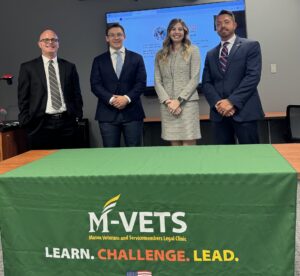
(Pictured L-R: M-VETS Director Timothy MacArthur, Student Advisors Jacoby Warner, Sarah Khalife, Dan Krupa)

A Student Advisor (SA) in the Mason Veterans and Servicemembers Legal Clinic (M-VETS) kicked off the fall semester by representing the daughter of a Servicemember during a Department of Veterans Affairs (DVA) Board of Veterans’ Appeals (BVA) hearing on September 22, 2025.

The hearing involved an appeal of an incorrect award of Post-9/11 GI Bill benefits for the Servicemember’s daughter while she was pursuing a higher-level college degree. M-VETS initially took on this case in 2020, and after attempting to resolve the issue by filing a supplemental claim with the DVA, the case was finally placed on the docket for a BVA hearing in 2023, with the hearing being held this fall.

Many Student Advisors in M-VETS worked on this case from 2020 to 2025. However, when a hearing date was finally set, current M-VETS SA Ms. Sarah Khalife took over the case in the summer of 2025, as the hearing approached, and spent months thoroughly preparing for it. Ms. Khalife represented the M-VETS client during the BVA hearing under the supervision of M-VETS Director Timothy MacArthur.

“I am very grateful to the M-VETS clinic and Mr. MacArthur’s guidance that allowed me to represent our client before the BVA,” Ms. Khalife said. “As a second-year law student, this was my first opportunity to work hands-on with the law. This opportunity allowed me to apply my classroom knowledge and work skills from my previous career, and to humanize how the law affects real people in practice. It was an honor to help give a voice to the family of a Servicemember who has served our country for so long.”

“Sarah did a great job advocating for our client during the hearing,” MacArthur stated. “She conducted a pre-hearing informal conference with the Judge, presented an opening statement, performed a direct examination with our client, and delivered a closing argument before the BVA judge,” MacArthur stated. “I want to thank all of the SAs who worked on this matter while they were in the clinic. I would also like to thank our client for allowing Sarah to represent her during the hearing. Additionally, our client and the BVA judge permitted our other M-VETS SAs to observe the hearing, providing a valuable learning opportunity for the clinic as a whole. At an informal post-hearing conference, the Judge provided positive feedback to Sarah regarding her performance and preparation for the hearing. The Judge also provided an opportunity for a question-and-answer period for the SAs after the hearing, which was a great opportunity to speak to a member of the bench and further the learning process.”

M-VETS enables students to assist active-duty members of the armed forces, their families, and veterans in a wide variety of administrative, litigation, and non-litigation matters, including medical and physical evaluation boards, appeals of denials of Department of Veterans Affairs disability compensation and educational claims, representation before the Board of Veterans’ Appeals and Court of Appeals for Veterans Claims, applications for discharge upgrades or military records correction before the Boards for Correction of Military Records and Discharge Review Boards.

Rudisill Ruling: How Some Veterans Can Now Unlock 48 Months of 9/11 GI Bill Educational Benefits

Written by Fall 2025 M-VETS Student Advisor Daniel Krupa.

On April 16, 2024, the Supreme Court’s 7-2 ruling in Rudisill v. McDonough expanded educational benefits for some veterans, allowing up to 48 months of combined Montgomery GI Bill (“MGIB”) and Post-9/11 GI Bill (“PGIB”) benefits, overturning the Department of Veterans Affairs (“VA”) 36-month cap for those with dual entitlements.[1] As Justice Jackson stated, “Servicemembers who, through separate periods of service accrue educational benefits under both the Montgomery and Post-9/11 GI Bills may use either one, in any order, up to §3695(a)’s 48-month aggregate-benefits cap.”[2] (emphasis added) This ruling empowered veterans like James Rudisill, with multiple service periods—both pre-9/11 and post-9/11—to access benefits without “coordination” limits under 38 U.S.C. §3322(d).[3] The Rudisill decision impacts approximately 1.04 million veterans.[4] As a veteran currently using the 9/11 GI Bill, I understand firsthand how valuable these extra months can be for veterans, but ongoing litigation may broaden access further. Here’s how qualifying veterans can act now to expand their educational benefits:

I. Who Should Apply and Why:

Veterans with service qualifying for MGIB (2-3 years active duty, $1,200 contribution) and PGIB (90+ days post-9/11) who waived MGIB for PGIB may be eligible for an additional 12 months of PGIB, for a total of 48 months, under 38 U.S.C. §3695(a).[5] Veterans with an education claim decision before August 15, 2018, must apply manually for Rudisill benefits (approximately 379,000 veterans). Veterans with a claim decision on or after August 15, 2018 (approximately 660,000 veterans), will receive an automatic VA review within approximately 22 months and do not need to take action.[6] Suppose the veteran qualified for MGIB and PGIB, but their service was continuous. In that case, the veteran should still apply—filing with the VA is low-risk and preserves rights if litigation expands eligibility.[7] MGIB benefits expire 10 years after the last separation under 38 U.S.C. §3031; Post-9/11 GI Bill benefits expire 15 years after the last separation if the separation occurred before January 1, 2013; otherwise, there is no expiration.

II. Actionable Steps for Veterans to Apply:

  1. Check Status: Log into VA.gov for entitlement updates. Veterans with an education claim decision on or after August 15, 2018, will receive an automatic VA review and do not need to take action. Check VA.gov for updates on your review status.[8]
  2. Submit a Claim: Veterans with an education claim decision before August 15, 2018, should file VA Form 22-1995 online at https://www.va.gov/find-forms/about-form-22-1995/ and ensure the veteran selects “Go to the online tool.” Select the Rudisill review option when completing the online form. Include DD-214 and MGIB proof.[9] (Links for applying through the VA website can be found at the end of the article in the “Resources” section.)
  3. Get Support: Call the VA Education and Training at 1-888-442-4551 or contact a Veteran Service Organization (“VSO”) (g., Veterans of Foreign Wars (“VFW”), Disabled American Veterans (“DAV”), American Legion) for free assistance. Veterans who are residents of Virginia can also contact the Virginia Department of Veterans Services (V-DVS) to receive additional support in developing and filing claims.
  4. Meet Deadlines: Apply by October 1, 2030, for a new delimiting date.[10]

III. If Denied a Favorable Rudisill Decision:

If the VA denies the Rudisill claim, typically citing a “service break” requirement,[11] appeal under the Appeals Modernization Act (AMA)[12] with assistance from a VSO or M-VETS.[13] Select from three options based on the denial’s basis and your evidence (file within one year to preserve your effective date).[14]

  1. Higher-Level Review (HLR): File VA Form 20-0996 for a 4-5 month review by a senior adjudicator. Best for legal errors, such as misapplying Rudisill’s election rights under 38 U.S.C. §3327(a).[15] No new evidence permitted.[16]
  2. Supplemental Claim: Submit VA Form 20-0995 with new and relevant evidence (e.g., service records to support eligibility, such as for multiple education benefits). Suitable for addressing denials due to incomplete documentation or other deficiencies. If claiming benefits under multiple GI Bill programs, reference Rudisill to challenge restrictions under 38 U.S.C. §3322(d) if applicable, expect 4-5 months processing time.[17]
  3. Board Appeal (Notice of Disagreement): File VA Form 10182 to request a Board of Veterans’ Appeals review, selecting from three dockets:
    1. Direct Review (no new evidence or hearing, 365 days),
    2. Evidence Submission (new evidence within 90 days, 18-24 months), or
    3. Hearing (virtual or in-person, 2-3 years).[18]

*Note that full resolution of AMA appeals can average over 5 years, depending on the docket and complexity.[19]

Suitable for complex cases, such as challenging Rudisill-related denials under 38 U.S.C. §3322(d), or when seeking a final VA decision, with potential appeal to the U.S. Court of Appeals for Veterans Claims for legal errors.[20]

  1. If an initial appeal is denied, pursue further AMA review by filing a Supplemental Claim with new and relevant evidence, a Higher-Level Review if not previously pursued, or a Board Appeal (see bullets 1-3 for details). After a Board Appeal denial, an appeal to the U.S. Court of Appeals for Veterans Claims may be filed within 120 days for legal errors, such as misapplication of Rudisill’s holding on 38 U.S.C. §3322(d).[21]

IV. Ongoing Litigation:

A 2025 Federal Circuit lawsuit, led by Virginia’s Attorney General (“AG”), the VFW, and Iraq and Afghanistan Veterans of America, challenged the VA’s narrow interpretation of Rudisill, arguing that continuous-service veterans should qualify under Rudisill for 48 months of educational benefits too.[22] If the Virginia and VFW suit is successful, it could change education benefits for an additional 1.7 million veterans.[23] Monitor the VA, American Legion, VFW, and other VSOs for legal updates and to appeal educational upgrade denials to leverage future rulings.

V. Broader Implications:

48 months of GI Bill benefits can fund the attainment of advanced degrees or vocational training. Veterans with disability ratings (20%+) can pair Rudisill with rating increases via new claims to boost compensation.[24]

Conclusion:

Rudisill’s decision honors veterans’ service by providing the full 48 months of GI Bill educational benefits, but litigation may unlock these benefits for additional veterans in the future. Apply today under 38 U.S.C. §§3011, 3311.

Resources:

[1] Rudisill v. McDonough, 601 U.S. 294 (2024).

[2] Id. at 294.

[3] Id. at 295.

[4] American Legion, Determine Your GI Bill Benefits Expansion Under Rudisill Decision, https://www.legion.org/information-center/news/veterans-benefits/2025/january/determine-your-gi-bill-benefits-expansion-under-rudisill-decision (last visited Sept. 3, 2025).

[5] U.S. Dep’t of Veterans, Impact of Rudisill Supreme Court Decision on Veterans’ Education Benefits, https://benefits.va.gov/gibill/rudisill.asp (last visited Sept. 3, 2025).

[6] Supra note 5.

[7] Virginia Office of the Attorney General, Virginia Takes Action in U.S. Federal Court to Guarantee Veteran Education Benefits, https://www.oag.state.va.us/media-center/news-releases/2897-august-14th-2025-virginia-takes-action-in-u-s-federal-court-to-guarantee-veteran-education-benefits (last visited Sept. 3, 2025).

[8] Supra note 5.

[9] Supra note 5.

[10] U.S. Dep’t of Veterans, Impact of Rudisill Supreme Court Decision on Veterans’ Education Benefits, https://benefits.va.gov/gibill/rudisill.asp (last visited Sept. 3, 2025).

[11] Supra note 10.

[12] U.S. Dep’t of Veterans Affairs, Appeals Modernization, https://www.va.gov/decision-reviews/appeals-modernization (last visited Sept. 3, 2025).

[13] U.S. Dep’t of Veterans Affairs, Find a Veterans Service Organization, https://www.va.gov/vso/ (last visited Sept. 3, 2025) (listing VSOs and legal clinics like M-VETS for appeal assistance).

[14] 38 U.S.C. §7105(d)(3) (2024) (requiring appeals within one year to preserve effective date under AMA).

[15] Rudisill, 601 U.S. at 295 (2024) (holding that veterans with dual entitlements may elect benefits under either GI Bill without coordination limits).

[16] 38 CFR §20.602 (2024) (prohibiting new evidence in HLR).

[17] 38 U.S.C. §5108 (2024) (requiring new and relevant evidence for supplemental claims under the Appeals Modernization Act); 38 CFR §3.2501 (2024) (defining new and relevant evidence); U.S. Dep’t of Veterans Affairs, Decision Reviews and Appeals, https://www.va.gov/decision-reviews/ (last visited Sept. 3, 2025) (noting average 4-5 month processing for supplemental claims).

[18] 38 U.S.C. §7105 (2024) (governing Board Appeals under the AMA); 38 CFR §20.200 (2024) (defining Board Appeal procedures); U.S. Dep’t of Veterans Affairs, Board of Veterans’ Appeals, https://www.bva.va.gov (last visited Sept. 3, 2025) (detailing docket options and processing times).

[19] Board of Veterans’ Appeals Annual Report (Fiscal Year 2024) (noting average AMA appeal resolution can exceed 5 years for complex cases).

[20] 38 U.S.C. §7252 (2024) (establishing jurisdiction of U.S. Court of Appeals for Veterans Claims for legal errors); Rudisill, 601 U.S. 294 (2024).

[21] 38 U.S.C. §7266(a) (2024) (requiring appeal to the U.S. Court of Appeals for Veterans Claims within 120 days); 38 U.S.C. §5108 (2024) (allowing Supplemental Claims with new and relevant evidence); 38 CFR §3.2500 (2024) (outlining AMA review options after a denial); Rudisill v. McDonough, 601 U.S. 294 (2024).

[22] Commonwealth of Virginia v. Secretary of Veterans Affairs, Petition for Review at 5–9 (Fed. Cir. filed Aug. 14, 2025).

[23] Id.

[24] Rudisill, 601 U.S. at 295; 38 U.S.C. § 1114 (2024).

M-VETS Student Advisor Advocates for GMU Alum and Veteran at Board of Veterans’ Appeals Hearing

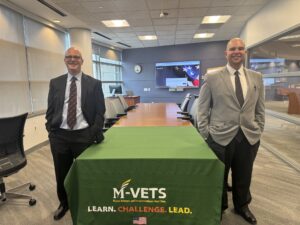
(Pictured L-R: M-VETS Director Timothy MacArthur, Student Advisor Tony Mancini)

The Scalia Law School’s Mason Veterans and Servicemembers Legal Clinic (M-VETS) advocated for a GMU Alum and United States Air Force veteran before the Department of Veterans Affairs (DVA) Board of Veterans’ Appeals (BVA).

Student Advisor (SA) Anthony (Tony) Mancini conducted the BVA hearing under the supervision of M-VETS Director Timothy M. MacArthur. The hearing involved a 2019 claim for secondary service-connection for right leg radiculopathy, which an administrative law judge heard after five years of litigation with the DVA.

M-VETS originally filed the secondary-service connection claim on behalf of the GMU alum who had injured her lower back while loading a KC-135 aircraft during Operation Southern Watch in Saudi Arabia. After her discharge from service, the veteran was service-connected for degenerative disc disease of her lumbar spine, and with the assistance of M-VETS, the DVA granted secondary service-connection for left leg radiculopathy but denied secondary service-connection for her right leg radiculopathy. As a result, M-VETS filed a brief before the BVA and requested a personal appearance to argue the matter before an administrative law judge.

Due to the lengthy litigation of this issue, many M-VETS SAs worked diligently on the matter while in the clinic. When the matter was scheduled for hearing, M-VETS SA Tony Mancini argued the service-connection claim before the BVA.

“I am deeply honored that I was able to represent our client before the BVA,” Mancini said. “This entire process has been an invaluable experience that goes far beyond anything I could have learned in a law school classroom. I am proud that I was a part of an organization that works for the people who have selflessly sacrificed more than we could imagine in the service of their country. This is as much my accomplishment as it is Mr. MacArthur’s,” Mancini continued. “Being an M-VETS SA over the past two semesters has taught me so much about the realities of the practice of law. Under Mr. MacArthur’s direction, my attention to detail, presentation, and writing skills have improved. This growth not only assisted me in representing our client before the BVA but has made me a better litigator for the future. For that, I am grateful.”

“Tony did a great job advocating for our client during the hearing,” MacArthur stated. “He conducted a pre-hearing informal conference with the Judge, presented an opening statement, performed a direct examination with our client, and delivered a closing argument. At certain points during the hearing, the Judge posed questions to Tony regarding the case and evidence presented, and Tony was able to respond to those questions and further our client’s arguments. At an informal post-hearing conference, the Judge provided positive feedback to Tony regarding his performance and preparation for the hearing, which was valuable to Tony’s development as a future attorney,” MacArthur continued.

Regarding the assistance she received from M-VETS, the GMU Alum and veteran stated, “I am truly grateful to Mr. MacArthur and Mr. Mancini for their guidance and for taking on my case. Their representation was not only exceptional, but it also reflected the most up-to-date practices of the learning-teaching environment, which gave me great confidence throughout the process. I could not have been more pleased, and I know Tony will go on to become an outstanding lawyer. This meant so much to me and my family.”

“I am incredibly grateful to our client for the patience she showed during this lengthy process. Also, for her willingness to allow our student advisors to participate in this process of representing her before the BVA. The DVA benefits process is paternalistic, which is invaluable for allowing our students to gain practical experience in a non-adversarial setting while providing valuable pro bono services to our clients,” MacArthur stated. “Also, before the hearing, our client had presented us with a challenge coin from her organization for our work on her matter, which was unexpected and a pretty awesome gesture from her, which is based on military tradition.” M-VETS continues to represent the GMU alum while awaiting a decision by the BVA Judge on the contested issue.

M-VETS enables students to assist active-duty members of the armed forces, their families, and veterans in a wide variety of administrative, litigation, and non-litigation matters, including appeals of denials of Department of Veterans Affairs disability compensation and educational claims, representation before the Board of Veterans’ Appeals and Court of Appeals for Veterans Claims, applications for discharge upgrades or military records correction before the Boards for Correction of Military Records and Discharge Review Boards.

Preparing for a BVA Hearing: A Step-by-Step Guide for M-VETS SAs

Written By Summer 2025 M-VETS Student Advisor Anthony Mancini.

Introduction

Preparing for a hearing before the Board of Veterans’ Appeals (BVA) is a critical, yet often daunting task for any advocate—especially for law students working on pro bono cases where your client is a veteran who has waited several years for their appeal to be heard. The stakes could not be higher. These hearings may significantly impact a veteran’s financial stability, access to healthcare, and recognition of service-connected injuries or illnesses.

For background, the BVA is part of the U.S. Department of Veterans Affairs (VA). It is an appellate body responsible for reviewing appeals from veterans regarding benefits decisions made by local VA offices.[1] Veterans who disagree with a decision related to service connection, disability ratings, effective dates, or other benefits may request multiple tracks of appeal, including a hearing before a Veterans Law Judge (VLJ) at the BVA.[2] These VLJs conduct a de novo review of the case—meaning they look at the claim for the first time and are not bound by prior decisions.[3]

Because the BVA is an appellate body, hearings focus heavily on the evidence and the legal standards governing veterans’ claims. That’s why methodical, strategic preparation is key. This guide outlines the major steps required to prepare for a BVA hearing, offering advice I learned through my own experience representing a veteran before the BVA.

  1. Start with the BVA Brief

The first—and arguably most important—step in your preparation is reading the BVA brief carefully and thoroughly. At its core, this brief serves as a roadmap outlining the issues that the Mason Veterans and Servicemembers Legal Clinic (M-VETS) is asking the Board to resolve. Fortunately, these briefs are typically short (usually spanning three to five pages) and provides an excellent opportunity to properly assess what M-VETS is asking of the BVA. As you read, take notes to identify the key issues presented. Is the veteran appealing a denial of service connection? Is the dispute about the effective date of benefits or the assigned rating percentage? Understanding the scope of the appeal will allow you to tailor your legal argument and structure your client’s testimony later in the process.

Next, identify every document cited in the BVA brief. These source materials—ranging from private medical records and rating decisions to service treatment records (STRs)—form the evidentiary foundation of M-VETS’s position. Read these documents as many times as necessary until you have a complete understanding of their contents. Once you’ve listed all the cited evidence, ensure you can locate each document in the client’s claims file. If something is missing or you’re having difficulty finding a document in the T-Drive, notify the M-VETS director (Mr. MacArthur) immediately. Missing records—especially those referenced in the brief—can create significant gaps in your presentation and severely hamper your efforts at the hearing. It’s essential to close that loop as early as possible.

  1. Organize and Analyze the Client File

After reviewing the BVA brief and verifying the presence of all source documents, the next step is to immerse yourself in the client’s full claims file. For the Student Advisors (SAs) in M-VETS, this part of the process is familiar and can be overwhelming. The file may contain hundreds, sometimes thousands, of pages of service records, medical evidence, correspondences, and decisions. To stay organized, begin by constructing a timeline of your client’s relevant service and medical history. Note key points such as when the veteran served, what injuries or conditions arose during that time (with guidance from the BVA brief), and how those conditions evolved after discharge. Creating a timeline can help contextualize the evidence and allow you to better spot patterns or inconsistencies.

As you analyze the file, take meticulous notes. Pay particular attention to STRs, Compensation and Pension (C&P) exam reports, private medical opinions, prior rating decisions, and any lay statements from the veteran or supporting witnesses. Relevance of these documents will be determined largely by the issues outlined in the BVA brief. Be sure to note documents that both support your theory of the case and weaken your client’s position. As a general rule on this, it is better to be overly critical than underprepared. If you come across a piece of negative evidence that could, even marginally, harm your case, make a note of it. It’s far better to anticipate a problem than to be caught off guard during the hearing. You will almost certainly feel lost during this step—maybe more than once. That’s completely okay! I did too. Don’t hesitate to ask Mr. MacArthur if you’re stuck or unsure of whether a certain piece of evidence is relevant.

Once you have identified the key pieces of evidence, consider creating a summary chart. This will help you track which documents support (or contradict) the elements of your client’s claim and align your legal strategy with the available record. This can be particularly useful when dealing with a large volume of records that must be organized chronologically.

  1. Research the Background Law

Legal research is always an important part of hearing preparation—even in cases that appear to be fact-intensive. Once you’ve mastered the factual record and the issues raised in the BVA brief, the next step is determining which legal standards govern the outcome. Doing so will not only improve your understanding, but will also help streamline your drafting and strategy for the hearing.

The amount of time you’ll need for research depends on the complexity of the BVA brief. Regardless, I began by reviewing relevant statutes and regulations, typically found in Title 38 of the U.S. Code and the Code of Federal Regulations (CFR). These will often include provisions related to service connection, the burden of proof (commonly “at least as likely as not”), and diagnostic criteria from the VA Schedule for Rating Disabilities (VASRD). If applicable, then look to precedent cases from the U.S. Court of Appeals for Veterans Claims (CAVC) for guidance. You may also look to past BVA decisions, as they can offer insight into how the BVA has handled similar cases. However, note that BVA decisions are not binding authority on subsequent hearings, so be cautious in their usage.[4] Finally, secondary sources may also be useful for context, but they should be a small percentage of your research in this step.

Once you’ve completed your research, consider drafting a short legal outline. This document should summarize the relevant law and how it applies to your client’s facts. It does not need to be lengthy—one page is often good enough. In some cases, especially if the legal issue is straightforward, this step may even be unnecessary. Still, having a legal outline ready can be invaluable during the hearing, particularly if the judge asks a pointed legal question or requests clarification on the applicable standard.

  1. Engage Early and Often with Your Client

I cannot stress enough how important this step is—not only for the hearing, but for your future success as a lawyer. Anyone who has been in M-VETS long enough knows that your relationship with the client is foundational to your effectiveness as an advocate. Therefore, the earlier you contact the client, the more time you have to gather important information and begin building a relationship. Establishing this early helps the client develop trust in your ability to represent them effectively when the time comes. So, as soon as possible, schedule an introductory meeting with your client. In that first session, explain your role and outline the timeline for preparation.

You should then plan to meet with the client several more times over the course of your representation. Use these sessions to dig into your client’s personal story. Ask about any relevant injuries or illnesses, treatment history, and the ways in which their condition has affected their daily life. These details are vital for preparing testimony and for shaping a compelling narrative to present at the hearing. You will also begin rehearsing the client’s testimony during these sessions, as outlined in more detail later in this guide.

Another key purpose of these meetings is to manage expectations. Many veterans—understandably—are unfamiliar with the appeals process and may have misconceptions about what the BVA can and cannot do. As their advocate, it is your responsibility to clarify the relevant legal standards and explain the range of possible outcomes. The better informed your client is, the more confidently they can testify and participate in their case.

  1. Draft Strategically and Early

Drafting your hearing materials—your opening statement, direct examination questions, and closing argument—early in the process will give you time to revise and receive feedback from Mr. MacArthur. This process will take considerable time and usually involves multiple rounds of revision. You may feel stuck during the drafting phase, which is completely normal. When that happens, keep in mind one core tenet that can guide you: the three documents should parallel each other in content, but each should accomplish a different purpose. In other words, while there will be some overlap in the information presented, simply repeating the same content across all three documents is a serious mistake.

When you begin drafting, you should start with your closing argument. Why? Because it serves as your guidepost—it reminds you of the specific evidence that must be introduced during the hearing, either through testimony or documentation. If key evidence is not entered into the record, the VLJ may not consider it. The closing argument is also your final opportunity to leave the judge with a clear and persuasive explanation of why your client should prevail. To make the most of your closing, clearly outline the legal standard at issue and explain how the evidence—both documentary and testimonial—satisfies that standard. Refer back to your research from earlier in the process to assist you. End your closing by directly requesting the relief you are seeking, whether that is service connection, an increased rating, or an earlier effective date.

Next, draft your direct examination questions. These questions are designed to guide your client’s testimony and allow them to share their story in their own words. Build a chronology using the timelines you created, and use open-ended questions that elicit facts supporting your legal theory. For instance, ask about the onset of symptoms during service, the progression of the condition, and how the disability currently impacts your client’s daily life. This is also your opportunity to walk through most of the key evidence referenced in your closing argument, and to ask clarifying questions as needed. Importantly, BVA hearings are non-adversarial and not bound by the Federal Rules of Evidence.[5] That means you are permitted to ask leading questions, which can be useful when trying to clarify the record or focus the judge’s attention on specific facts.[6]

Finally, you’ll draft your opening statement. This is your chance to set the tone for the hearing and frame the case for the VLJ. Your opening should introduce your client, succinctly summarize the issue on appeal, and provide a brief preview of the key evidence that will come out during direct examination.

  1. Practice, Practice, Practice

As a simple rule, if your client is unprepared for the hearing, then you will have both lost the case and have failed as their advocate. To avoid this, plan to conduct several mock testimony sessions before the hearing. These rehearsals serve multiple purposes: they build the client’s confidence, help refine their narrative, and allow you to correct inconsistencies or unclear statements. Moreover, it will also help you with nerves and better prepare you for the actual hearing. Per previous sections in this guide, you will most likely be conducting most of these mock sessions either over the phone or over Zoom.

During your first session, you should walk the client through the structure of the hearing and explain what they can expect. Afterwards, start having the client practice answering the direct examination questions you’ve prepared. As the client gets more comfortable, you should ask follow-up or clarifying questions—even if you did not prepare them ahead of time. The more familiar the client is with the hearing process, the more comfortable and credible they’ll appear when they testify in front of the VLJ.

  1. Collaborate Frequently with Mr. MacArthur

I cannot stress this enough. Mr. MacArthur is the most valuable resource at your disposal. He has been practicing law for a long time, and has many valuable insights on the BVA hearing process. Hence, you should make it a point to schedule regular check-ins with him throughout the preparation process. These meetings are a great opportunity to get feedback on your drafts, and to ask any questions you have about the law, procedure, or client management.

It may be intimidating to ask for help at times. You may think that it makes you “lesser than” for not getting the right answer on your own. That does not make you unqualified, it means you are on the right path. The best piece of advice I can give on this is to be open to constructive criticism, and don’t let that criticism discourage you further from getting help. Throughout my BVA hearing, I had revised the hearing documents outlined in this guide at least ten different times. It was sometimes frustrating getting what I perceived as “nitpicked” by Mr. MacArthur on multiple rounds of revisions. However, I credit this approach as the biggest reason why my BVA hearing went so well. Having that collaborative effort during your preparation is key to delivering a polished, persuasive presentation once the hearing comes around.

  1. Build Your Trial Binder

One of the last steps in your preparation is to assemble a comprehensive trial binder. This is your go-to resource during the hearing, and it should be organized. Include all critical pieces of evidence, such as the hearing notice, the BVA brief, a copy of the client’s service and medical records, your legal outline (if applicable), and your hearing documents. Mr. MacArthur will provide you with a binder using tabbed sections and you will create a table of contents. Thus, you should be able to easily flip to the right section during the hearing. What helped me is to put the documents in reverse chronological order, that way you are able to quickly find and reference them. This will allow you to respond effectively to questions and maintain a smooth flow during the hearing.

Conclusion

Preparing for a BVA hearing is a rigorous process that demands your attention to detail, a clear understanding of the law, and a deep commitment to your client and their story. For veterans who have waited a long time for justice, your detailed preparation could make the difference when the time comes. Approach the process with the seriousness and care that their service deserves, and your BVA hearing will also be a success.

[1] 38 U.S.C. § 7104(a).

[2] Id.

[3] 38 C.F.R. § 20.300(a).

[4] 38 C.F.R. § 20.1303.

[5] M21-1, Part III, Subpart iv, 5.1.

[6] Id.
Pro Bono Victory at the Supreme Court: How NVLSP Secured Justice for 9,000 Combat-Disabled Veterans

Written by Summer 2025 M-VETS Student Advisor Andrew West.

In June 2025, the Supreme Court issued a unanimous decision in Soto v. United States that will result in substantial retroactive payments to over 9,000 combat-disabled veterans.[1] The ruling marked a major legal victory not only for the class of veterans involved, but also for the National Veterans Legal Service Program (NVLSP), a nonprofit pro bono organization that has been fighting for veterans’ rights for more than four decades.[2] This case serves as a powerful example of how legal advocacy can produce life-changing results for vulnerable populations. It is the kind of impact that mirrors the mission and values of the Mason Veterans and Servicemembers Legal Clinic (M-VETS) at George Mason University, where students and supervising attorneys provide free legal representation to military veterans facing complex legal challenges.[3]

At the heart of the case was the Combat-Related Special Compensation (CRSC) statute, codified at 10 U.S.C. § 1413a. CRSC allows veterans with combat-related disabilities to receive tax-free compensation that offsets the retirement pay they lose due to their receipt of VA disability benefits.[4] In practice, CRSC is critical to ensuring that combat-disabled veterans receive the full value of the benefits they earned through their service. However, for years, the Department of the Navy and other branches of the military have limited veterans’ retroactive CRSC payments to just six years from the date of application, citing the Barring Act, 31 U.S.C. § 3702(b).[5]

This six-year gap left many veterans, particularly those unaware of their eligibility or struggling with physical and mental health conditions, without the full compensation they deserved.[6] Simon Soto, a retired Marine Corps veteran, was among them. Represented by NVLSP and pro bono counsel from Sidley Austin LLP, Soto filed suit challenging the application of the Barring Act to CRSC claims.[7] NVLSP argued that the CRSC statute does not impose any retroactivity limitation and therefore supersedes the general limitations of the Barring Act.[8]

After several years of litigation, including a favorable ruling in the district court and a reversal by the U.S. Court of Appeals for the Federal Circuit, the case made its way to the Supreme Court.[9] On June 12, 2025, the Court unanimously held that the Barring Act does not apply to CRSC claims.[10] Writing for the Court, Justice Kagan concluded that Congress had enacted a specific compensation scheme for combat-disabled veterans that was plainly designed to operate independently of the general claims limitation statute.[11] The ruling restores the right of thousands of veterans to receive the full amount of CRSC for every eligible month, not just the six years preceding their application.[12]

The precise financial impact of the decision is not yet known, as neither NVLSP nor the Department of Defense have released a total payout estimate. However, given that the affected class includes over 9,000 veterans and that CRSC payments can range from hundreds to thousands of dollars per month, the aggregate amount could easily reach tens of millions of dollars. For many veterans, this is a long-overdue acknowledgement of the sacrifices they made and a correction of bureaucratic injustice.

The decision in Soto reflects a growing recognition by the judiciary that statutory benefit schemes for veterans must be interpreted in ways that honor their intent and practical function. It reinforces a broader judicial trend favoring liberal construction of veterans’ benefit laws, consistent with the remedial nature of such statutes. While the legislative process is often slow to correct systemic problems, public interest litigation can achieve substantial results. In this case, it ensured that thousands of veterans will finally receive what they earned through service and sacrifice.

The victory would not have been possible without the sustained efforts of NVLSP, whose mission is to ensure that veterans and active-duty servicemembers receive the benefits to which they are entitled.[13] NVLSP’s Lawyers Serving Warriors project provides free legal services to veterans with significant physical and mental health disabilities.[14] In the Soto case, NVLSP worked alongside attorneys from Sidney Austin, who provided high-level litigation support on a pro bono basis.[15] Together, they navigated nearly a decade of litigation through multiple courts, culminating in the Supreme Court’s landmark ruling.[16]

For those of us engaged in clinical legal work, especially in programs like M-VETS, Soto serves as an inspiration. It shows how skilled legal advocacy, even by a small nonprofit, can compel the federal government to change its practices and comply with the law. At M-VETS, students regularly handle discharge upgrades, VA appeals, and other legal matters that, while smaller in scale, can be just as transformative for the individual veteran. The Soto decision is a reminder that whether in a Supreme Court brief or a student-prepared memo, pro bono work on behalf of veterans has the power to deliver justice where it is most urgently needed.

[1] Soto v. United States, 605 U.S. 360, 145 S. Ct. 1677 (2025).

[2] National Veterans Legal Service Program, About NVLSP, https://nvlsp.org (last visited Aug. 9, 2025).

[3] Mason Veterans and Servicemembers Legal Clinic, About M-VETS, https://mvets.law.gmu.edu (last visited Aug. 9, 2025).

[4] 10 U.S.C. § 1413a (2002).

[5] 31 U.S.C. § 3702(b) (1982).

[6] See NVLSP, Supreme Court Unanimously Rules for 9,000 Combat-Disabled Veterans to Receive Full Retroactive Combat-Related Special Compensation (June 12, 2025), https://nvlsp.org/supreme-court-unanimously-rules-for-9000-combat-disabled-veterans-to-receive-full-retroactive-combat-related-special-compensation.

[7] Id.

[8] Id.

[9] Sidley Austin LLP, Sidley Wins Major Pro Bono Supreme Court Victory on Behalf of Combat-Wounded Veterans (June 12, 2025), https://www.sidley.com/en/newslanding/newsannouncements/2025/06/sidley-wins-major-pro-bono-supreme-court-victory-on-behalf-of-combat-wounded-veterans.

[10] Soto, at 361.

[11] Id. at 370.

[12] Id. at 362.

[13] NVLSP, supra note 6.

[14] Id.

[15] Sidley Austin LLP, supra note 9.

[16] Id.

Arlington County Bar Foundation Donates $2,000 to Mason Veterans and Servicemembers Legal Clinic in Memory of Griffin T. “Bus” Garnett III

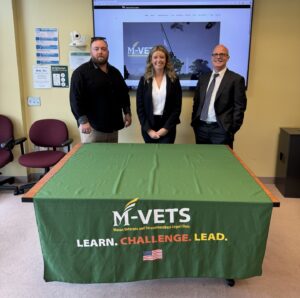
(Pictured L-R: M-VETS Director Timothy MacArthur and Student Advisors Andrew West and Sarah Khalife)

The Arlington County Bar Foundation has awarded a $2,000 grant to the Mason Veterans and Servicemembers Legal Clinic (M-VETS) at George Mason University’s Antonin Scalia Law School. The grant is named in memory of Griffin T. “Bus” Garnett, III, a dedicated leader of the Arlington County Bar Foundation and a proud veteran, whose life exemplified a commitment to justice, public service, and the legal community of Arlington.

The funds will help support M-VETS’ operating needs, including providing Adobe software licenses to law students who serve as student advisors in the clinic. This technology is essential for securely managing and reviewing sensitive client documents. Also, the donation will help cover the cost of M-VETS membership fees in the National Law School Veterans Clinic Consortium as a founding Valor Member. This grant will ensure that the clinic continues to offer high-quality pro bono legal services to veterans, servicemembers, and their families throughout Northern Virginia.

“We are honored to receive this support from the Arlington County Bar Foundation and especially proud to carry forward the legacy of Bus Garnett,” said Timothy MacArthur, Director of M-VETS. “This grant enables our students to do the critical work of representing those who have served our country, using the tools and training necessary to protect their rights. Meeting his son Chris at the ceremony was a true honor. Chris shared that his dad served as a Judge Advocate in the United States Air Force during his legal career, and hearing that firsthand reinforced how meaningful this grant is to our clinic, students, and the clients we serve. We are humbled to receive this grant named in his memory and will ensure it is used in the spirit of service that defined his life.”

Founded in 2004, M-VETS was the first law school clinic of its kind in the nation and continues to provide the most comprehensive veterans’ legal services of any law school in Virginia. Since its inception, M-VETS has delivered more than $5.5 million in free legal services to over four hundred clients. M-VETS assists veterans, service members, and their dependents with military/veteran/DVA administrative matters, to include disability compensation and educational benefits appeals, discharge upgrades, and Boards for Correction of Military Records matters.


M-VETS Student Advisor Advocates on Behalf of a Combat Veteran at Board of Veterans’ Appeals Hearing

(Pictured L-R: M-VETS Client Richard Fahlman, Student Advisor Samantha Hargis, and M-VETS Director Timothy M. MacArthur)

The Scalia Law School’s Mason Veterans and Servicemembers Legal Clinic (M-VETS) advocated for a combat veteran before an administrative law judge at a hearing before the Department of Veterans Affairs (DVA) Board of Veterans’ Appeals (BVA). The hearing occurred on May 12, 2025.

The hearing involved a 2016 claim for an increased rating for a service-connected disability that was caused by an Improvised Explosive Device in Afghanistan. This injury led to the veteran’s medical separation from the Army. The clinic filed a motion in 2019 with the DVA alleging that a Clear and Unmistakable Error (CUE) occurred, which carries the highest burden of proof within the DVA system.

Due to the lengthy litigation of this issue, many M-VETS Student Advisors (SAs) worked diligently on behalf of our client while in the clinic. However, when the matter was scheduled for hearing, current M-VETS Student Advisor Samantha Hargis conducted the hearing under the supervision of M-VETS Director Timothy M. MacArthur.

“Working on this matter for our client was an incredible opportunity. I am deeply grateful to the student advisors who came before me and laid a solid foundation for our argument at the hearing, our client for his commitment and collaboration throughout the process, and my supervising attorney for his invaluable guidance and support,” Hargis said.

“Ms. Hargis did a phenomenal job arguing the motion and presenting evidence during the hearing,” MacArthur commented. “Our client was able to attend the virtual hearing with us, which was held in our classroom at the law school. Sam conducted a pre-hearing conference with the Judge, delivered an opening statement, conducted a direct examination of our client, and delivered an impactful closing, effectively arguing our position.” MacArthur continued, “The DVA benefits process is paternalistic, which is invaluable for allowing our students to gain practical experience in a non-adversarial setting while providing valuable pro bono services to our clients.”

“I would like to thank Mr. MacArthur and Ms. Hargis for the work they did in my case. They put their heart, time, and soul into developing my defense, and I couldn’t have asked for a better legal team. Without M-VETS, combat veterans like me wouldn’t have a voice,” stated Mr. Fahlman.

M-VETS Director Timothy M. MacArthur stated, “I’m glad our client reached out to M-VETS, and we could advocate on his behalf at this hearing. The DVA initially denied the request for an increased rating decision while our client was still on active duty in the Army and navigating the Integrated Disability Evaluation System (IDES). While in IDES, he received an initial 20% rating for the condition, but based on new medical evidence, a request to increase this rating to 40 % was submitted to the DVA. The rating official denied the request for an increase, and our client was discharged from the Army with a severance check. Had the 40% rating been approved, our client would have been medically retired and received all the benefits accompanying that status, including much-needed health care. Our position was that the decision review officer had made a CUE error, contradicting federal law and regulatory standards. The CUE burden of proof created challenges for the Clinic, but our client and Sam did an excellent job explaining our position to the Judge during the hearing. I appreciate our client’s patience during this lengthy process and for him and the Judge allowing Ms. Hargis to conduct the hearing.” M-VETS continues to work with the veteran while the hearing outcome is pending.

M-VETS assists veterans, service members, and their dependents with military/veteran/DVA administrative matters, to include disability compensation and educational benefits appeals, discharge upgrades, and Boards for Correction of Military Records matters.

Moving Forward: Veterans Discharged on the Basis of Gender Dysphoria

Written by Spring 2025 M-VETS Student Advisor Alexandria Ryan.

History

In 2016 at the end of the Obama Administration, the former Secretary of Defense, Ashton Carter, authorized transgender Servicemembers to openly serve for the first time.[1] But, the policy was short-lived when President Trump took office in 2017, and ordered the Department of Defense (DoD) to exclude transgender individuals from military service.[2] In promulgating the new policy, former Secretary of Defense, James Mattis, directed an expert panel to review the impact of transgender Servicemembers on “military readiness and lethality.”[3] The Mattis Policy incorporated the panel’s recommendations and permitted Servicemembers who were diagnosed with gender dysphoria during military service to continue service if they adhered to their birth sex.[4] It also allowed Servicemembers, who were diagnosed with gender dysphoria while the Carter Policy was in effect, to continue service in their preferred gender.[5] But, those who had already transitioned were disqualified from service.[6] In 2021, former President Biden reversed President Trump’s policy and issued an executive order allowing transgender Servicemembers to serve openly.[7]

Current Policy

This year, President Trump took office and for a second time, placed strict limitations on transgender personnel serving in the military.[8] Accordingly, under Secretary of Defense Pete Hegseth, the DoD issued a policy memorandum generally disqualifying anyone from military service who either has gender dysphoria or has undergone medical interventions to treat gender dysphoria.[9]

Under the Hegseth Policy, Servicemembers who have a current diagnosis, history, or symptoms of gender dysphoria will be administratively separated unless they are granted a waiver.[10] Servicemembers may be considered for a waiver on a case-by-case basis if there is a compelling government interest in retaining them that directly supports warfighting capabilities.[11] The Servicemember must (1) demonstrate that he or she has been stable for 36 consecutive months in the Servicemember’s sex; (2) demonstrate that he or she has never attempted to transition to any other sex; and (3) be willing and able to adhere to all applicable standards.[12]

Servicemembers without a waiver are eligible for referral to the Disability Evaluation System (DES) only if they have a co-morbidity, or other qualifying condition prior to processing for administrative separation.[13] Under the Hegseth Policy, characterization of service will be honorable unless other circumstances justify a lower characterization.[14] In effect, the policy has no impact on characterization of service. Furthermore, all Servicemembers who are involuntarily separated under this policy, are entitled to an administrative separation board or a board of inquiry.[15] Those within two years of retirement from active duty service are eligible for early retirement.[16]

In response to the policy, a group of active-duty transgender Servicemembers, transgender individuals who would like to join the military, and a human rights organization challenged the policy in Shilling v. United States.[17] The plaintiffs requested the federal district court to grant a preliminary injunction preventing the executive branch from enforcing the Hegseth Policy.[18] The district court granted the injunction and the government appealed.[19] Ultimately, the Supreme Court granted a stay of the preliminary injunction on May 6, 2025.[20] Therefore, the DoD may now enforce the Hegseth policy pending the court of appeals disposition.[21]

The lawsuit filed in response to the Mattis Policy demonstrates the uncertainty surrounding the Shilling case.[22] In Karnoski v. Trump, the federal district court granted a preliminary injunction preventing enforcement of the Mattis Policy.[23] The court of appeals found that the district court may have been justified in dissolving the injunction because the Mattis policy had significantly changed the original policy.[24] The parties ultimately agreed to permit enforcement of the Mattis Policy while the case was pending.[25] The district court eventually dismissed Karnoski v. Trump after President Biden took office and revoked the policy at issue.[26] Therefore, Shilling may not be resolved during the Trump administration.

Moving Forward

In light of the fluctuations over the past ten years, there is a chance that the next administration will relax the retention and accession policies for military personnel with gender dysphoria. Thus, veterans separated on the basis of gender dysphoria may be permitted to reenter the military in the future.[27]

If a veteran meets the DoD eligibility requirements, he or she may petition a Discharge Review Board (DRB) to change the character of service, narrative reason for separation, or Reentry Code (RE Code).[28] The DRB is authorized to change the RE code if an applicant’s narrative reason or characterization of discharge is also changed, and that change warrants revision of the previously issued RE Code.[29] But a DRB cannot change the reason for discharge from or to a Physical Disability.[30] Thus, an application to the Board for Correction of Military/Naval Records (BCM/NR) is appropriate if a veteran (1) wants to challenge their disability status, (2) was discharged for a disabling condition and would like to change the narrative reason, or (3) would like to change the RE Code individually without other changes.[31] Military recruiters may also provide an RE Code waiver if authorized at the time of reentry.[32]

Generally, to receive benefits and services from the Department of Veterans Affairs (DVA), the veteran’s character of discharge must be honorable, under honorable conditions, or general.[33] But veterans that receive an undesirable or bad conduct discharge may qualify for a compelling circumstances exception.[34] DVA benefits include disability compensation, health care, education, housing assistance, life insurance, and family member benefits.[35] Moving forward, individuals discharged for gender dysphoria should continue to monitor the policy changes and take advantage of DoD and DVA benefits and services.

[1] Shilling v. United States, No. 25-cv-241-BHS, 2025 U.S. Dist. LEXIS 57869, at *8 (W.D. Wash. Mar. 27, 2025).

[2]Presidential Memorandum for the Sec’y of Def. and the Sec’y of Homeland Sec., Military Service by Transgender Individuals (Aug. 25, 2017), https://trumpwhitehouse.archives.gov/presidential-actions/presidential-memorandum-secretary-defense-secretary-homeland-security/.

[3] Shilling, 2025 U.S. Dist. LEXIS 57869, at *11.

[4] Id. at *10-11.

[5] Karnoski v. Trump, 926 F.3d 1180, 1191 (9th Cir. 2019).

See Shilling, 2025 U.S. Dist. LEXIS 57869, at *11.

[6] Karnoski, 926 F.3d at1199.

[7] Exec. Order No. 14004, 86 Fed. Reg. 7471 (Jan 25, 2021).

[8] Exec. Order No. 14168, 90 Fed. Reg. 8615 (Jan 20, 2025); Exec. Order No. 14183, 90 Fed. Reg. 88757 (Jan. 27, 2025); Shilling, 2025 U.S. Dist. LEXIS 57869 at *4.

[9] Memorandum from the Off. of the Under Sec’y of Def. Pers. and Readiness, Additional Guidance on Prioritizing Military Excellence and Readiness (Feb. 26, 2025); U.S. Dept. of Def., DOD: Gender Dysphoria Incompatible With Military, Service Members Must Serve in Accordance With Sex (Feb. 28, 2025), https://www.defense.gov/News/News-Stories/Article/Article/4086111/dod-gender-dysphoria-incompatible-with-military-service-members-must-serve-in-a/#:~:text=In%20addition%20to%20affecting%20existing,also%20disqualified%20for%20military%20service.

[10] Memorandum from the Off. of the Under Sec’y of Def. Pers. and Readiness, Additional Guidance on Prioritizing Military Excellence and Readiness 4.3(c) (Feb. 26, 2025). See Sec’y of Def. Memorandum,  Prioritizing Military Excellence and Readiness (Feb. 7, 2025).

[11] Memorandum from the Off. of the Under Sec’y of Def. Pers. and Readiness, Additional Guidance of Prioritizing Military Excellence and Readiness 4.3(c) (Feb. 26, 2025).

[12] Id.

[13] Id.

[14] Memorandum from the Off. of the Under Sec’y of Def. Pers. and Readiness, Additional Guidance of Prioritizing Military Excellence and Readiness 4(e) (Feb. 26, 2025).

[15] Memorandum from the Off. of the Under Sec’y of Def. Pers. and Readiness, Additional Guidance of Prioritizing Military Excellence and Readiness 4.4(a)(6)-(7) (Feb. 26, 2025).

[16] Memorandum from the Off. of the Under Sec’y of Def. Pers. and Readiness, Additional Guidance of Prioritizing Military Excellence and Readiness 4.4(a)(8) (Feb. 26, 2025).

[17] Shilling, 2025 U.S. Dist. LEXIS 57869 at *26-28.

[18] Id. at *6-8.

[19] Shilling v. Trump, No. 25-2039, 2025 U.S. App. LEXIS 9437, at *5 (9th Cir. Apr. 18, 2025).

[20] United States v. Shilling, No. 24A1030, 2025 U.S. LEXIS 1831, at *1 (May 6, 2025);

Shilling, 2025 U.S. App. LEXIS 9437 at *5.

[21] Shilling, 2025 U.S. App. LEXIS 9437 at *5.

[22] See id.

[23] Karnoski, 926 F.3d at 1190.

[24] Id. at 1199.

[25] Shilling, 2025 U.S. Dist. LEXIS 57869, at *12.

[26] Order of USCA, No. 2:17-cv-01297, Dkt. 689 (Aug. 31, 2021), https://files.eqcf.org/cases/w-d-wash-217-cv-01297-docket/.

[27] 10 U.S.C. § 1552.

[28] DoDI 1332.28, Discharge Review Board (DRB) Procedures and Standards (Apr. 4. 2004).

[29] See DoDI 1332.28, Discharge Review Board (DRB) Procedures and Standards (Apr. 4. 2004).

[30] Id.

[31] 32 C.F.R. § 723 (2025); DoDD 1332.41, Boards for Correction of Military Records (BCMRs) and Discharge Review Boards (DRBs) (Mar. 8, 2004); Air Force Review Boards Agency, Air Force Board For Correction of Military Records (AFBCMR) (last visited May 15, 2025), https://afrba-portal.cce.af.mil/#board-info/bcmr; Sec’y of the Navy, Board for Correction of Naval Records (last visited May 15, 2025), https://www.secnav.navy.mil/mra/bcnr/Pages/FAQ.aspx.

[32] Army Review Boards Agency, ARBA Case Tracking System Online (last visited May 15, 2025), https://actsonline.army.mil/gui/ContactAnswer82.aspx.

[33] U.S. Dep’t of Veterans Affs., Applying for Benefits and Your Character of Discharge, Veterans Benefits Administration (Apr. 16, 2025), https://www.benefits.va.gov/benefits/character_of_discharge.asp.

[34] Id.

[35] U.S. Dep’t of Veterans Affs., Explore VA benefits and health care (last visited May 15, 2025), https://www.va.gov/.

Hurry Up and Wait: How the VA’s Mass Firings May Stall Justice for Veterans

Written by Spring 2025 M-VETS Student Advisor Samantha Hargis.

Background

The VA appeals process allows veterans to challenge decisions about their disability benefits. Historically, the system was slow and complex, often taking years to resolve appeals. In 2019, the Appeals Modernization Act (“AMA”) introduced a streamlined process with three lanes: supplemental claims, higher-level reviews, and direct appeals to the Board of Veterans’ Appeals (“BVA”), which offers multiple review options, including hearings.[i] Despite improvements, the system faces mounting pressure due to increased caseloads from laws like the PACT Act.[ii] Recent mass firings at the VA in 2025 threaten to exacerbate delays, particularly in hearing-based appeals, as fewer staff remain to handle growing backlogs.

Impact of VA Firings on Appeals Processing

In 2025, the Trump Administration took office and implemented staff reductions across multiple federal agencies.[iii] This includes the VA, top-level officials at the agency were told that there is an objective to cut enough employees to return to 2019 staffing levels of just under 400,000.[iv] This means that more than 80,000 workers would be cut from the agency, after the VA’s expansion under the Biden administration.[v] These reductions have raised concerns about the VA’s capacity to manage its workload effectively.

The BVA, responsible for handling appeals, has already been grappling with substantial backlogs. As of late 2024, average decision times for Direct Docket appeals had decreased from over 640 days in March 2024 to just above 500 days by December 2024.[vi] However, appeals requiring hearings still face prolonged wait times, often exceeding two years.[vii] Not only is there a long waitlist for VA appeals, but there is also a legacy backlog that as of January 2025, there were roughly 201,730 pending appeals.[viii]

The recent layoffs threaten to reverse the improvements from the AMA. With fewer personnel to process appeals, veterans may experience longer delays in receiving decisions. Additionally, the implementation of the PACT Act has expanded the scope of appeals, further increasing the BVA’s workload.

What This Means for Veterans

The firings at the VA are having a significant impact on veterans in more ways than one. An additional issue that arises out of the firings of VA employees is that more than 25% of the VA’s workforce is comprised of veterans.[ix] Veterans awaiting appeal decisions should prepare for potential delays. With fewer staff members processing claims, the system could become overloaded, leading to delays.[x] While the VA has made progress in reducing wait times, the recent staff reductions and increased workload may hinder further progress. Veterans are encouraged to stay informed about their appeal status and consider seeking assistance from accredited representatives to navigate the process.

[i] U.S. Dep’t of Veterans Affs., U.S. Dep’t of Veterans Affairs, Board of Veterans’ Appeals (last visited May 13, 2025), https://department.va.gov/board-of-veterans-appeals/.

[ii] U.S. Dep’t of Veterans Affs., In Two Years of the PACT Act, VA Has Delivered Benefits and Health Care to Millions of Toxic-Exposed Veterans and Their Survivors, VA News (Aug. 9, 2024), https://news.va.gov/press-room/in-two-years-of-the-pact-act-va-has-delivered-benefits-and-health-care-to-millions-of-toxic-exposed-veterans-and-their-survivor/ .

[iii] Stephen Groves, Trump Administration Plans to Cut 80,000 Employees from Veterans Affairs, According to Internal Memo, AP News (Mar. 5, 2025), https://apnews.com/article/veterans-affairs-cuts-doge-musk-trump-f587a6bc3db6a460e9c357592e165712.

[iv] Id.

[v] Mike Stone et al., U.S. Plans to Fire 80,000 Veterans Affairs Workers as Part of Trump Cuts, Sparking Backlash, Reuters (Mar. 5, 2025), https://www.reuters.com/world/us/department-veterans-affairs-cut-80000-jobs-part-trump-cuts-2025-03-05/.

[vi] U.S. Dep’t of Veterans Affs., More Board Personnel Address Pending AMA Appeals and Wait Times, Board of Veterans’ Appeals (last visited May 13, 2025), https://department.va.gov/board-of-veterans-appeals/decision-wait-times/more-board-personnel-address-pending-ama-appeals-wait-times/.

[vii] Id.

[viii] U.S. Dep’t of Veterans Affs., Claims Backlog,  u.s. dep’t of Veterans Affairs (last visited May 13, 2025), https://www.benefits.va.gov/reports/mmwr_va_claims_backlog.asp

[ix] Stephen Groves, Trump Administration Plans to Cut 80,000 Employees from Veterans Affairs, According to Internal Memo, AP News (Mar. 5, 2025), https://apnews.com/article/veterans-affairs-cuts-doge-musk-trump-f587a6bc3db6a460e9c357592e165712.

[x] Dan Pearce, 83,000 VA Jobs at Risk: How Potential DOGE Cost-Cutting Plans Could Impact Your VA Benefits, VA Claims Insider (Mar. 6, 2025), https://vaclaimsinsider.com/83000-va-jobs-at-risk-how-potential-cost-cutting-plans-could-impact-your-va-benefits/#potential-impact-on-va-disability-claims.