Understanding Military Parole in Place: What is it and How Can a Servicemember’s Family Gain Immigration Benefits

Written by Fall 2023 M-VETS Student Advisor Annah Seaford.

What is Military Parole in Place?

Military Parole in Place, often called Military PIP, is a way for immigrant family members of a current or previous servicemember to gain access to stay and work in the United States.[1] Military PIP also prevents family separation and can lead to permanent residence.[2] This policy was introduced in 2007 and United States Citizenship and Immigration Services (“USCIS”) began implementing it in 2010.[3] Military PIP must be renewed each year, though there is no limit to how many times an individual can apply or renew their application.[4]

Eligibility

To be eligible for Military PIP, the qualifying servicemember must:

  • Serve active duty in the armed forces;
  • Be in the selected reserve or ready reserve;
  • Have served either active duty or in the reserves and not been dishonorably discharged.[5]

An individual applying for Military PIP must also not have been admitted to the United States.[6] For instance, an individual arriving with a tourist visa would not be eligible for Military PIP because they lawfully entered with the tourist visa.[7] However, there may be other ways for this person to gain lawful status past the expiration of their lawful entry.[8]

What to Submit

Individuals applying for Military PIP must submit the following evidence:

  • I-131 Form;
  • Evidence that shows a family relationship;
    • Examples include:
      • Marriage certificate
      • Birth certificate
      • Divorce decree
    • DD-214 to show that the individual was or is a servicemember;
    • Two passport style pictures;
    • And any other evidence that supports the PIP application.[9]

The documents submitted to USCIS will depend on the relationship between the servicemember and the individual who is applying.[10]

The Benefits of Military PIP

For a servicemember’s family, getting Military PIP can be extremely helpful for their immigration status and immigration case. This benefit aids the servicemember and their family because it can help prevent family separation.[11]

For regular civilians and their family members entering unlawfully, and staying for more than 180 days but less than 365 days results in a three-year bar.[12] If the individual was to enter unlawfully and stay for a year or more, they are subject to the ten-year bar.[13] Military PIP allows servicemembers’ families to avoid accruing unlawful presence, which would be a ground of inadmissibility regarding future immigration benefits.[14] It also cures their unlawful entry by providing them with an I-94 number.[15] Thus, it is like the individual entered lawfully.  Additionally, Military PIP individuals can file an I-765, which allows for employment authorization, and an I-485, which allows an individual to adjust their immigration status and apply for permanent residence.[16]

[1] What is Military Parole in Place (PIP)? Explaining the ‘parole’ program for certain family members of current and former U.S. armed forces personnel, Garfinkel Immigration Law Firm (May 8, 2023), https://www.garfinkelimmigration.com/2023/05/08/what-is-military-parole-in-place-pip-explaining-the-parole-program-for-certain-family-members-of-current-and-former-u-s-armed-forces-personnel/#:~:text=Military%20Parole%20in%20Place%20(PIP)%20is%20available%20for%20certain%20family,of%20other%20%E2%80%9Cparole%E2%80%9D%20programs.

[2] Parole in Place Explained, CitizenPath, https://citizenpath.com/parole-in-place/#:~:text=Protection%20from%20Deportation%20and%20Employment,record%20as%20evidence%20of%20parole.

[3] Garfinkel Immigration Law Firm, supra note 1.

[4] Id.; Discretionary Options for Military Members, Enlistees and their Families, USCIS (Nov. 15, 2023), https://www.uscis.gov/military/discretionary-options-for-military-members-enlistees-and-their-families.

[5] Discretionary Options for Military Members, Enlistees and their Families, USCIS (Nov. 15, 2023), https://www.uscis.gov/military/discretionary-options-for-military-members-enlistees-and-their-families.

[6] Id.

[7] Id.

[8] Id.

[9] Id.

[10] Id.

[11] CitizenPath, supra note 2.

[12] What is Military Parole in Place (PIP)? Explaining the ‘parole’ program for certain family members of current and former U.S. armed forces personnel, Garfinkel Immigration Law Firm (May 8, 2023), https://www.garfinkelimmigration.com/2023/05/08/what-is-military-parole-in-place-pip-explaining-the-parole-program-for-certain-family-members-of-current-and-former-u-s-armed-forces-personnel/#:~:text=Military%20Parole%20in%20Place%20(PIP)%20is%20available%20for%20certain%20family,of%20other%20%E2%80%9Cparole%E2%80%9D%20programs.

[13] Id.

[14] Id.

[15] Id.

[16] Id.

Establishing A Drug Treatment Court

Written by Fall 2023 M-VETS Student Advisor Dylan Sparks.

Introduction:

Combatting drug addiction calls for a collaborative partnership between the criminal justice system and substance abuse treatment programs. Establishing a drug treatment court is a great way for a community to establish such a partnership, and this article will explain the benefits that drug treatment courts bring and detail the steps a community should take to establish one.

What are drug treatment courts?

Drug treatment courts have become an increasingly popular solution for reducing addiction and incarceration rates.[1] In Virginia, drug treatment court dockets have been used in some localities since 1995.[2] They are formed with the objective of offering treatment for addiction and mental health issues that traditional courts may not be able to provide,[3] and they often offer incentives for participation such as “case dismissal, reduction in charges, and/or reduction in supervision.”[4] All drug treatment court dockets in Virginia are overseen by the Office of the Executive Secretary of the Supreme Court of Virginia.[5] They are often supported by a mixture of state and local funding.[6] In addition to providing defendants struggling with substance abuse support to help navigate their addictions, Virginia drug treatment courts were estimated to save $19,234 per person in 2012 when compared to traditional court methods.[7]

If my jurisdiction doesn’t have a drug treatment court, how can we get one established?

To establish a drug treatment court, a jurisdiction must create a local drug treatment court advisory committee.[8] The advisory committee will plan the operations of the drug treatment court,[9] and the members of the committee should be composed of officials such as: (1) the judge who will oversee the drug treatment court; (2) the local commonwealth attorney; (3) the local public defender, or a member of the local criminal defense bar if there is not a public defender’s office; (4) and the local clerk of court, among other officials listed in Virginia Code Section 18.2-254.1(G) as required members of the committee.[10] Other individuals besides the required committee members are also able to join a jurisdiction’s advisory committee.[11] Once established, the advisory committee will determine matters such as eligibility for offenders to participate in the drug treatment court program and operational/logistical policies.[12] If you would like to establish a drug treatment court in your community, contact your city council or local board of supervisors to get the process started.

How can my community get funding for a drug treatment court?

There are federal grants available to help communities receive funding for their drug treatment courts. These include grants available through the Substance Abuse and Mental Health Services Administration,[13] the Bureau of Justice Assistance,[14] the Department of Justice, and other sources.[15] A non-governmental organization that has offered grants in the recent past is the Rural Health Information Hub.[16] In 2021, Culpeper County, Virginia received over $500,000 from the Bureau of Justice Assistance to establish their drug treatment court program.[17] Nelson County would later be awarded $700,000 from the Bureau of Justice Assistance in 2022 after the Nelson County Commonwealth’s Attorney’s Office submitted an application for the grant. [18] The Supreme Court of Virginia has also offered drug treatment court grants in the past.[19]

[1] Office of the Executive Secretary of the Supreme Court of Virginia, Virginia Drug Treatment Court Dockets Fiscal Year 2023 Annual Report 1, 1 (2023), https://www.vacourts.gov/courtadmin/aoc/djs/programs/sds/programs/dtc/resources/2023_dtc_report.pdf.

[2] Id.

[3] Id.

[4] Id.

[5] Id at 2.

[6] Id.

[7] National Center for State Courts, Virginia Adult Drug Treatment Courts Cost Benefit Analysis 1, 11 (Oct. 2012), https://www.vacourts.gov/courtadmin/aoc/djs/programs/sds/programs/dtc/resources/virginiadtccostbenefit.pdf.

[8] Virginia Code Section 18.2-254.1(G).

[9] Id.

[10] Id.

[11] Id.

[12] Virginia Code Section 18.2-254.1(H)-(I).

[13] While this grant is for 2023, the Substance Abuse and Mental Health Services Administration would be a good source to check for future grant opportunities. Substance Abuse and Mental Health Services Administration, Grants to Expand Substance Use Disorder Treatment Capacity in Adult and Family Treatment Courts, https://www.samhsa.gov/grants/grant-announcements/ti-23-007.

[14] Bureau of Justice Assistance, FY 2023 Adult Treatment Court Discretionary Grant Program, https://bja.ojp.gov/funding/opportunities/o-bja-2023-171509.

[15] U.S. Department of Justice Office of Justice Programs, Drug Courts, https://www.ojp.gov/feature/drug-courts/grants-funding.

[16] Rural Health Information Hub, Grants to Expand Substance Abuse Treatment Capacity in Adult and Family Treatment Drug Courts, https://www.ruralhealthinfo.org/funding/4074.

[17] Maria Basileo, Culpeper County Supervisors Accept Federal Funds for Drug Court, Culpeper Times (Jan. 21, 2022), https://www.insidenova.com/culpeper/culpeper-county-supervisors-accept-federal-funds-for-drug-court/article_292246b2-7af8-11ec-b402-8bb87cbb1e95.html.

[18] Caitlyn Frolo, Nelson Co. Awarded $700,000 Grant to Staff, Supply Newly Established Drug Court (Oct. 11, 2022), https://wset.com/news/local/nelson-county-awarded-700000-grant-staff-supply-newly-established-drug-court-commonwealths-attorney-october-2022.

[19] Odyssey Fields, Bedford County’s Family Treatment Docket to Receive $60K to Fill New Position (Jan. 9, 2024), https://www.wfxrtv.com/bedford-county/bedford-countys-family-treatment-docket-to-receive-60k-to-fill-new-position/; City of Norfolk, Acceptance of a Norfolk Adult Drug Treatment Court Grant of $250,000 from the Supreme Court of Virginia and Authorizing Expenditure of $78,500 as a cash match (Sep. 13, 2016), https://www.norfolk.gov/AgendaCenter/ViewFile/Item/2688?fileID=6034.

M-VETS Receives $30,000 Grant from Virginia Law Foundation to Support M-VETS American Legion Post 139 Advice and Referral Clinic

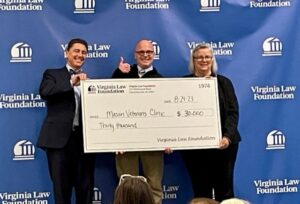
(Pictured L-R: VLF Vice President Stephen Noona, M-VETS Director Timothy MacArthur, and VLF President Hon. Jane Marum Roush)

The Mason Veterans and Servicemembers Legal Clinic (“M-VETS”) was awarded a $30,000 grant from the Virginia Law Foundation (“VLF”) to support its new initiative, the M-VETS American Legion Post 139 Advice and Referral Clinic.  In partnership with American Legion Post 139, M-VETS opened a new office co-located in the newly redeveloped Post 139 Headquarters to provide free legal advice and referral services to the military community.  Staffed with a licensed attorney, the M-VETS Advice and Referral Clinic officially opened for clients in May 2023.

“We are incredibly grateful to the Virginia Law Foundation for their continued support of M-VETS and its generous grant to help fund the M-VETS American Legion Post 139 Advice and Referral Clinic,” M-VETS Director Timothy MacArthur said.  “This grant will enable us to build momentum in our new initiative while continuing our capital campaign to eventually hire a full-time attorney to staff the new office and expand clinic practice areas to serve more veterans and service members.”

In 2020, M-VETS began a capital campaign to secure funding to hire a third attorney to staff the new M-VETS office.  The tireless work of M-VETS staff and University development raised funds to hire a third attorney part-time.  However, the vision for the M-VETS office at Post 139 is to secure funding to hire a full-time attorney to provide legal consultations and direct legal representation, as well as expand the legal practice areas offered by the clinic.

“The services offered at the M-VETS American Legion Post 139 Advice and Referral Clinic complement the pro bono services offered,” said M-VETS Deputy Director Leigh Winstead.  “When applicants contact our offices looking for immediate legal advice for urgent matters, we can connect them with a licensed attorney and a free legal consultation the same week, if not the same day.  The peace of mind this provides to our clients who often face stressful legal matters affecting their daily lives is immeasurable.”

In honor of the award, M-VETS attended the Virginia Law Foundation Grant Recipient Luncheon on August 24, 2023, in Richmond, Virginia.  The event highlighted all 32 organizations, including M-VETS, who were awarded over $700,000 in grants collectively.  The Virginia Law Foundation supports initiatives and nonprofits throughout Virginia that align with its mission to promote the Rule of Law, access to justice, and law-related education.

M-VETS provides free legal services to veterans, service members, and their dependents in a variety of civil matters, including uncontested divorces, landlord/tenant matters, consumer protection, and contract disputes, as well as in military/VA administrative matters, including MEB/PEBs, Discharge Upgrades, Boards for Correction of Military Records, and VA disability compensation appeals.  M-VETS is currently accepting applications for appointments to the M-VETS American Legion Post 139 Advice and Referral Clinic:  https://mvets.law.gmu.edu/apply/

#VirginiaLawFoundation


M-VETS Resumes In-Person Execution Services for Estate Planning Documents

(Pictured from L to R:  M-VETS Deputy Director Leigh Winstead & M-VETS Student Advisors Alden Campo and Amanda Nhek).

For the first time since the pandemic, M-VETS welcomed back clients to its clinic offices located at the Antonin Scalia Law School to provide execution services for various estate planning documents prepared by M-VETS.  Though M-VETS continued to provide representation for drafting estate planning documents, in-person execution services were discontinued during the pandemic.

This summer, M-VETS Student Advisors Alden Campo, Amanda Nhek, and James Caruso assisted three clients from the veteran community with drafting and executing estate planning documents, including simple wills, powers of attorney, and living wills.  M-VETS provided witnesses and a notary public for the signings.

“We are excited to welcome back clients to our offices and offer execution services for the estate planning documents drafted by our clinic,” said M-VETS Deputy Director, Leigh Winstead.  “Virginia law requires these documents to be executed with certain formalities, so it is important for us to have oversight on that process to ensure the documents are executed properly.”

“I was amazed how fast M-VETS responded not only to my initial call but also to the completion of my Will,” said one Veteran client.  “There was continuous e-mail and phone consolation during the write up and clarification phases of the process.” Student Advisor Alden Campo stated “It was such a blessing to participate in this process and help out our clients! I hope to work in the practice area of Trusts and Estates someday, and the M-VETS Clinic has given me a fantastic opportunity for real, hands-on experience in this area.”

M-VETS provides basic estate planning services for veterans, service members, and dependents, including simple wills, powers of attorney, living wills, and codicils.

In addition, M-VETS provides free legal services to the military community in a variety of civil matters, including uncontested divorces, landlord/tenant matters, consumer protection, and contract disputes, as well as in military/VA administrative matters, including MEB/PEBs, Discharge Upgrades, Boards for Correction of Military Records, and VA disability compensation appeals.  M-VETS also provides free legal consultations at the M-VETS American Legion Post 139 Advice and Referral Clinic.  Appointment requests may be submitted through the M-VETS website:   https://mvets.law.gmu.edu/apply/ .

M-VETS Secures Almost $13,000 in Disability Compensation at Board of Veterans’ Appeals Hearing for U.S. Navy Veteran

(Pictured:  M-VETS Student Advisors Amanda Nhek and James Caruso)

The Mason Veterans and Servicemembers Legal Clinic (M-VETS) appealed an incorrect Department of Veterans Affairs (DVA) disability rating decision. They secured an increase in the overall DVA disability rating, as well as a disability payment of almost $13,000, for a U.S. Navy Veteran. M-VETS filed the appeal on behalf of the Veteran beginning in 2016 and argued before the Board of Veterans’ Appeals (BVA) at a personal appearance hearing on 15 March 2023.

The Veteran served honorably in the active Navy from 1999 to 2013, nearly fourteen years with several deployments. The DVA initially denied the Veteran a compensable disability rating for migraines for lack of evidence of their severity. M-VETS argued that the Veteran’s migraine attacks were clearly prostrating and successfully persuaded the BVA to assign the condition a 30% rating, backdated to the original claim date in 2015. As a result, the Veteran’s overall disability rating increased to 90%, and the Veteran was awarded almost $13,000.00 in additional disability payments.

“I have been working with Tim MacArthur and the Antonin Scalia Law School students to rectify my disability through two board hearings and appeals. The dedication and thorough work finally prevailed, and I was awarded the claim for my migraines. The students who helped me have taken my case seriously and listened. They diligently reviewed my record and other cases like mine to help me get the rating I deserved. I am unsure if I would have gotten the rating independently and am truly thankful for their help,” stated the Veteran.

Due to the lengthy process involved with litigating this issue, many M-VETS Student-Advisors (SAs) worked diligently on this matter while in the clinic. When the case was scheduled for hearing, M-VETS SAs Amanda Nhek and James Caruso argued the motion before the BVA.

“Amanda and James did a great job arguing the motion and presenting evidence during the hearing,” M-VETS Director Timothy M. MacArthur commented. “Amanda and James each conducted a direct examination of our client, with James presenting the opening statement and Amanda providing the closing argument. Their performance greatly assisted the Judge in determining the favorable outcome for our client,” MacArthur continued. “The DVA benefits process is paternalistic, which is invaluable for allowing our students to gain practical experience in a non-adversarial setting.”

The Student Advisors expressed much gratitude for the opportunity to argue on behalf of the Veteran and are ecstatic to have played a part in achieving favorable outcomes for the Veteran. Amanda Nhek stated: “It was an honor and privilege to represent our client during the BVA hearing. Being able to advocate and present evidence on behalf of our client during the hearing was an invaluable experience. I am beyond grateful to have worked alongside my fellow M-VETS colleagues and thrilled that our client received a favorable outcome.” “Working on this case was a unique and demanding opportunity,” said Student Advisor James Caruso; “I feel honored to have played a part in this Veteran’s hard-earned win!”

“This was a long process, and I am pleased with the outcome. I want to thank all of our Student Advisors who worked on this matter as they did a wonderful job, and I want to thank our client for working with us for the last seven years,” MacArthur stated.

M-VETS assists veterans, Servicemembers, and their dependents in a variety of civil matters, including uncontested divorces, landlord/tenant matters, consumer protection, and contract disputes, as well as in military/VA administrative matters, including MEB/PEBs, Discharge Upgrades, Boards for Correction of Military Records, and VA disability compensation appeals. M-VETS provides free legal representation while allowing law students to receive supervised, practical legal experience by advocating for those who serve or have served in our Armed Forces.

The Fight for Equality Continues: Women Remain the Minority in Senior Ranks of the Military

Written by Summer 2023 M-VETS Student Advisor Amanda S. Nhek.

Introduction

Women have always found a way to serve their country. Whether it be disguising themselves as men during the Revolutionary War or flying warplanes in modern times, they continue to contribute by any means necessary. The fight for equal opportunity is nothing new to women in the military. They undoubtedly had to overcome a multifaceted set of issues that have stemmed from the onset of our country’s existence. Albeit the roles of women have changed over time, their fight and passion to serve our country has remained unchanged.

Despite the military’s long history and tradition of being male-dominated, women have slowly integrated into every branch of service. Women now make up approximately 17% of the Armed Forces. Although great strides have been made, women are still underrepresented when it comes to filling leadership positions. The unique barriers and obstacles that women face unequivocally contribute to their minority status in the senior ranks.

Change is on the horizon when it comes to promoting women into leadership positions. However, several issues must be addressed before women can ascend into these positions. Although the Department of Defense (DoD) continues to strive and implement new policies to support women in the military, the organizational culture and climate needs much improvement.

Background

Women have served in the military for more than 200 years.[1] Dating back to the Revolutionary War, women traveled with the Continental Army to provide care for injured soldiers, cook meals, and do laundry. Nearly 20,000 women assisted soldiers in the Civil War and more than 3,000 women were deployed to British hospitals in France during World War I.[2] However, women were very limited in their ability to serve as members of the military until the Women’s Armed Services Integration Act was passed.

In 1948, Congress passed the Women’s Armed Services Integration Act allowing women to serve in all four branches of the military. However, the Act limited the number of women to 2% of the total number of enlistees per branch. In addition, the Act authorized the discharge of women if they were to become pregnant. Furthermore, women were not permitted to serve in combat roles or command men. However, in 1972, women gained the right to fulfill roles in commanding units that included men.

In 1988, the Risk Rule essentially “excluded women from non-combat units or missions if the risks of exposure to direct combat, hostile fire or capture were equal to or greater than the risk in the units they supported.”[3] However, in 1994, President Bill Clinton rescinded the Risk Rule and permitted women to serve in any role except those positions that included direct combat on the ground. However, this policy excluded women from approximately 200,000 positions.[4] Then in 2013, former Defense Secretary Leon Panetta lifted the ban on women engaging in direct ground combat. As a result, more women were allowed to acquire ranks previously unobtainable due to their lack of combat experience.

Roughly ten years since permitting women to engage in combat, the number of women holding leadership positions has increased.[5] However, women are still significantly underrepresented when it comes to holding high-ranking roles.[6] There are several issues that continue to contribute to the lack of female senior leadership.

Issues

First, recruitment and retention of female service members has been a constant issue. Unfortunately, women are 28% more likely to withdraw from the military than their counterparts.[7] Therefore, it is very difficult to promote women into leadership positions if they do not have very long careers in the military. In addition, the recruitment rate of women compared to men is significantly lower.[8] The Joint Advertising, Market Research & Studies program found that parents’ perception of the military is that women are not treated adequately.[9] Therefore, this has a discouraging effect on their daughters when it comes to enlisting.[10]

Gender stereotyping and workplace discrimination have contributed to a toxic work environment for many women in the military. In a 2018 Workplace and Gender Relations Survey of Active Duty Members, it was recorded that women “rated every aspect of their unit climate lower than did male service members and rated workplace hostility as higher.”[11] Furthermore, the DoD reported that ““sexual harassment is a leading factor affecting the unit climate on sexual assault.”[12] In 2021, approximately 36,000 service members were victims of sexual violence.[13] Of that total, 19,200 were reported by women.[14]

Retaliation is also a real and prevalent fear that numerous female service members experience. For example, 28% of women faced retaliation after a sexual assault.[15] Moreover, a third of women who reported a sexual assault were discharged within seven months.[16] In 2022, only 5% of all reports of sexual assault were tried by a court martial.[17] Even more alarming is only 2% of the offenders tried before the court were actually convicted of a nonconsensual sex offense.[18]

The lack of trust and faith in the military to protect women from sexual violence has contributed to the low retention rate. For instance, 1 in 4 victims of sexual violence took some form of action to leave the military. [19] Furthermore, 60% of women in the military don’t think that the military as a whole will ensure their safety.[20] If full integration of women in the military is going to be a reality, then the military must earn back the trust of women.

Recommendations

The future success of the U.S. Armed Forces depends not only on recruiting women but also on retaining women who are currently serving. The Defense Advisory Committee on Women in the Services (DACOWITS) has played an enormous role in the “recruitment, retention, employment, integration, well-being and treatment of women in the Armed Forces.”[21] As of 2022, the DoD has implemented “approximately 97 percent of the committee’s recommendations.”[22] It is without a doubt that the DoD is putting policies into place to allow women to climb the ranks, however, continued effort is needed to promote equity within leadership.

Mentorship

The importance of female role models is paramount to inspiring the next generation of female soldiers. The DoD could implement more mentorship programs in all branches of the military. The Sisters in Arms program is a prime example as the Army provides a mentorship program that supports women of all ranks as they progress through their careers. Additional resources to fund and promote these mentors and support groups for women will hopefully assist with the retention of female service members. In addition, more women will likely join the military and ascend through the ranks if more systems are in place to them help them navigate their career paths.

Family Care

A report by the 2020 Congressional Research Service found that a “larger percentage of female Servicemembers and veterans have cited childcare issues as a major stressor associated with their time in service relative to their male counterparts.”[23] The military could implement a more liberal leave policy that would allow women to take more time off in the event their child was sick. In addition, the DoD should look to implement even more lactation rooms in military facilities in efforts to accommodate nursing mothers. Many female service members also face several challenges when it comes to pregnancies. It is very difficult for women to pass retention standards following the birth of a child. The Federal Employee Paid Leave Act, that went into effect in 2019, limits maternity leave to 12 weeks.[24] However, the military should consider extending the maternity leave policy to a full year. This would give women adequate time to recover physically and emotionally to be able to continue on with their careers.

Improving Organizational Culture

Additional oversight is needed to help monitor and ensure compliance with the DoD workplace policies. The military could put more of an emphasis on leadership development to foster a more inclusive environment. The military can change an individual’s behavior, but changing someone’s character is an extremely difficult challenge. Therefore, the military should focus on workplace expectations and consequences of bad behavior. It is very important that the military allocate a substantial number of resources to educate and train its leaders on how to identify and deal with inappropriate behavior.

The military should require more robust reporting systems in order for soldiers to feel more comfortable disclosing instances of poor military climate. It is not enough to just train military personnel on appropriate workplace expectations; it is equally important for leaders to be held accountable for a poor command climate. Further investigation and action against those in leadership positions will likely curb the prevalence of an unhealthy military culture.

 Conclusion

 Regardless of the time in history, women have been a staple in the U.S. Armed Forces. The DoD has made tremendous advancements in their efforts to provide women an avenue to advance in the military. Nevertheless, it is immensely important that women continue to push pass barriers and advocate for equal opportunity.

 [1] Danielle DeSimone, Over 200 Years of Service: The History of Women in the U.S. Military, United Service Organizations, (Feb, 23, 2023), https://www.uso.org/stories/3005-over-200-years-of-service-the-history-of-women-in-the-us-military.

[2] Id.

[3] The Risk Rule, N.Y. Times (Aug. 15, 2009), https://www.nytimes.com/2009/08/16/us/16womenbox.html#:~:text=1988%20The%20rule%20“excluded%20women, in%20the%20units%20they%20supported.”

[4] Leon Panetta & Shelly Stoneman, It’s been 10 years since women were allowed to serve in combat. There’s a lot left to accomplish, The Hill, (Jan. 1, 2023), https://thehill.com/opinion/national-security/3834021-its-been-10-years-since-women-were-allowed-to-serve-in-combat-theres-a-lot-left-to. accomplish/#:~:text=Yet%20while%20American%20women%20had,artillery%20and%20other%20combat%20roles.

[5] See Emma Moore, Women in Combat: Five-Year Status Update, Center for a New American Security, (Mar. 31, 2020), https://www.cnas.org/publications/commentary/women-in-combat-five-year-status-. update#:%7E:text=The%201994%20rescinding%20of%20the,submarines%20and%20some%20small%20vessels.

[6] Panetta & Stoneman, supra note 4.

[7] Corey Dickstein, Women are making up more of the military, but are more likely to leave early, new report says, Stars and Stripes, (May 20, 2020), https://www.stripes.com/theaters/us/women-are-making-up-more-of-the-military-but-are-more-likely-to-leave-early-new-report-says-1.630516.

[8] Panetta & Stoneman, supra note 4.

[9] Moore, supra note 5.

[10] Id.

[11] Allison Abbe, The Balancing Act for Female Officers, War Room Online Journal, (Mar. 5, 2020), https://warroom.armywarcollege.edu/articles/balancing-act/.

[12] Military Sexual Assault Fact Sheet, Protect our Defenders, (Updated July 2023), https://www.protectourdefenders.com/wp-content/uploads/2023/07/POD-MSA-Fact-Sheet-2023.pdf

[13] Id.

[14] Id.

[15] RL Beckman, C Farris, LH Jaycox, TL Schell, Perceived Retaliation Against Military Sexual Assault Victims, RAND National Defense Research Institute (2021), https://www.rand.org/pubs/research_reports/RR2380.html.

[16] Department of Defense (DoD) Inspector General, Evaluation of the Separation of Service Members Who Made a Report of Sexual Assault (2016), https://media.defense.gov/2016/May/09/2001714241/-1/-1/1/DODIG-2016- 088.pdf.

[17] Supra note 12.

[18] Id.

[19] Id.

[20] Id.

[21] Panetta & Stoneman, supra note 4.

[22] Id.

[23]  Kamarck, Kristy N. (2020, March 19). Military Child Development Program: Background and Issues. (CRS Report No. R45288). https://crsreports.congress.gov/product/pdf/RL/RL33640.

[24] H.R.564 – 117th Congress (2021-2022): Comprehensive Paid Leave for Federal Employees Act, H.R.564, 117th Cong. (2021), https://www.congress.gov/bill/117th-congress/house-bill/564.
The Veterans Treatment Court: A Resurgence of Rehabilitation as a Goal of the Criminal Justice System

Written by Summer 2023 M-VETS Student Advisor Rebecca McGuinness.

Since the criminal justice system’s inception, rehabilitation has stood as a primary end towards which policymakers direct legislation.[1] The premise underpinning this objective is that the human person has the capacity to both abandon criminal activity and reform their behavior. This belief in the ability for a person to change was a uniquely American ideal.[2] Ove time, however, rehabilitation has fallen out of fashion within criminal courts and amongst lawmakers alike.[3] Lawmakers emphasized, instead, punishment for the crime rather than rehabilitation of the criminal.[4]

And yet, the Veterans Treatment Court (the “VTC”) stands in sharp contrast to these trends. Where adopted, the criminal court recognizes the unique difficulties that veterans face upon leaving the military that may result in criminal conduct.[5] Not unlike in juvenile courts or drug courts, in the VTC the law serves “as a kind of therapist or therapeutic agent,” with “legal rules, legal procedures, and the roles of legal actors” functioning as “social forces.”[6] Consequently, the court offers a program in which the veteran receives comprehensive care for underlying conditions while remaining accountable to these treatment goals through regular meetings with a judge.[7] Through these services, the VTC aims at helping veterans thrive within civil society without future contact with the criminal justice system.

Rather than simply punishing the criminal behavior, the veteran works with a multi-disciplinary team to find the root of the issue.[8] This team includes counselors, Department of Veterans Affairs (the “VA”) representatives, support organizations, and veteran mentors that address a wide range of challenges a veteran may face.[9] Veterans receive individual care to promote sobriety, recovery, and stability––offering to participants a new life instead of a criminal record.[10] Further, these courts offer specialized treatment for the unique life circumstances of veterans. These circumstances often include mental health issues triggered by service and unhealthy coping mechanisms like substance abuse.

The road to graduation does not come without intense intervention, a stretch of sobriety, and radical accountability. Participants undergo regular drug and alcohol testing, the failure of which results in judicial sanctions personally tailored to the veteran’s situation. As such, the veteran receives remedial solutions as opposed to the punitive sentences emphasized in traditional courtrooms. The success of these programs has encouraged jurisdictions across the country to adopt similar measures.[11] In fact, the VTC is the fastest growing specialized court in the country, spanning forty-five states.[12]

While these courts take on the character of the community, most follow a similar blueprint. This structure focuses on four key components: (1) access to mental health resources; (2) direct support from the VA; (3) consideration of combat-related issues; and (4) veteran peer mentors.[13] In practice, the VTC allows for the systematic identification of veterans within the civilian population to connect them with resources available because of their service.[14] This identification system allows the American people to “keep in mind the enduring debt we owe our country’s military veterans” despite imperfect post-service conduct.[15]

Not all veterans, however, are eligible to participate in the VTC. These courts require a qualifying veteran to have either a substance use disorder or a treatable psychiatric condition.[16] Additionally, each court adopts its own unique criteria which may include a required nexus between the crime and the veteran’s military service; combat experience; or an honorable discharge.[17]

For those who have received true recovery, the VTC is an opportunity of substantial importance. This program provided a “clean slate, a true second chance.”[18] The question remains unanswered, though, whether this return to a rehabilitative role of the judicial system has produced lasting healing for the veteran participants at large. Given that one of the primary concerns with rehabilitation is the risk of recidivism, the long-term data regarding veteran participants will likely determine whether similar initiatives to the VTC will expand to include a wider pool of people facing criminal charges.

While most VTC programs are too young to provide adequate data, many veterans have graduated from these programs with gratitude and a new-found zeal for life. Regardless of how the VTC may impact the criminal justice system at large, these courts signify an ongoing commitment to honoring out veterans and providing these men and women with the resources owed to them because of their sacrifices.

[1] See Francis A. Allen, The Decline of the Rehabilitative Ideal: Penal Policy and Social Purpose, 1, 4 (1981).

[2] See Morris V. Hoffman, The Case for Jury Sentencing, 52 Duke L.J. 951, 965 (2003) (“The penitentiary was a uniquely American invention, begun by the Quakers in Pennsylvania in 1790.”)

[3] See Francis T. Cullen, Rehabilitation: Beyond Nothing Works, 42 Crime & Just. 299, 299 (2013).

[4] See Francis A. Allen, The Decline of the Rehabilitative Ideal: Penal Policy and Social Purpose, 1, 4 (1981).

[5] Exec. Off. of the President, Fact Sheet: Veterans Treatment Courts, Off. of Nat’l Drug Control Policy, 1, 1 (2010) https://obamawhitehouse.archives.gov/sites/default/files/ondcp/Fact_Sheets/veterans_treatment_courts_fact_sheet_12-13-10.pdf.

[6] David B. Wexler, Therapeutic Jurisprudence in a Comparative Law Context, 15 Behav. Sci. & L. 233, 233 (1997).

[7] See Exec. Off. of the President, Fact Sheet: Veterans Treatment Courts, Off. of Nat’l Drug Control Policy, 1, 1 (2010) https://obamawhitehouse.archives.gov/sites/default/files/ondcp/Fact_Sheets/veterans_treatment_courts_fact_sheet_12-13-10.pdf.

[8] Id.

[9] Id. at 2.

[10] Id.

[11] Id.

[12] Barry C. Edwards, Ramon Hinojosa, & Komysha Hassan, How to Transform the Judicial System: Lessens from the Institutionalization of Veterans Treatment Courts, 21 N.Y.U. J. Legis. & Pub. Pol’y 841, 848 (2018-19).

[13] Id.

[14] Id. at 875.

[15] Exec. Off. of the President, Fact Sheet: Veterans Treatment Courts, Off. of Nat’l Drug Control Policy, 1, 1 (2010) https://obamawhitehouse.archives.gov/sites/default/files/ondcp/Fact_Sheets/veterans_treatment_courts_fact_sheet_12-13-10.pdf.

[16] R. Scott Johnson et al., Predictors of Incarceration of Veterans Participating in U.S. Veterans’ Courts, 68 Psychiatric Servs. 144, 144 (2017).

[17] Barry C. Edwards, Ramon Hinojosa, & Komysha Hassan, How to Transform the Judicial System: Lessens from the Institutionalization of Veterans Treatment Courts, 21 N.Y.U. J. Legis. & Pub. Pol’y 841, 877 (2018-19).

[18] Dep’t of Veterans Affairs, Second Chances for Veterans from Veterans Treatment Courts, at 1 (June 30, 2020). https://news.va.gov/76378/second-chances-veterans-veterans-treatment-court/#:~:text=Each%20Veteran’s%20road%20to%20Veterans,always%20consider%20the%20team%20family.

M-VETS Secures $396,000 in DVA Disability Compensation for Vietnam Veteran

Smaller M-VETS logo

The Antonin Scalia Law School Mason Veterans and Servicemembers Legal Clinic (“M-VETS”) secured a total of $396,000.00 in Department of Veterans Affairs (DVA) disability compensation payments for a veteran due to his service in Vietnam. M-VETS had previously secured the Veteran $123,000.00 in retroactive disability payments but argued at a hearing before the Board of Veterans’ Appeals (BVA) that the Veteran was entitled to additional disability payments. This effort resulted in the Veteran being paid an additional $273,000.00 for disability payments resulting from the Veteran’s service.

The Veteran initially filed the claim for disability in 2010 and, after being continuously denied by the DVA for seven years, sought the assistance of M-VETS. M-VETS corrected the Veteran’s military records before the Air Force Board for Correction of Military Records (ABCMR) to show boots-on-the-ground service in Vietnam. This evidence provided the basis for a successful Motion for Reconsideration before the BVA, which ruled the Veteran’s condition was service connected. As a result, he was paid $123,000.00 in retroactive disability payments to the original filing date 11 years earlier. However, the DVA unilaterally lowered the Veteran’s disability percentage from 100% to 10% for eight of those 11 years without providing notice to the Veteran.

“I was excited to learn that M-VETS could initially correct our client’s military records with the AFBCMR and convinced the DVA that our client was entitled to service connection for his disability,” said Timothy M. MacArthur, M-VETS Director. “We placed our Veteran in a better position than when we found him, which is always one of our main goals. Nevertheless, we knew the DVA had erred again by not giving our client due process concerning the reduced rating. Further, we believed the rating of 10% did not accurately reflect the severity of his condition. We had more work to help our client, so the Clinic filed an appeal to the BVA.”

MacArthur continued, “After we filed our appeal to the BVA in 2021, it took another two years for our case to be heard by a judge at the BVA. When our day in Court arrived, M-VETS was prepared for the hearing, and we argued our theory of the case to the Court. Fortunately, we prevailed on the merits of our case and convinced the Judge that our client’s rating should not have been reduced and that he was entitled to a 100% rating for the entire period of his disability claim. This ruling resulted in the backdated restoration of our client’s 100% rating, which provided him with the much-needed benefits he earned from his service in Vietnam. A significant amount of hard work went into this effort, and I want to thank the M-VETS student advisors who handled this matter and made this outcome possible for our Veteran.”

“Thank you from the bottom of my heart for all the work you and your staff did to help me get the benefits I was entitled to,” said the Veteran. “It would have never happened without your help. God bless you and all your staff.”

M-VETS provides free legal representation to active-duty Servicemembers, veterans, and their dependents. M-VETS allows law students to receive supervised, practical legal experience by advocating for those who serve or have served in our armed forces. M-VETS provides representation in a variety of matters, including Virginia civil litigation matters, uncontested divorces, consumer protection matters, wills, and powers of attorney, as well as assisting with matters before the DVA and various administrative boards, including discharge upgrades, record corrections, military issues of pay and entitlement, and DVA disability benefits appeals.

M-VETS Honored with Arlington County Bar Foundation Grant

(Pictured:  ACBF Treasurer Jennifer Brust, M-VETS Director Timothy MacArthur and Deputy Director Leigh Winstead)

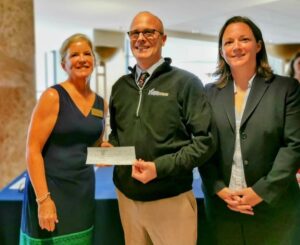
The Mason Veterans and Servicemembers Legal Clinic (“M-VETS”) received a $1,500 grant from the Arlington County Bar Foundation (“ACBF”) to support M-VETS’s pro bono legal work in the Arlington community.  The grant was presented to M-VETS at the Grantee Reception held at the Arlington County Courthouse on June 27, 2023.  Among other recipients honored for their charitable work in the community, M-VETS was presented with the award by ACBF Chair, Paul Ferguson and Treasurer, Jennifer Brust.

“We are incredibly grateful to the Arlington County Bar Foundation for their continued support of the clinic,” M-VETS Director, Timothy MacArthur said.  “The ACBF plays a vital role in supporting Arlington charitable organizations and we are honored to be recognized alongside our fellow grantees.”

M-VETS’s grant application is part of a capital campaign to seek funding for a third attorney to staff a new M-VETS office located in the American Legion Post 139.  Also an ACBF grant recipient, Post 139 partnered with M-VETS to provide office space in its newly redeveloped headquarters in Arlington which is situated on the ground floor of an affordable housing apartment complex with veteran-reserved units.  M-VETS recently opened the Post 139 office to provide free legal consultations to veterans, service members, and their dependents.  M-VETS is currently accepting appointments for the Post 139 Advice and Referral Clinic through its website:  https://mvets.law.gmu.edu/apply/.

“We are very excited to partner with American Legion Post 139 in opening our new Advice and Referral Legal Clinic,” said MacArthur.  “This grant is an important building block in our capital campaign to make the third staff attorney position permanently self-sustaining and further expand the legal services offered by M-VETS.”

In addition to recognizing grantees, the ACBF presented the Campbell-Smith-Thompson Award to Scalia Law School’s own Ilissa T. Belanger, a director of the ACFB and newly-retired Senior Associate Director of Career Services and Co-Director of Externship Programs at Scalia Law School.  The Campbell-Smith-Thompson Award is presented to the Foundation Board Member who has made extraordinary contributions to the philanthropic mission of the ACBF.  The Arlington County Bar Foundation is the philanthropic arm of the Arlington County Bar Association.  The Foundation assists local charities through the dissemination of grants and personnel support.

M-VETS provides free legal services to veterans, service members, and their dependents in a variety of civil matters, including uncontested divorces, landlord/tenant matters, consumer protection, and contract disputes, as well as in military/VA administrative matters, including MEB/PEBs, Discharge Upgrades, Boards for Correction of Military Records, and VA disability compensation appeals.

M-VETS Opens New Office Co-Located in the Newly Redeveloped American Legion Post 139

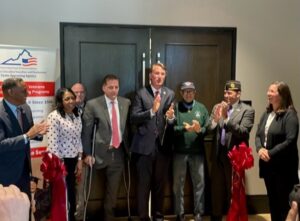
In partnership with the American Legion Post 139, M-VETS opened a new office co-located in the newly redeveloped Post 139 Headquarters to provide free legal advice and referral services to the military community.  The Grand Opening took place on May 11, 2023. It included remarks by M-VETS Director Timothy MacArthur, Secretary of Virginia’s Department of Veterans and Defense Affairs Craig Crenshaw, and a keynote address by Virginia Governor Glenn Youngkin.

Post 139 recently completed an $80 million public-private redevelopment of its headquarters on the ground floor of Terwilliger Place, a 160-unit affordable housing apartment complex with 50% veterans’ preference supported by the Arlington Partnership for Affordable Housing.  Tabbed as “Leisure, Lodging, and Legal,” the 6,000-square-foot headquarters will not only serve the social and housing needs of local veterans but will offer legal services and access to vital veterans benefits.

M-VETS new outpost at Post 139 headquarters will be staffed by a licensed attorney, M-VETS Assistant Director, Raphael Johnson, an Army Veteran and former M-VETS student advisor. Mr. Johnson will provide in-person legal advice to veterans on various legal issues and offer referral services to ensure those veterans are connected with the appropriate legal resources.  The Virginia Department of Veterans Services (“VDVS”) will also have a permanent office at Post 139 Headquarters to assist with VA claims, education benefits, and employment resources.

“We are very excited to open a new office at the American Legion Post 139 Headquarters to provide vital legal services to our military community,” M-VETS Director Timothy MacArthur said.  “This project has been years in the making, and we are excited for the opportunity to expand our legal services in partnership with Post 139 and VDVS.”

“I am excited for the opportunity to rejoin M-VETS and to be able to give back to the veteran community in such an impactful way,” said M-VETS Assistant Director Raphael Johnson.  “We have worked with the leadership at Post 139 to ensure that our clients can efficiently schedule appointments and receive timely access to legal consultations in a secure environment.”

In 2020, M-VETS began a capital campaign to secure funding to hire a third attorney to staff the new M-VETS office.  The tireless work of M-VETS staff and University development raised funds to hire a third attorney part-time.  The vision for the M-VETS office at Post 139 is to secure funding to hire a full-time attorney to provide legal consultations and direct legal representation and expand the legal practice areas offered by the clinic.

“We are very proud of our efforts to bring this vision to life, but our work is far from done,” M-VETS Deputy Director Leigh Winstead added.  “We are continuing our capital campaign to make the third attorney position self-sustaining in a full-time capacity and to further expand the legal services offered by M-VETS.”

M-VETS provides free legal services to veterans, service members, and their dependents in a variety of civil matters, including uncontested divorces, landlord/tenant matters, consumer protection, and contract disputes, as well as in military/VA administrative matters, including MEB/PEBs, Discharge Upgrades, Boards for Correction of Military Records, and VA disability compensation appeals.  M-VETS is currently accepting applications for appointments to the M-VETS American Legion Post 139 Advice and Referral Clinic:  https://mvets.law.gmu.edu/apply/